
Having promised myself if no one else that it wouldn’t be another eight year span in between book reviews, here I am back four months later. I’d put it off again, but my list is already long enough to be barely manageable. As I’ll cover shortly, it’s been an interesting and eclectic few months of books. A bit of literary fiction, some genre fiction, some classic noir, sci-fi new and old, an unfortunately necessary dose of US history and finally some essential comic relief.
As always, I’m making no effort to review the following thoroughly or in detail. I’m not writing school-length book reports, not least because it’s entirely possible that I’ll be the only reader and I don’t need those. My goal here instead is to provide a high level value assessment, a bit of color commentary about the author, titles or both and leave the decision of whether anything sounds compelling up to the reader.
The only other thing to note is that the links are Amazon affiliates, because I always enjoy seeing if people find any of the books interesting, and if so which.
With that, on to the reviews.
The Good
Never Let Me Go, Kazuo Ishiguro
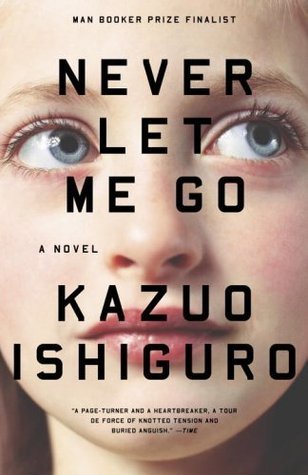
I’d somehow never gotten around to this title, but after several recommendations I finally gave Never Let Me Go a read. I was a little more ambivalent about the book than the folks that recommended, but that’s because all I kept thinking about while reading it was a line from Jeff Goldblum’s character in Jurassic Park: “life will find a way.” I can’t explain any more than that without spoiling things, but if you read it, you’ll understand. Where I struggled with plausibility, however, the characterization, the quality of the prose and the underlying theme made this worth a read for me.
James / The Trees, Percival Everett
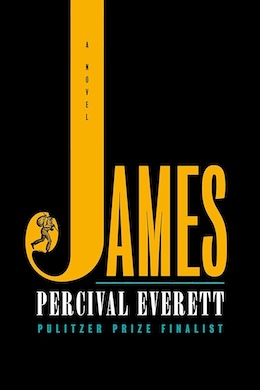
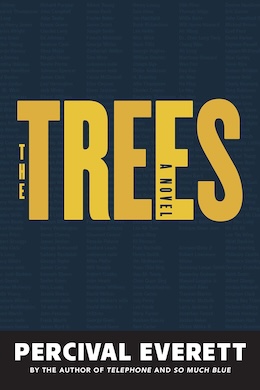
These two books are not connected other than their author and sharing a core theme of the Black experience in America, but I’m grouping them here because if you like one, you’ll almost certainly like the other. James is a retelling of Twain’s The Adventures of Huckleberry Finn (which I also re-read recently and is depressingly still very relevant) from Jim’s perspective with a very clever conceit, while the trees involves two Black detectives investigating brutal race-related crimes that are seemingly impossible. I found James the more satisfying of the two because I struggled with the ending to the Trees, but these are both well worth your time. Everett can write, and these books have a lot to say about what it’s like to be non-white in America, both then and now.
Those Across the River / The Lesser Dead / Between Two Fires, Christopher Buehlman
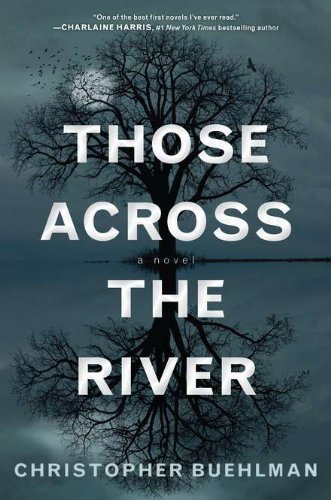
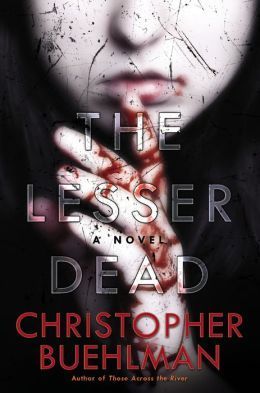
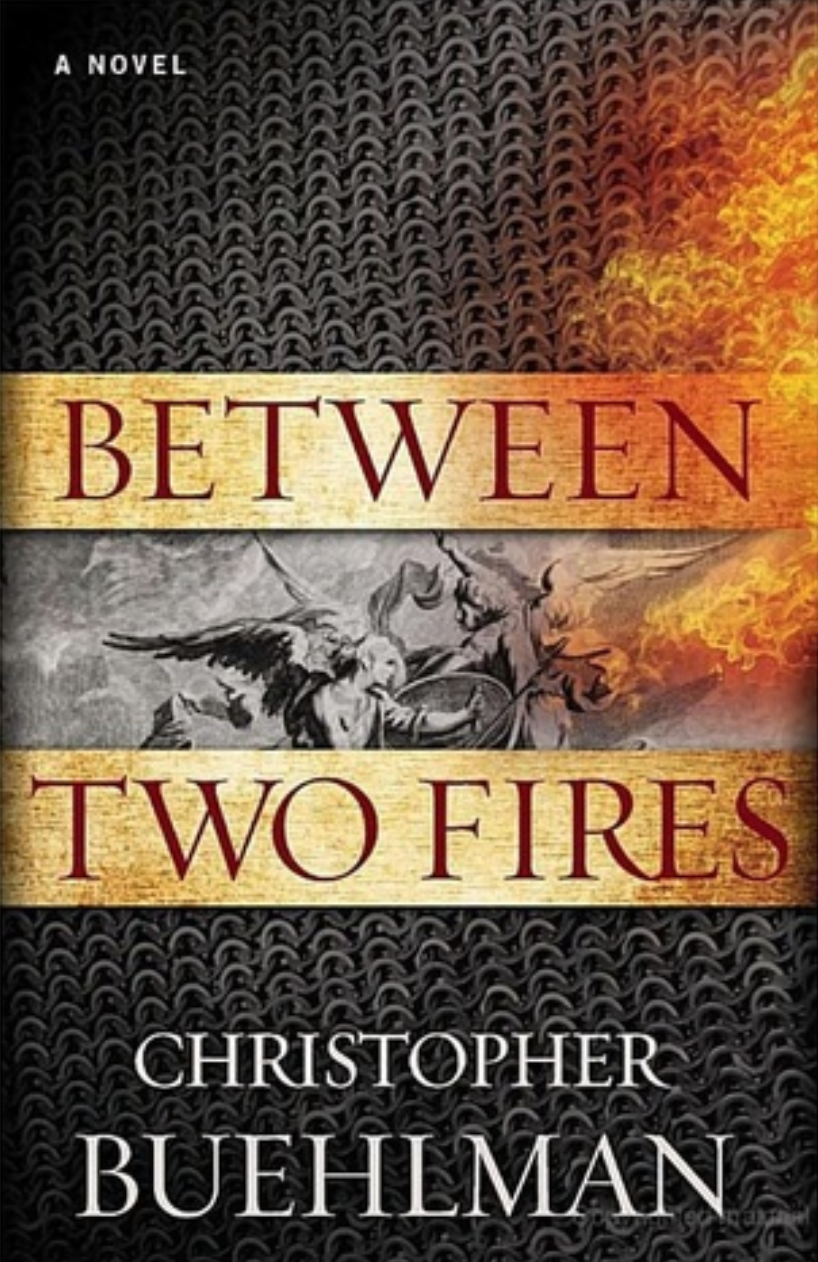
Equally brutal but less impactful because of the distance from reality that genre fiction affords, the first two novels are basically books about monsters. Which types, I’ll leave opaque here, but there’s a familiarity to both along with some genuine creativity when it comes to form. The Lesser Dead in particular attempts to use some of the standard tropes jujitsu-style, working against expectations, and while I thought the ending was a bit convoluted, it was a great read. Those Across the River was, as his debut novel, a little less sophisticated in both prose and format, but I enjoyed both of these books, though not as much as his much more ambitious historical fiction, Between Two Fires.
The Buffalo Hunter Hunter, Stephen Graham Jones
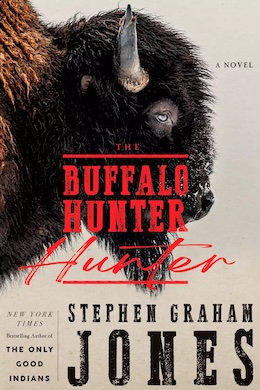
I haven’t had the opportunity to read too much genre fiction written from the perspective of Native Americans, but I’ll have to seek out more of it because the Buffalo Hunter Hunter was excellent. Other than the wrapper narrative, this is basically the stories of two men: a white minister and a warrior of the Blackfeet or Pikuni people. Central to the book is the Marias Massacre, in which the United States army attacked and murdered nearly two hundred Piegan Blackfeet – principally women, older men and children. This novel, and the story that unfolds, is about reckoning. And if you choose to read this, for what it’s worth, I highly recommend the audiobook. The narrators – Shane Ghostkeeper in particular – are exceptional.
There is No Antimemetics Division, qntm
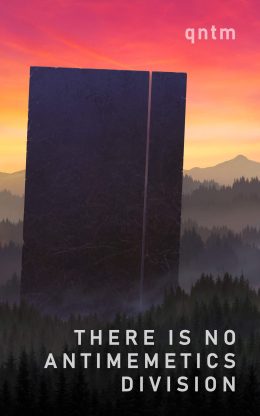
I described There is No Antimemetics Division at one point as something like a cross between Max Barry’s Lexicon and The Magnus Archives podcast. Which doesn’t help much if you don’t know one or both of those, but it’s enough to say here that this is an intensely layered book, with reality as subjective as if Philip K. Dick had written it. As with Lexicon, or The Matrix or countless other sci-fi titles, the opening is purposefully, intensely confusing, but while I wondered if the novel, which had been written serially, would hang together and be coherent as a whole, the answer is generally yes.
The Chill / The Underground Man / The Galton Case / The Zebra-Striped Hearse, Ross MacDonald
A little while back I fed my Goodreads list into Claude, an AI bot, and asked it to point out any obvious holes in my reading. One of them was the fact that while I’d read most of the classic noir titles from masters of the craft like Chandler and Hammett, not to mention heirs to their legacy like John D. MacDonald, I’d never read a single title from one of other giants in the field, Ross MacDonald (no relation to John D). Where Chandler had Philip Marlowe, Hammett had The Continental Op and John D. MacDonald had Travis McGee, Ross MacDonald’s series hero/anti-hero was a private detective by the name of Lew Archer. Curiously, Claude recommended I start with The Chill and The Underground Man which I liked least of the four that I read. The plots stretched and then snapped my ability to suspend disbelief, but there was enough to the books otherwise to read The Galton Case and The Zebra-Striped Hearse, and while they also were preposterous at times, they evinced a sense of style and quality of prose that made them worth it. I’d still rank Ross MacDonald well behind Chandler and Hammett, as well as my personal favorite John D. MacDonald, but the Lew Archer novels have substance to them and are least better than Rex Stout’s.
The Hilarious
Surely You Can’t Be Serious, David Zucker, Jim Abrahams and Jerry Zucker
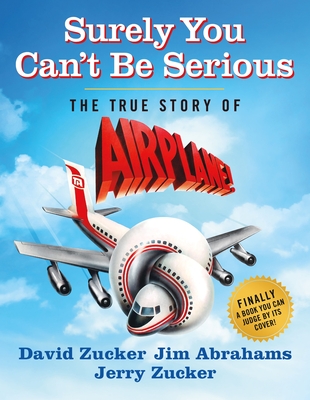
I don’t remember where I came across Surely You Can’t Be Serious, but this oral history of the making of Airplane was exactly what I needed after plowing through some of the depressing mid-twentieth century US history I’ll get to in a moment. The making of Airplane is a remarkable story of perseverance from Hollywood outsiders who changed comedies forever, and inspired countless comedians and filmmakers for decades – many of whom are quoted in the book. The book was educational, both about the film industry of the time in general as well as bits of trivia I’d never heard before, such as the fact that the Kentucky Fried Theater that made Airplane possible was also the inspiration for Saturday Night Live. But mostly the book made me laugh. This is another one to listen to as an audiobook if you can, as where possible it’s read by the actual actors, directors, comedians and filmmakers who contributed to it.
The History
The Burglary, Betty Medsger / Fugitive Days, Bill Ayers / The Last Honest Man, James Risen
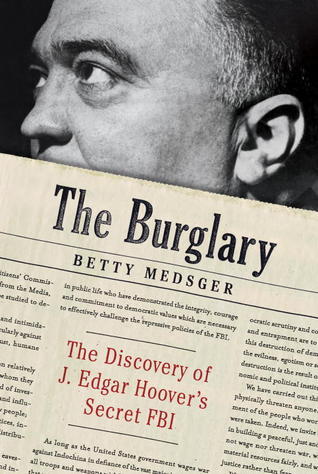
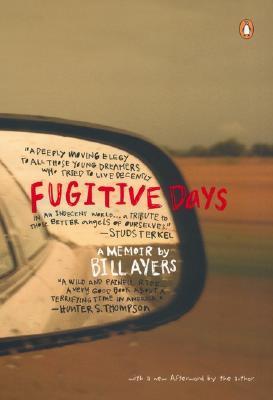
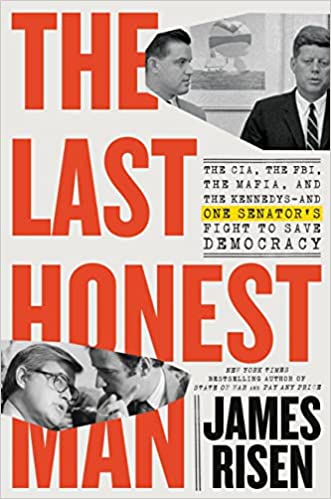
Getting back to that history, my consumption of histories of the United States in the middle of the last century is apparently directly proportional to the current president’s administration. During his first term, I inhaled books like All the President’s Men, Days of Rage and Nixonland. This time around, it’s subjects like: a group of activists who broke into an FBI office to publish highly confidential documents that eventually broke open the shameful history of COINTELPRO, a first hand account from an activist of his thoughts and behaviors of the time and lastly a biography of a Democratic Senator from Idaho (imagine that) – Frank Church – who helped expose the US intelligence agencies’ near total lawlessness and lack of accountability. Of the three, Risen’s Last Honest Man is easily the best written, though the Burglary’s narrative is the most compelling at least until you get to the modern material. Fugitive Days, meanwhile, provided some insight into the mindset of the young activists, but was lighter on the underground insights than expected and both self-aggrandizing and shockingly sexist for a memoir written decades later. But if you are struggling with the parallels between the present day and the last time the country was tearing itself apart, any of the above titles will provide you with a much better education on the state of the United States in that span than I ever got in school.
Proto, Laura Spinney
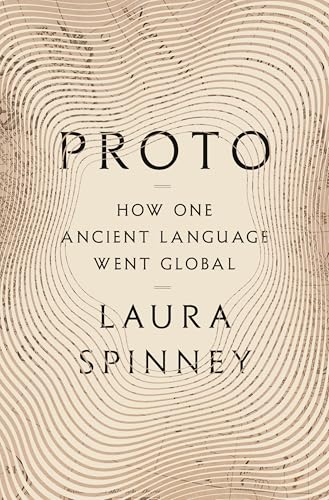
One of the criticisms of this novel chronicling the rise of Proto-Indo-European, the ancient language from which everything from English to French to Sanskrit is descended, is that it spend more of its time on history than it does on linguistics, and it’s a fair point. Another is that the dots here, from DNA to ancient primary sources to linguistics, aren’t perfectly joined up. Also true. But in spite of that, Proto is a fascinating read if you enjoy history and want to understand more about how languages evolve. The extrapolation on the geographic path and timing of the Romany people via the presence – or lack thereof – of loan words, for example, was almost enough by itself to justify reading this. It’s dense, but recommended for all fans of history and possibly for linguists as well.
The Very Different
Do Androids Dream of Electric Sheep?, Philip K. Dick
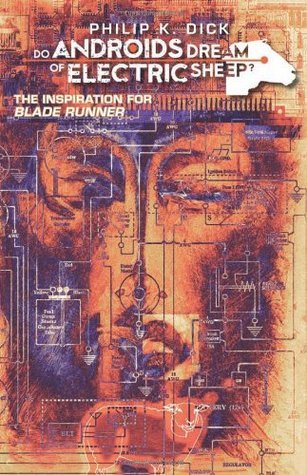
I knew Dick’s Do Androids Dream of Electric Sheep? differed greatly from its film incarnation Blade Runner, but I was unprepared for just how little the two had in common. Many of the characters are present in both, and the rough plot is similar enough. But Dick’s novel is as basic in its prose as it is inventive in its structure. It’s much more occupied with class and social mores than the film is and in that way reads more like a novel of the fifties than one published in 1968. Ultimately, it’s worth a read if only as a companion piece to the film, but approach it knowing that the two are deeply, radically different works of art.
The Meh
A Canticle for Leibowitz, Walter M. Miller Jr
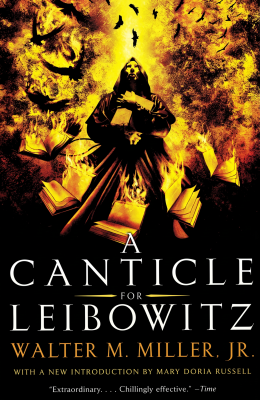
Generally regarded as a science fiction classic and winner of the 1961 Hugo Award for best novel, A Canticle for Leibowitz did little for me. Miller did well to make the actual apocalypse of his post-apocalyptic world something of an afterthought, a vague background consideration. It elevates the book, which is structured in three parts, from a basic genre title to one with more ambition. But the religious themes were largely lost on me, and characters were difficult to relate to in any meaningful way. My recommendation if you read this is to keep your expectations minimal and understand that parts of the slow moving plots will be a slog.
The Plot Against America, Philip Roth
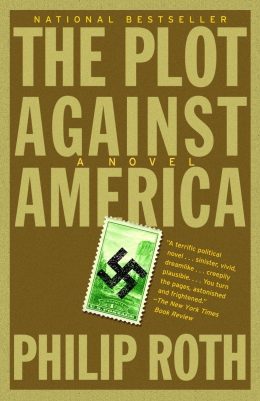
Widely considered one of the United States’ best novelists of the last century, having won the Pulitzer among other awards for American Pastoral, Roth’s The Plot Against America was in theory right up my alley. An alternative history, one in which Charles Lindbergh defeats FDR for the Presidency, it had a great deal going for it: a plausible alternative history set up (and one grimly relevant to the present day), the author’s undeniable ability to write and a plot which – while introduced too late – justified the read. But the novel spends so much time in the moment with its protagonist that it’s structurally weakened. Time has to be sped up on multiple occasions to actually advance the plot. Also, a microscopic view of the life of one child in New Jersey – and I can say this as a child who grew up in New Jersey – is not intrinsically the most fascinating of narratives even given the context, with the result a plot that seriously drags at times. The characters are fully fleshed out and three dimensional, and operate with the wide range of behaviors you’d expect from humans rather than cardboard cutouts. But other than the quality of the writing and the thought exercise of “Yes, It Can Actually Happen Here,” this was a long, slow read that I had to force myself to pick up and finish.
 sogrady.org