The Gear Guide for Walking

It could be mere curiosity, it could be interest as more people I’ve talked to have been getting out walking in the elements, but let’s be honest: it’s probably that Christmas is a few short weeks away and people are getting desperate. Either way, I’ve been getting a bunch of questions from people on gear. From general questions on what types are good for particular situations to specific brand and item recommendations, people have asked what works and what doesn’t.

Before I get to the more specific recommendations, let me answer a few common questions up front:

Q: Why do you have multiple versions of the same items? Two hoodies, for example.

A: In a couple of cases it’s pretty simple: it’s good to have more than one t-shirt, for example, merino wool or no.

But in cases like hoodies, hats, jackets and so on, it’s a different tools for different purposes thing. Aside from things like t-shirts, underwear and so on, I don’t have duplicates of the same item, I have slightly different versions. Even subtle differences in the weight of a midweight hoodie versus a heavier weight option make them better or worse options depending on conditions.

Q: Isn’t all this gear expensive? How do you fund it?

A: It sure is, and the answer is over time. The number one rule for me, at least, is simple: if I already have something workable, use that. I got my hard shell, for example, as a Christmas present in 1998, my soft shell is 15 or 16 years old, and my down coat is 11 or 12 years old – and all three have been repaired at least once by the original manufacturers.

The clothing I’ve needed to add, meanwhile, I’ve bought slowly and tactically. A hoodie one month; t-shirts another. A quarter zip and gloves later. And with rare exceptions, it’s all come out of my own personal corner of our budget so I’m not impacting our household finances at all. Other strategies include shopping at outlets (all of my Patagonia gear has come from the Freeport outlet, for example), birthday or Christmas presents, waiting for sales and other discounts (speaking of, if you want 20% off any of the Woolx stuff mentioned below, click here), or buying things used.

It’s taken a year and a half, but I now have almost everything I could need for the conditions I’m most likely to face and the gear I’ve bought should last a long while – with the notable exception of my shoes. Those wear out faster than anything else, alas, and I look at them basically as an unavoidable expense.

Q: Do I need a bunch of gear to get going?

A: Absolutely not. When I got started, almost everything I was wearing was cotton and the running shoes I was using were four years old. You’re better off just getting started with whatever you have on hand. As walking’s grown into a steadier habit for me, however, I’ve chosen to invest in things that both make me more comfortable and make it possible for me to get out in conditions that would otherwise be problematic. But when I got started, it was soft pants, a Carharrt hoodie and my insulated work gloves that were more leaf than leather.

As Arthur Ashe put it, “start where you are, use what you have, do what you can.”

Q: Isn’t this a lot of gear? I don’t use this much when running, skiing, etc.

A: Right, but you don’t generate nearly as much body heat when walking, so in cold temps you may need to compensate with more clothing than you would otherwise.

Q: Why do all of this? Isn’t it miserable? Can’t you just walk on a treadmill or something?

A: It might seem odd, but some of my favorite walks have been the ones with the worst weather. There’s nothing that makes you feel more alive – or more appreciative of bourbon-infused scratch cocoa – than trudging around in a blizzard for a couple of hours or nearly getting blown off the bridge. Sounds weird, but it’s true.

Q/A: This one isn’t a question I’ve gotten from one of you, obviously, because no one’s read this yet. But it anticipates a question. When I go on clothing sites, things are typically laid out as base layers, mid layers and so on. I’m not using that organizational structure below, because depending on conditions, a base or mid layer could be an outer layer or an outer layer an inner layer. I don’t find that way of sorting things helpful, personally, so I’m just referring to things as jackets, hoodies, vests and so on and instead sorting by conditions which is how I plan myself. Your mileage may vary, of course.

Conditions

DARK

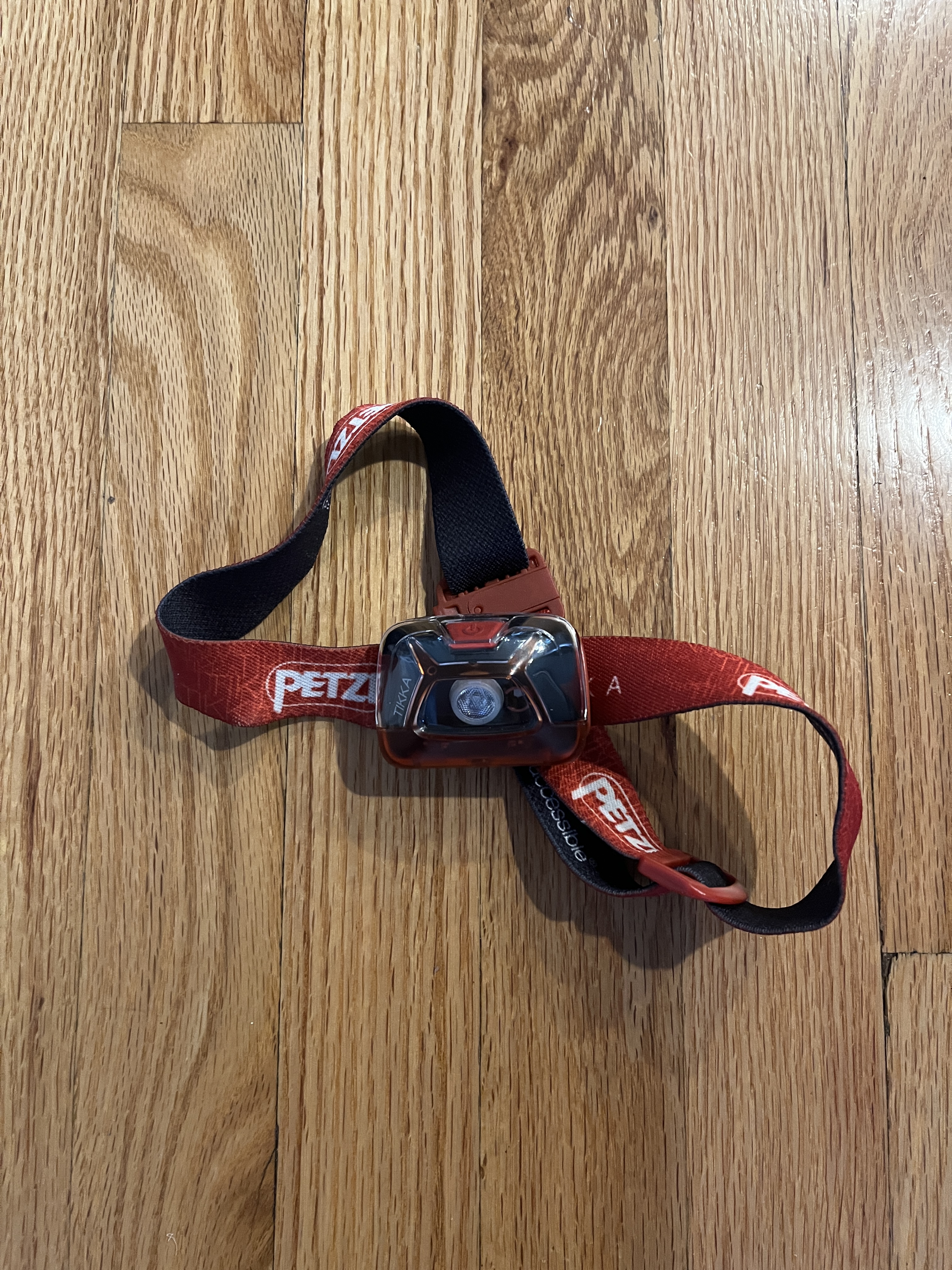
You’ll need a headlamp. There are more powerful models, but I use this Petzl. It’s bright enough to get me through trails in the woods in full dark, and more importantly is rechargeable so I’m not constantly cycling through batteries – here’s the battery by the way. I wish it charged via USB-C rather than micro-USB, but that’s about my only complaint.

RAIN

Rain Coat

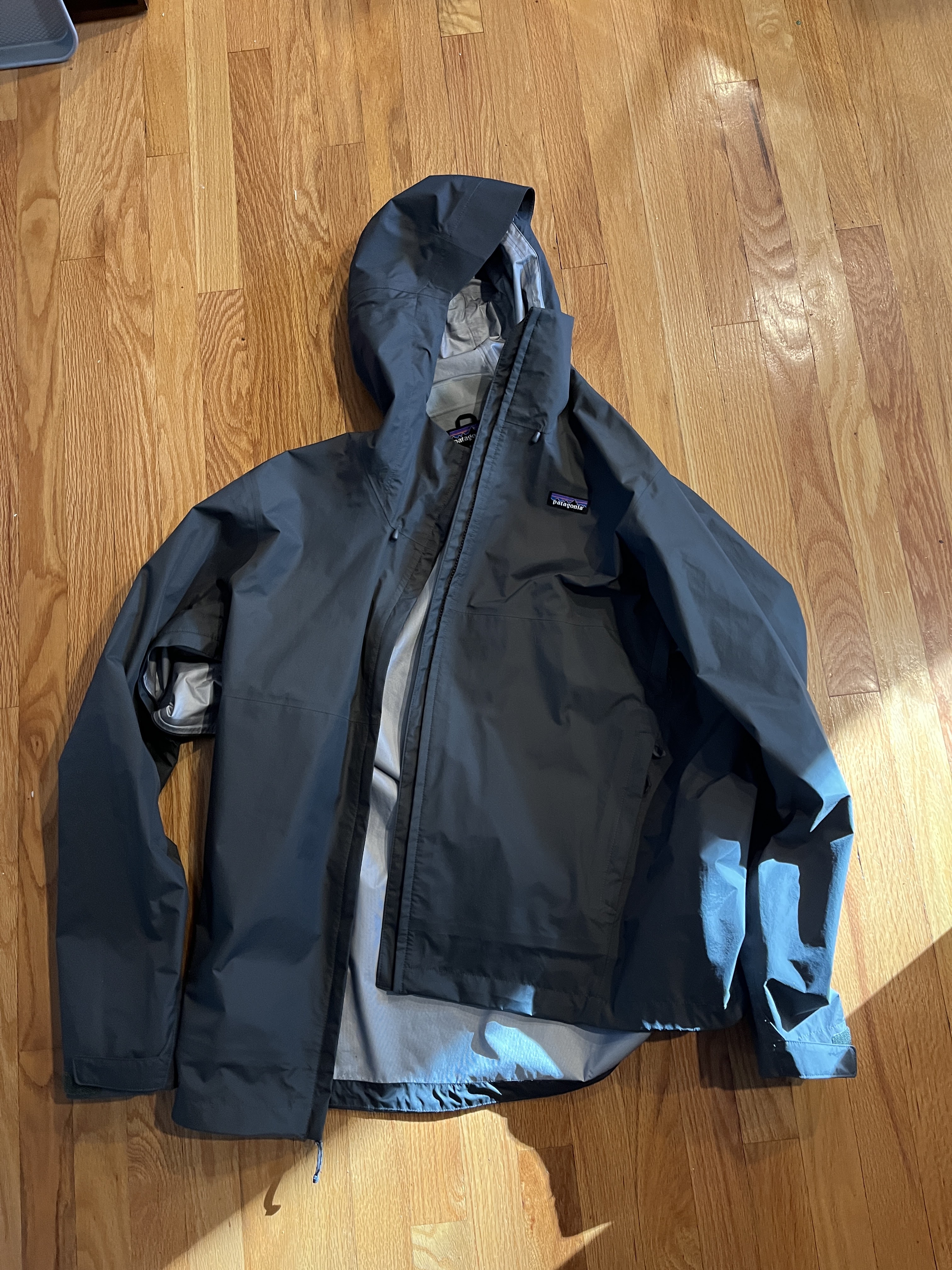
You may read that and think, “duh.” But I was literally dumb enough to go out for months wearing an old raincoat where the water repellent was peeling off like the paint on a hundred year old house. I finally replaced it with a Patagonia Torrentshell and that’s been excellent. More waterproof than my old one, more breathable and it has big side vents for when it’s warm out.

Rain Pants

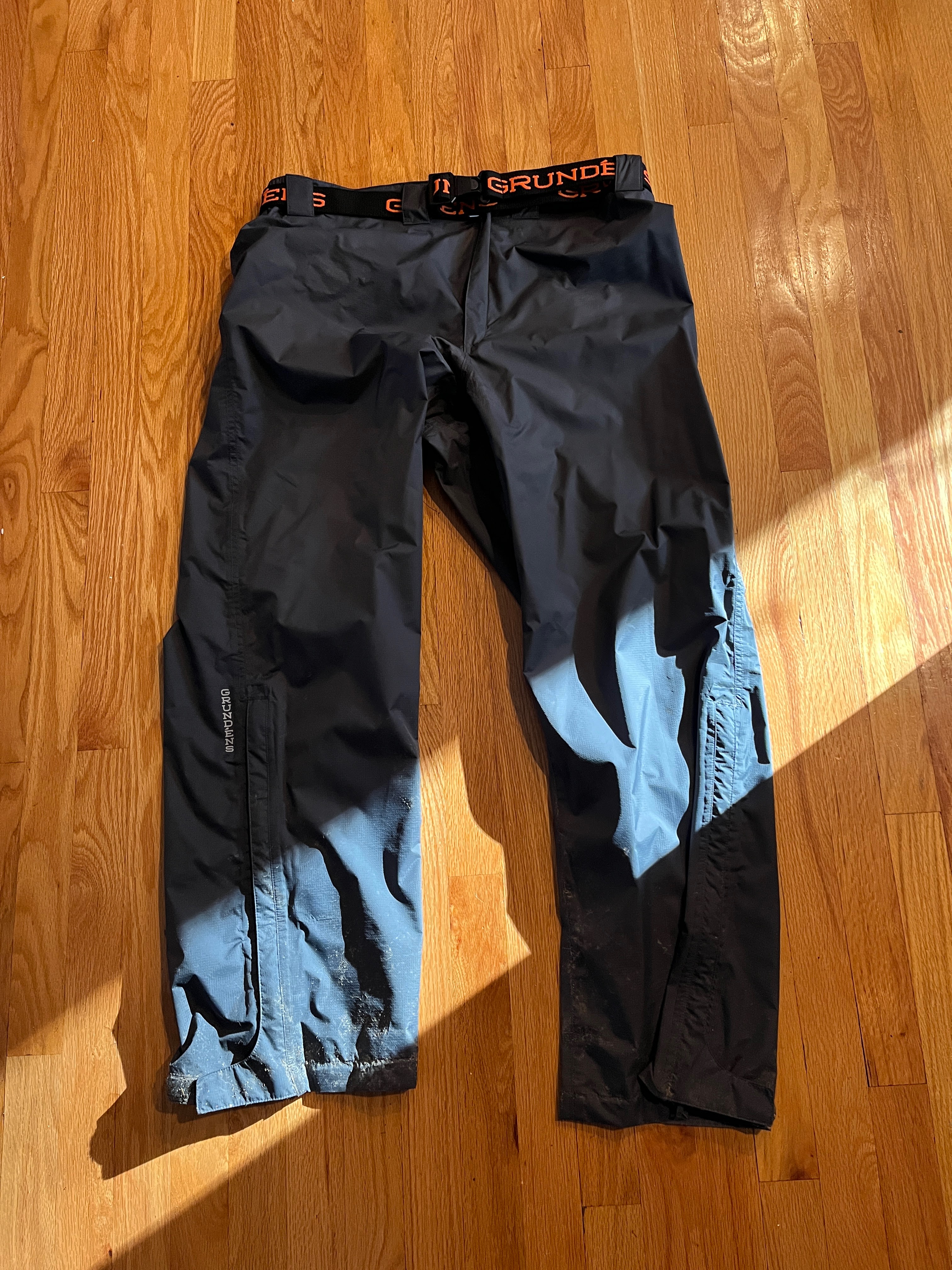
As I was telling coworkers this week, this was the biggest game changer for me. Even after upgrading my raincoat, in heavy rains I’d be dry up top but soaked below the waist before I even got down to the main road. To the point that my pants would get so waterlogged, my shoes would fill up with water and overflow. Eventually, with a big storm forecast to drop multiple inches of rain during my available window during the day, I went out and got rain pants – Grundens Trident. I wish they had side pockets, but otherwise they’re great and keep my legs and my feet dry.

Waterproof Footwear

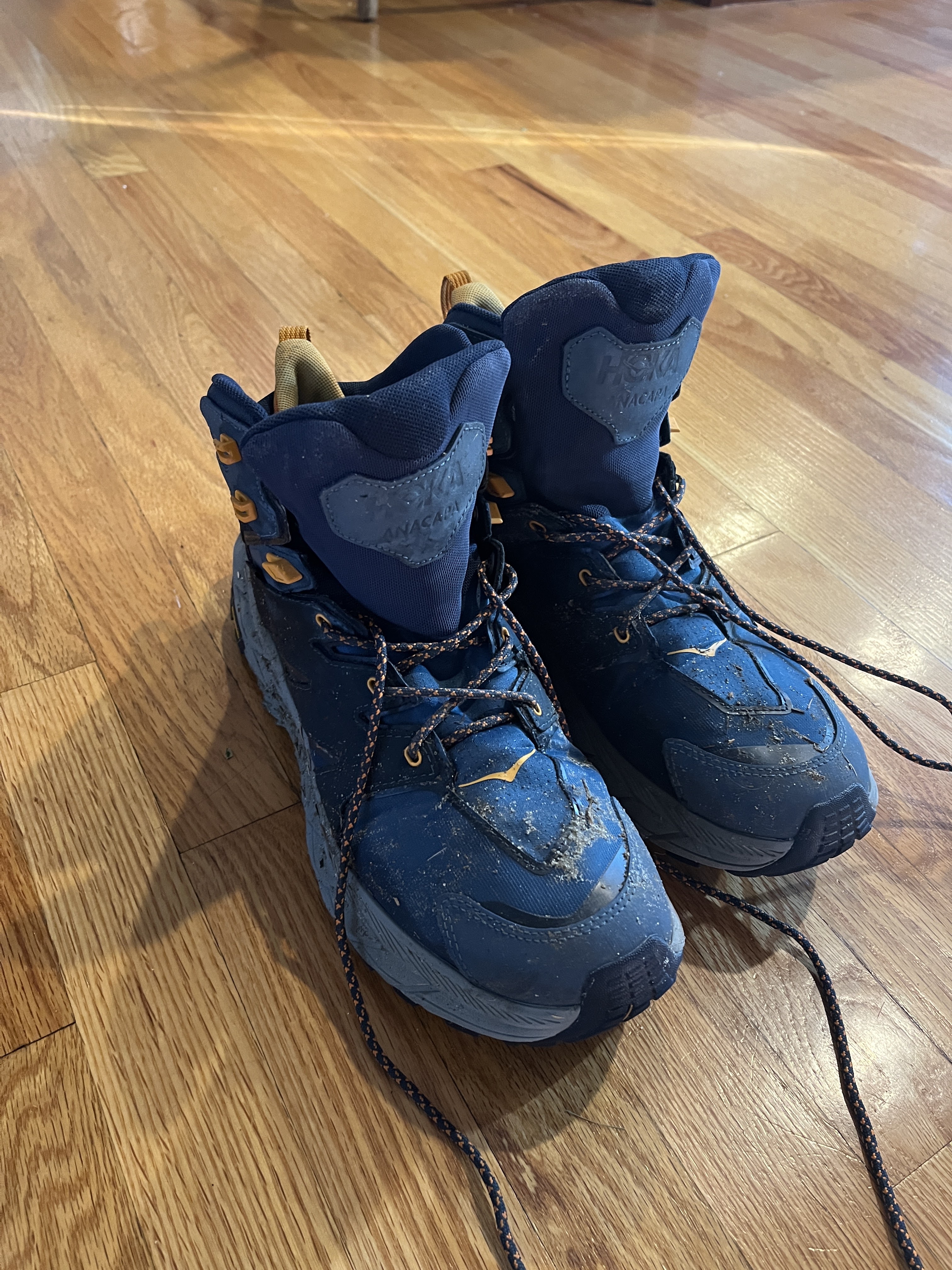
I could have gone the waterproof trail running shoe route, but instead I killed two birds with one stone and started incorporating my Hoka Anacapa hiking boots. They’re almost as lightweight as my regular running shoes, but they’re waterproof. Between the coat, pants and boots even in heavy rain I can stay 90-95% dry, which is a massive improvement over this time last year.

And it beats waiting two or three days waiting for regular sneakers to dry after they get soaked.

STORAGE

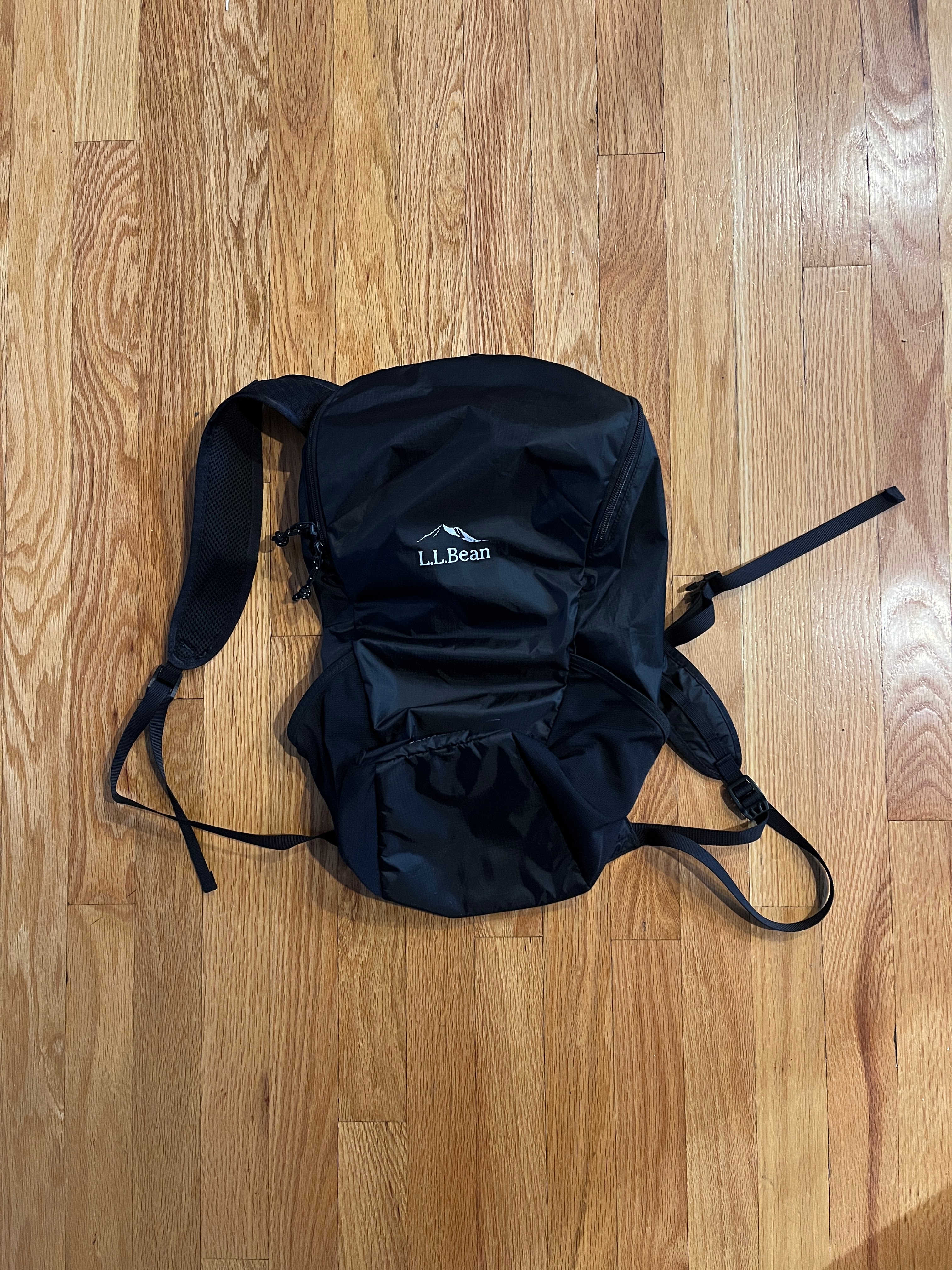
I don’t bring along a bag every walk, particularly those of shorter duration, but the more layers I have on or the more uncertain the weather is, the handier it is to have a bag – and more particularly something tiny and light that you don’t notice. This LL Bean bag is tiny, ultralight and cheap. I’ve used it to carry everything from discarded gloves to stripped outer layers to trailside trash to the beer I shotgunned trailside after completing my annual mileage goal. It’s perfect for what I need it to do.

ICE

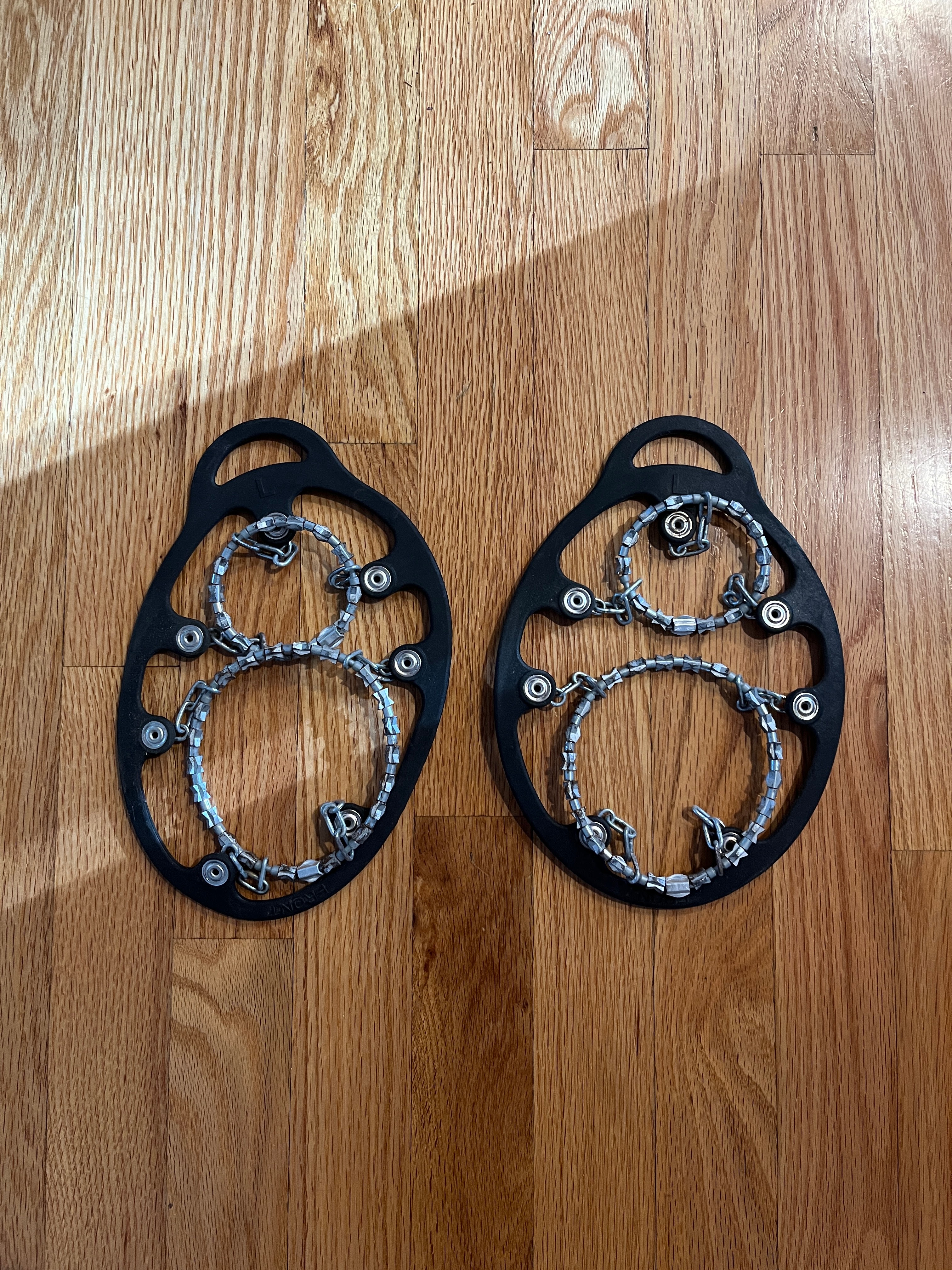
If you’re going to walk when there’s ice, you need cramp-ons. Just trust me on this. The Yaktrax are not only Wirecutter recommended, they were Mainer approved when I asked around. They’re a bit hard to get on while wearing gloves, but it’s not too difficult and it beats the hell out of falling.

SUN

Sunglasses

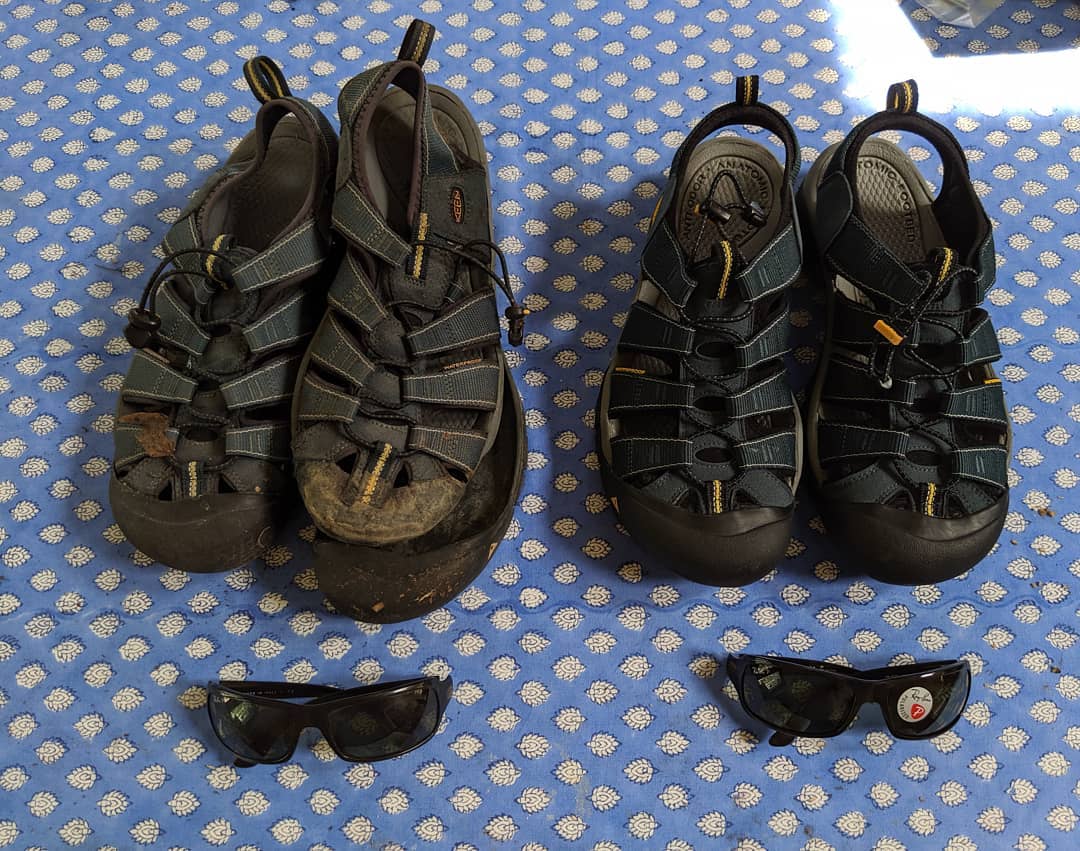
Obviously. I’ve had a pair of black black Ray-Bans for fifteen years or so, and when they broke I went out and bought exactly the same glasses – much to the chagrin of the more fashionable member of our household. So you probably don’t want what I have. Just make sure you have something to protect yourself.

Something that’s hopefully more fashionable than what I have.

Sunscreen

I’m no expert on this, but as I saw a video in which a guy had to have part of his ear removed because he didn’t wear it, it’s probably a good idea. If you’re going to be anywhere near the water, make sure to pick something reef safe.

WARM/HOT

Hat

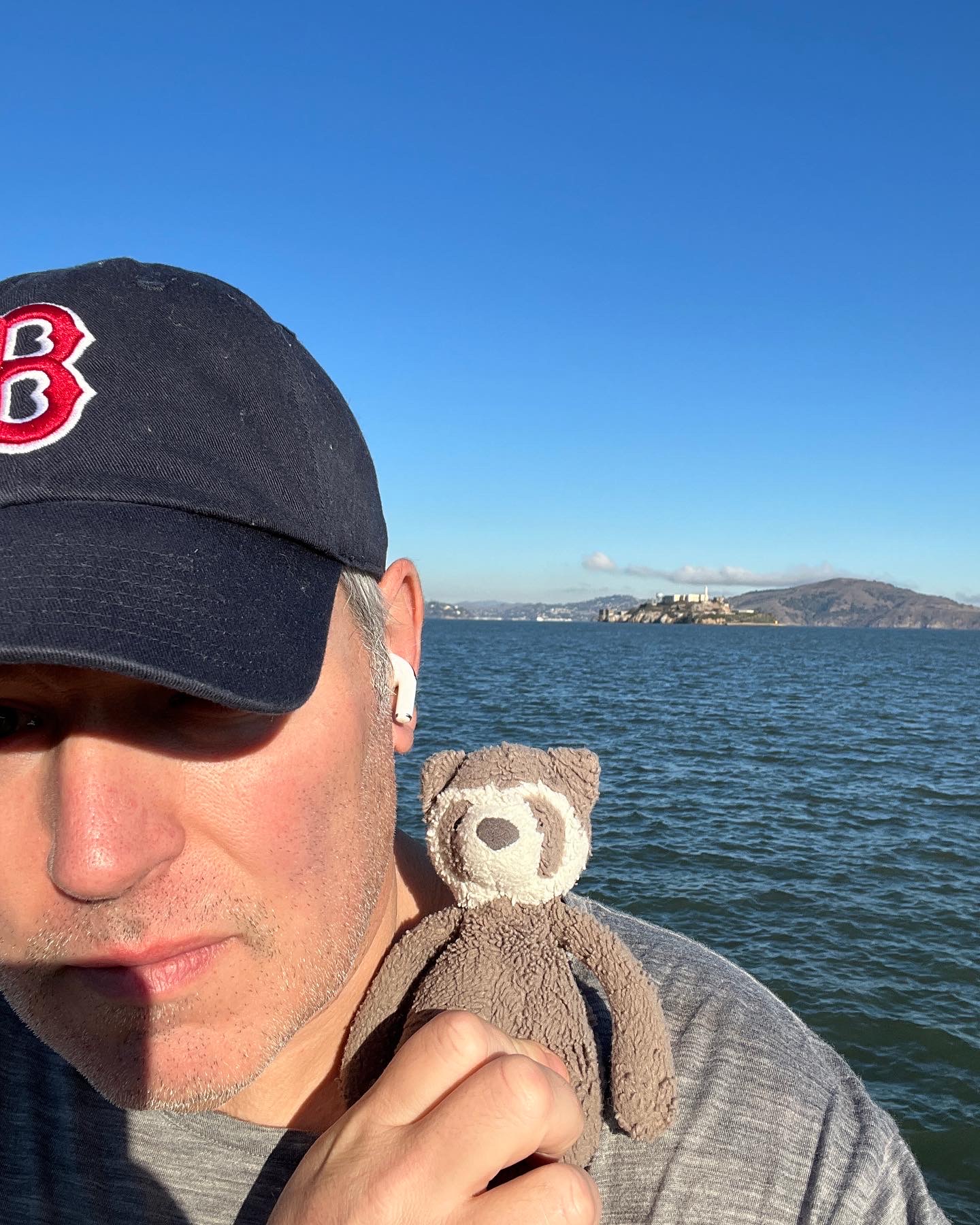
I wear my Sox hat, obviously, and you should wear one too. But anything that keeps the sun off your head and shades your eyes a bit will do. Bonus points if it shades your ears, otherwise sunscreen (see above).

Boxers

Don’t worry, I’m not going to put up pictures of my underwear. I used to wear cotton oxford cloth boxers, but cotton being cotton I’ve now swapped them out for these merino boxers from Woolx. They’re great; breathable, wick moisture and are comfortable.

Shorts

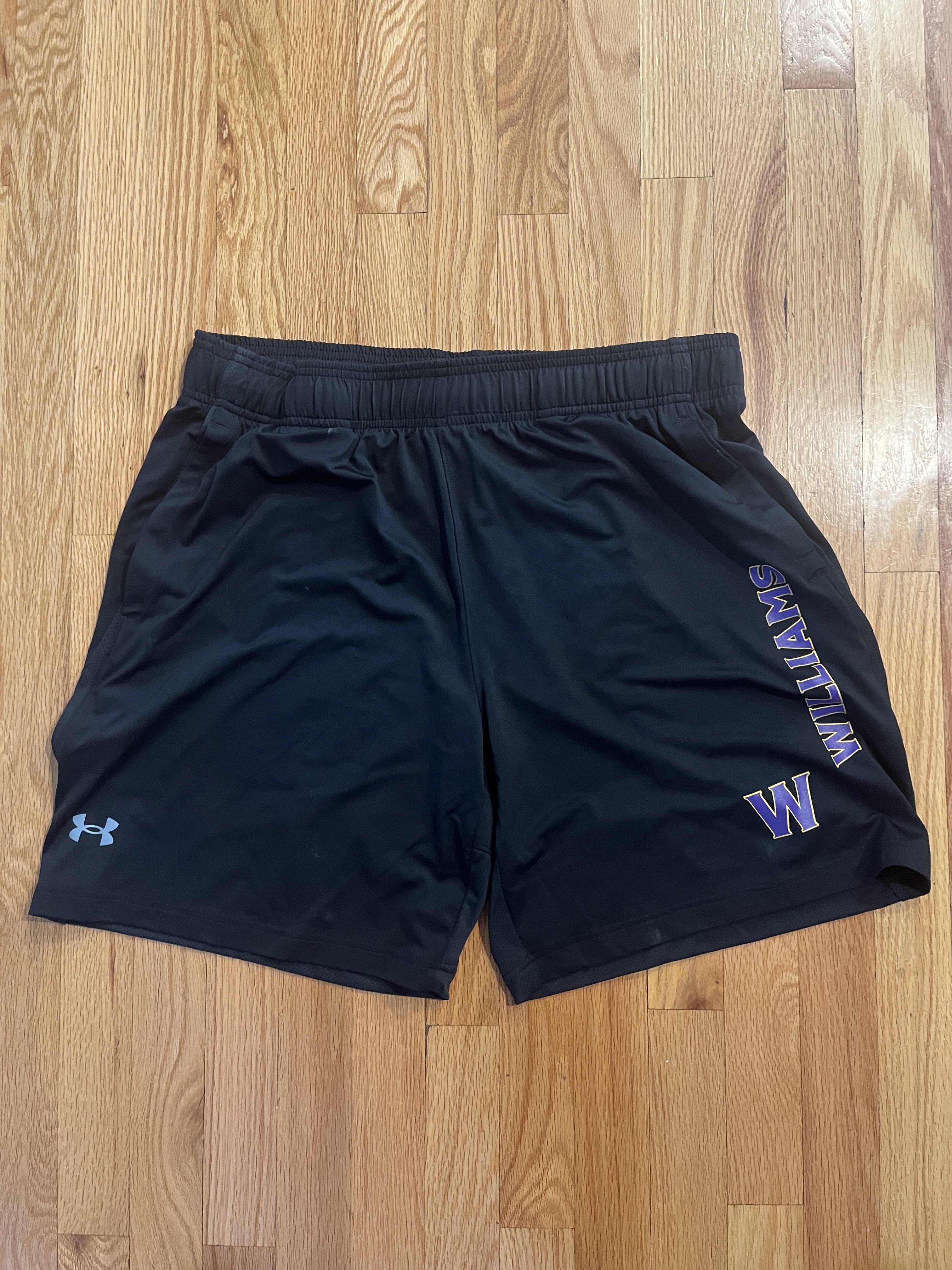
My shorts are a set of ordinary black Nike nylon shorts and an equivalent Under Armour set with a Williams logo on it. If you’re an Eph, you can get the latter set here. But it doesn’t really matter; shorts are not something I’ve felt a need to invest much in.

T-shirt

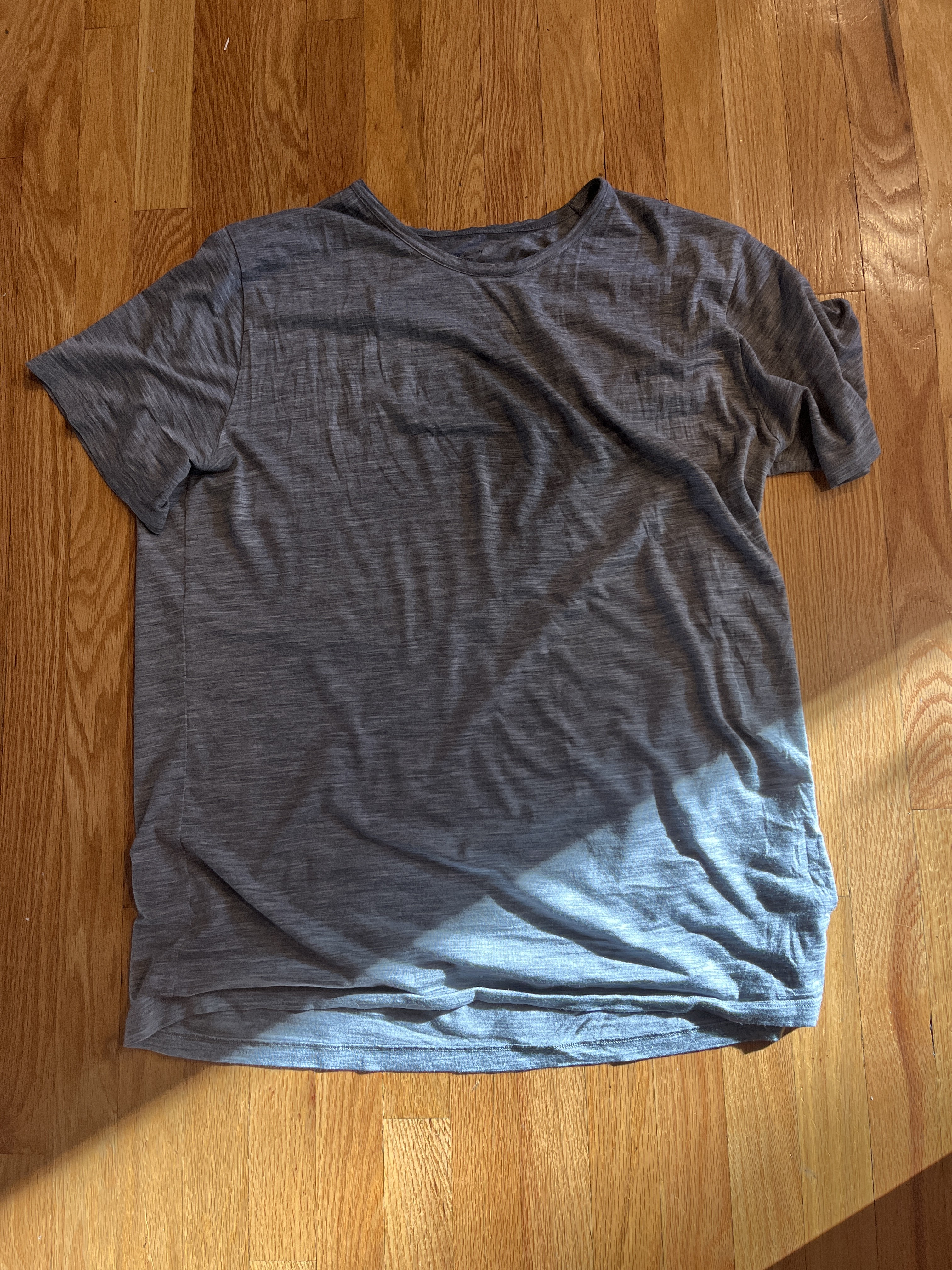
I wanted to solve two problems with my t-shirts. First, I was tired of picking out different shirts every day, so I wanted all of my t-shirts to be exactly the same (you might notice a theme here). Second, I wanted them to be merino wool rather than cotton so they wouldn’t chill me in winter. After evaluating shirts from Wool & Prince, Woolx and Taylor Stitch I eventually settled on the latter because they’re slightly cheaper and because they’re almost entirely merino, as opposed to the others which incorporate more synthetics.

The wool t-shirts are fantastic in cooler temps, and while I sweat through them in summer, that’s no different from cotton. I wear these Merino Tees, then, year round and just rotate through an identical set picking up a new, identical fresh one every day.

Socks

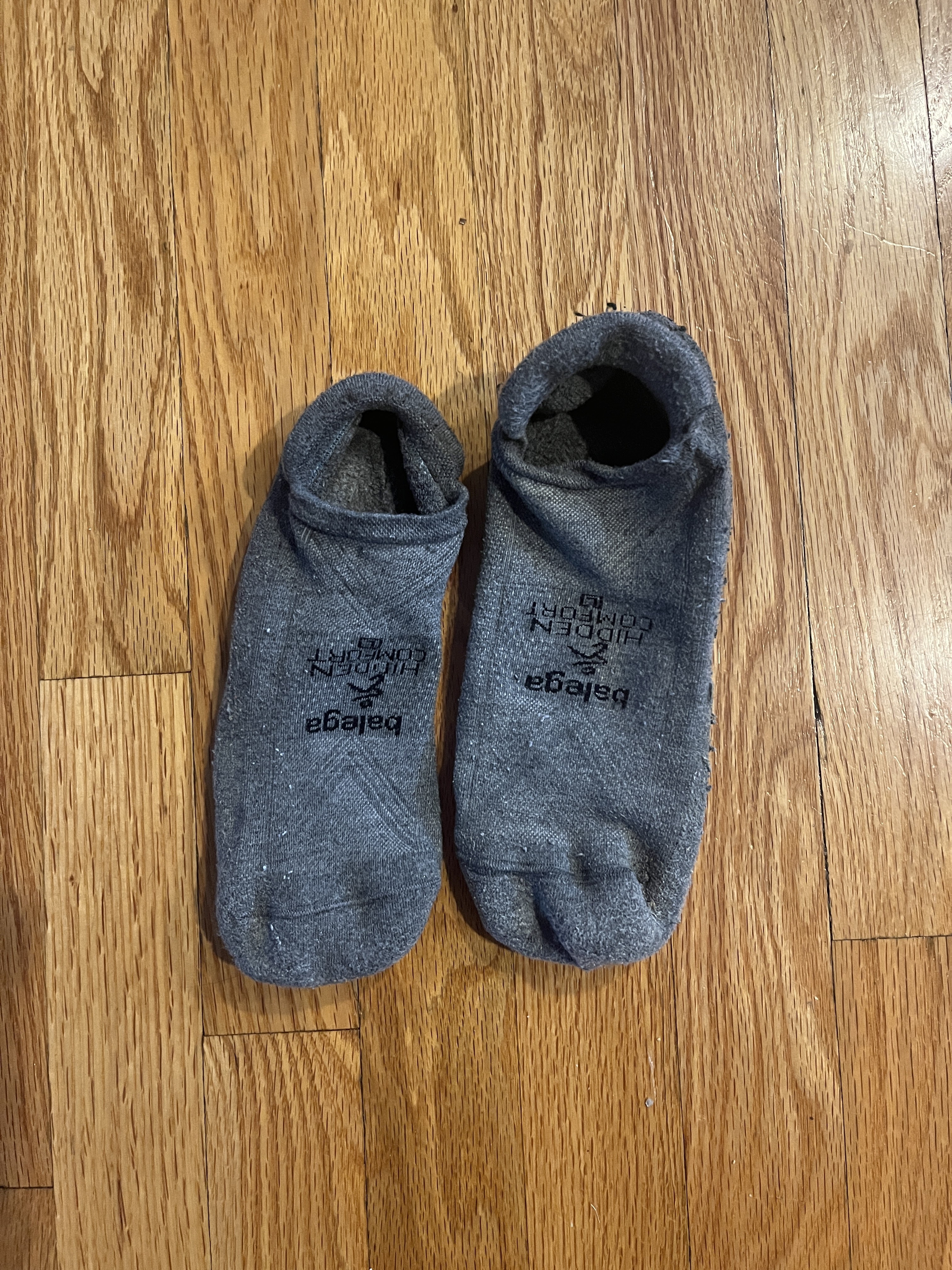
As I explained it to someone a couple of weeks ago, these Balegas are socks for people who hate socks. They’re easy on, easy off, they’re low profile enough you forget that you have them on and they’re excellent at resisting foot stink. Like the t-shirts, I’ve got a bunch of these and just cycle through them.

Sneakers

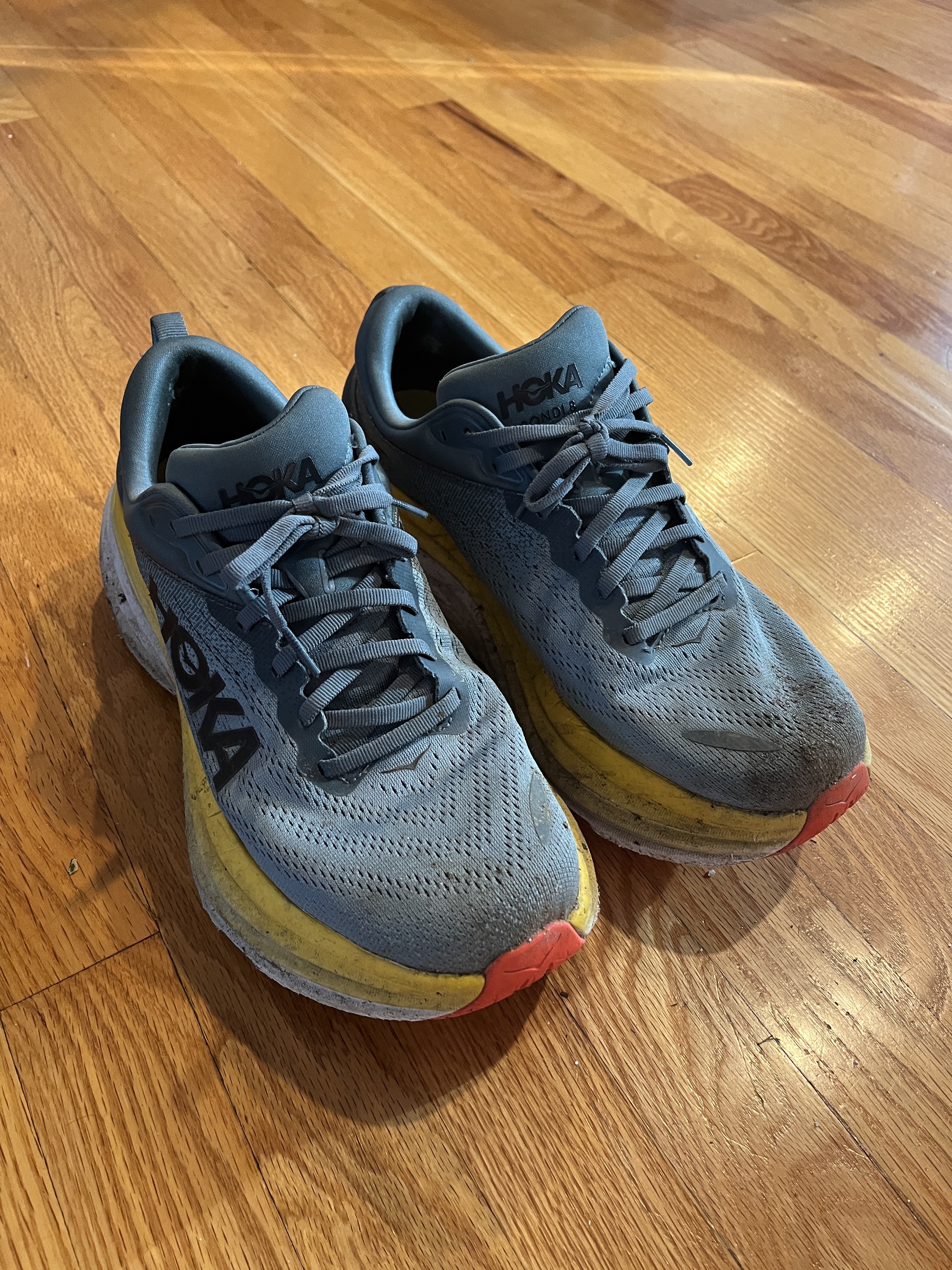
I’ve already talked about this a number of times, but the tl;dr is that I’d never heard of Hoka’s before reading a recommendation for them on a Fleet Feet review. I’m now on my sixth pair of Bondis. If you’re looking for a heavily cushioned shoe, and in my opinion you should be, you won’t do any better.

COOL

Glove Liners

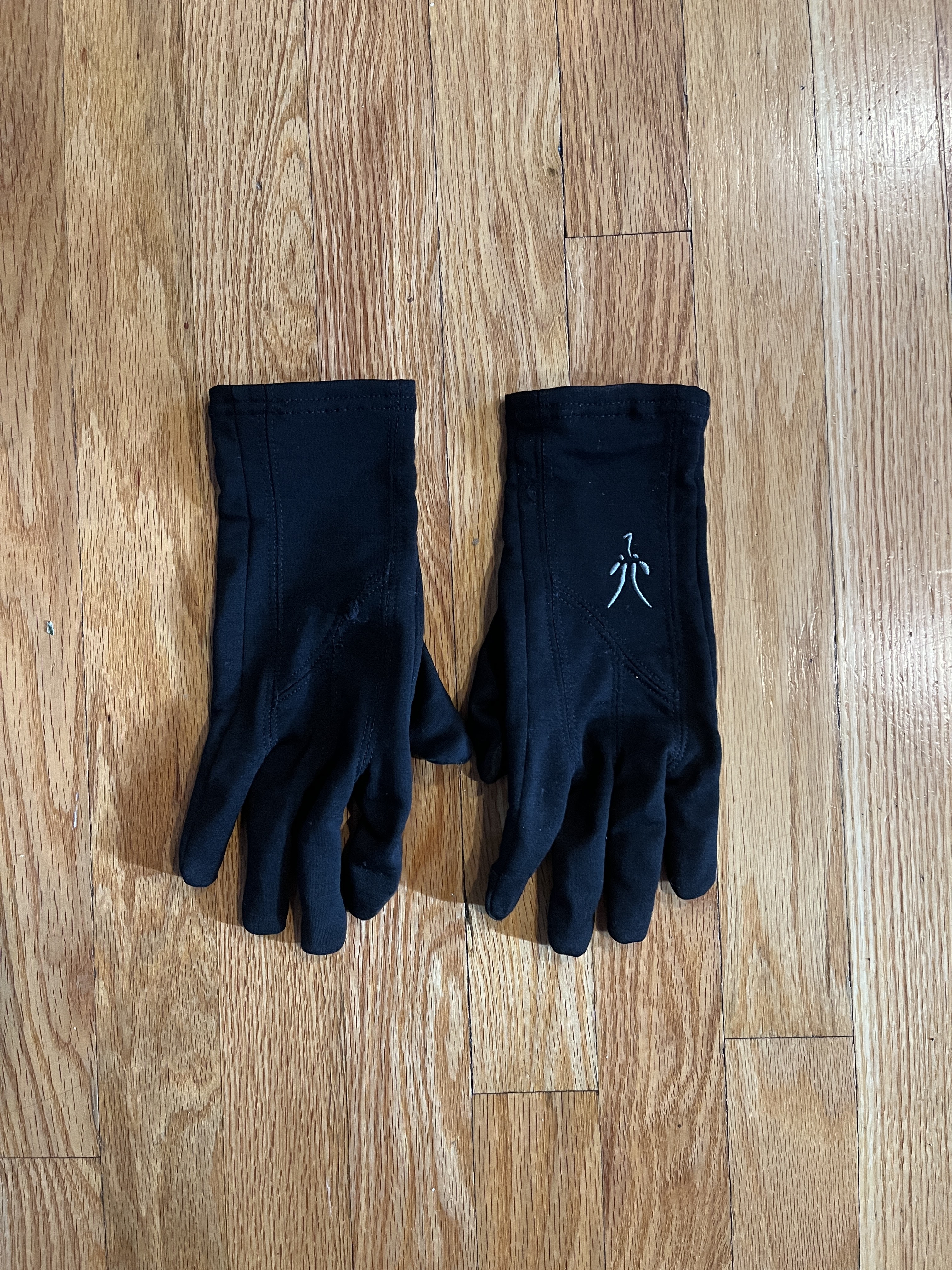
When I started out walking, and it was cool but not cold enough to wear my ski gloves, I tried to find something that worked. I tried my work gloves, as one example, but those either had holes in them or the insulated set proved to be too warm. Eventually I ended up getting a set of Ibex merino glove liners. These killed several birds with one stone: first, they provide enough warmth to keep my hands mostly warm for cooler temps. Second, they serve as replacement liners for my ski gloves which are so old the liners have worn out. Lastly, in both scenarios, they have touchpad fingers which allow me to use the touchscreen on my phone without completely taking off my gloves – which is huge in the winter.

Hat

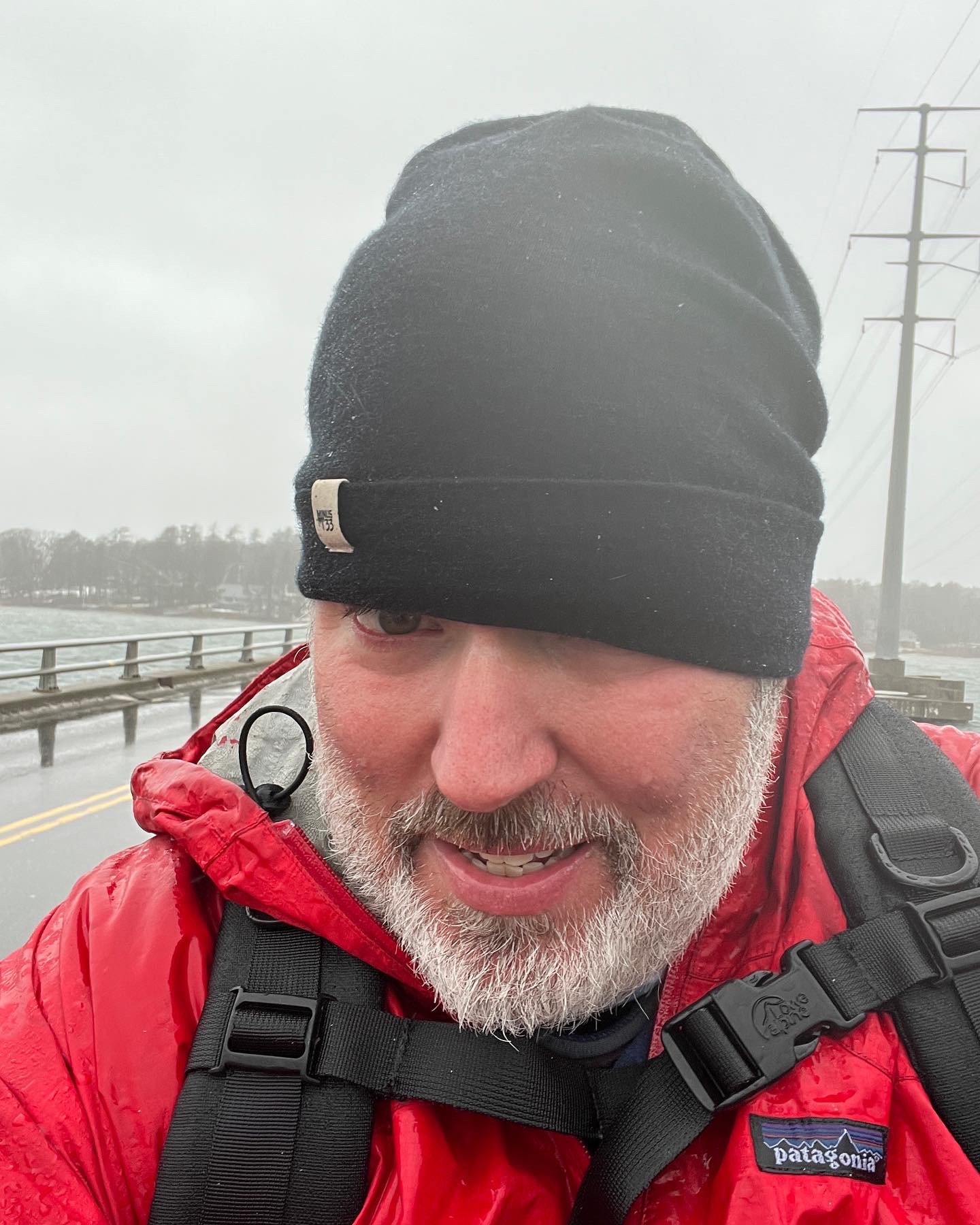
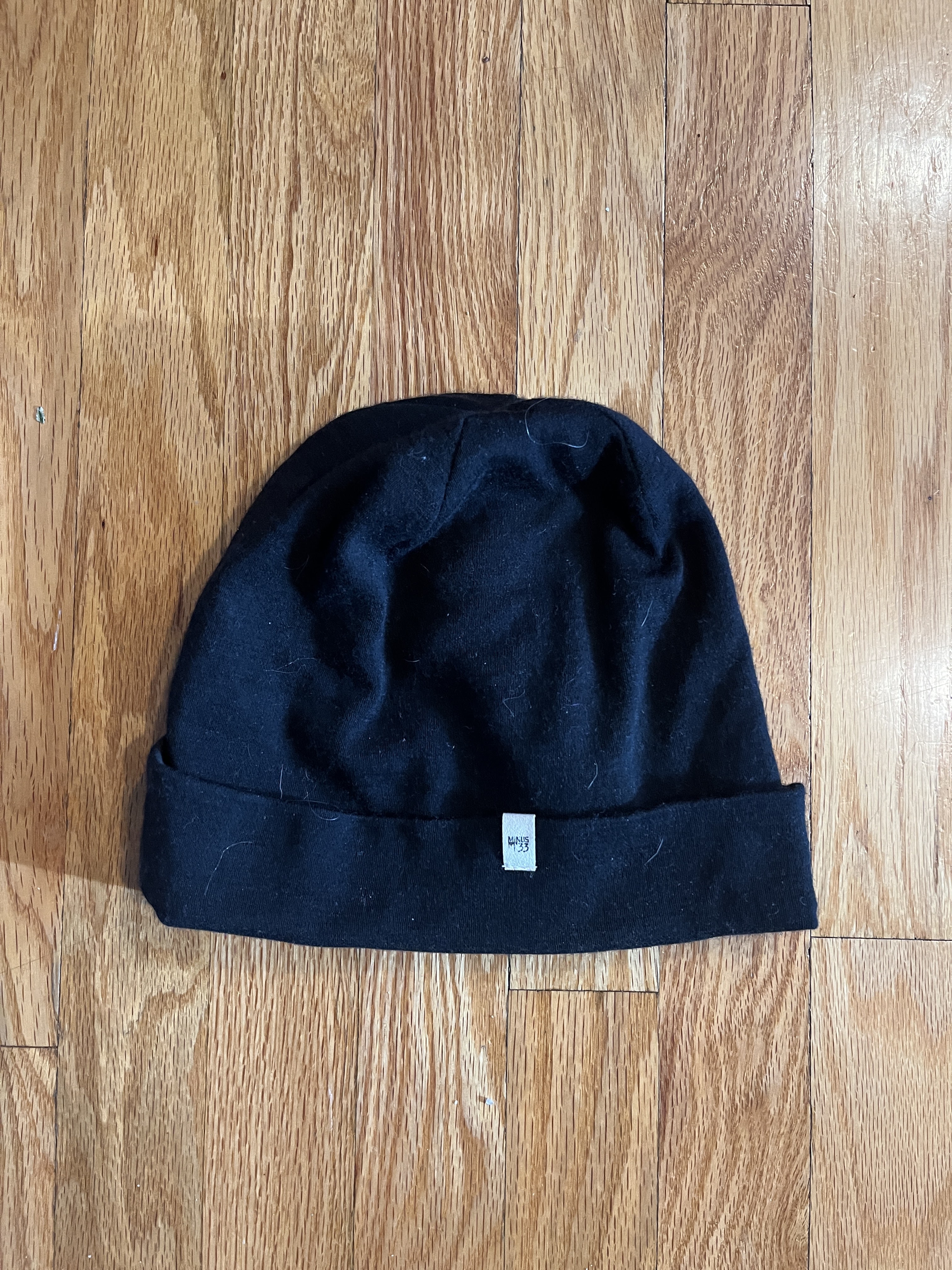
When I started out, I just wore whatever winter hats I had available – and that will work. But if you’re putting in a lot of mileage, and sweating, you might find that your forehead gets irritated and even breaks out in some light acne. After reading a recommendation online, I switched to this Minus33 100% merino hat, partly on the theory that its antimicrobial nature would be better than polyester alternatives but mostly because I was already sold on merino. This hat is soft and warm, and perfect for all but the coldest temps.

Vest

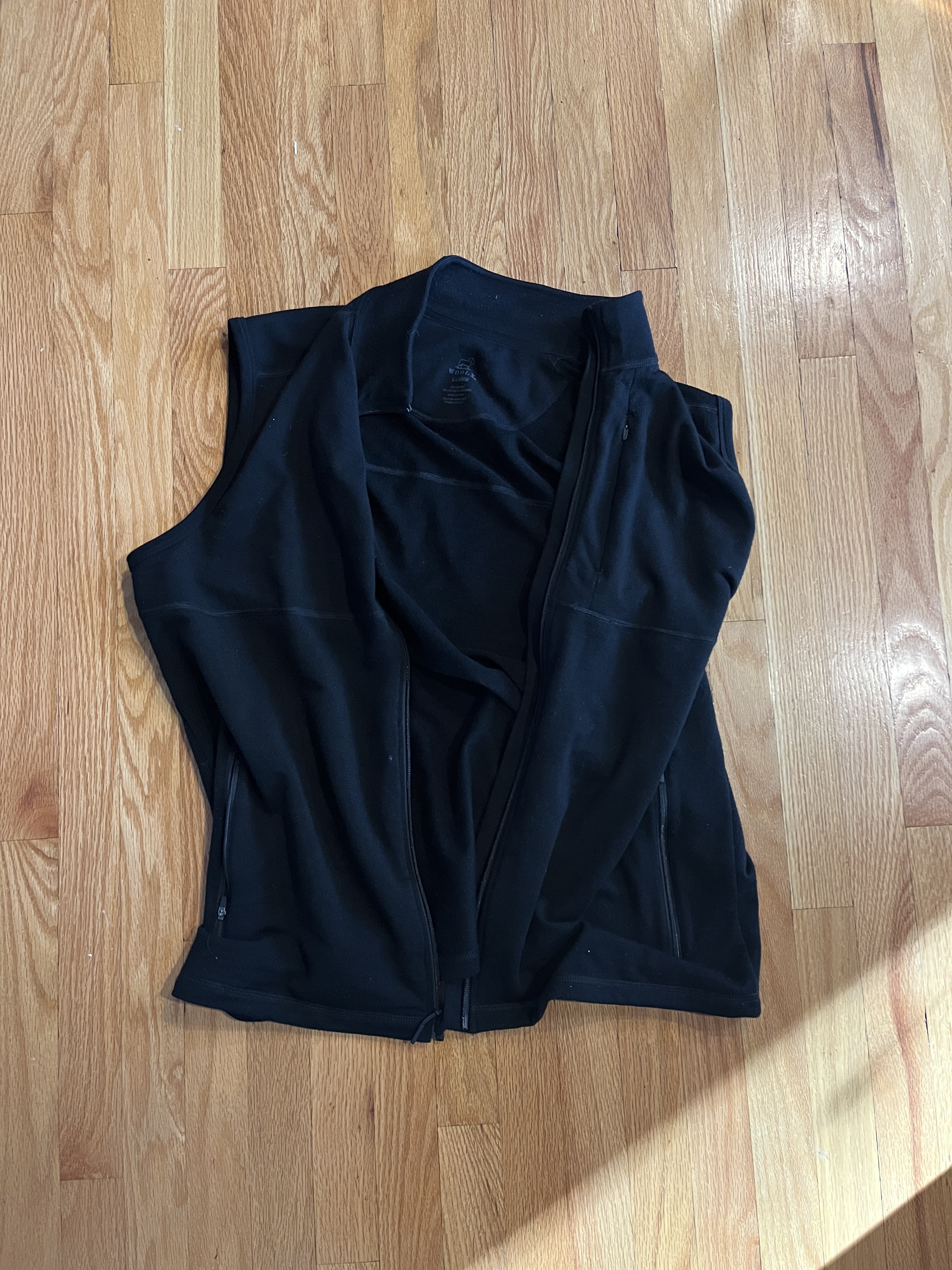
Out of all cold weather clothing, I probably wear a vest the most. Indoors, outdoors, whether it’s over a t-shirt or as an additional layer under a jacket or on top of my 1/4 zip, I wear a vest all the time. For years that was an Ibex, and their Shak vests are fantastic, but having had luck with their their hoodies and preferring the lower cost, I got this Woolx vest when I needed a new one. It does exactly what I need it to do, and is exceptionally lightweight.

1/4 Zip

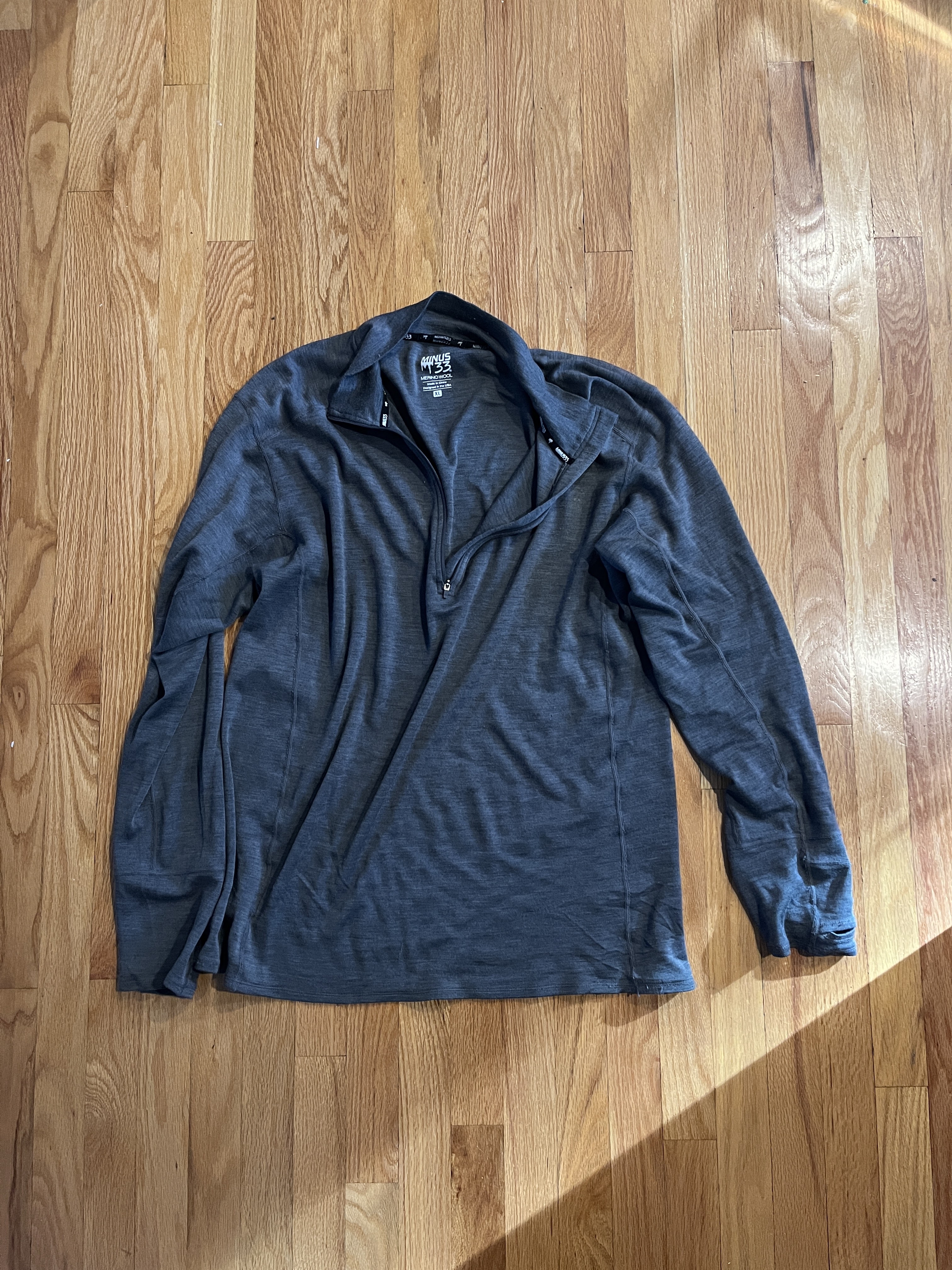
If it’s not windy, the Minus33 1/4 zip is an excellent layer on top of my t-shirts. I’d never had a 1/4 zip until Kate got me one last Christmas, but they’re hugely versatile. It provides lightweight warmth, even in passing showers, and if you get too hot while you’re out, you can unzip the top, roll up your sleeves and be perfectly comfortable.

Lightweight Hoodie

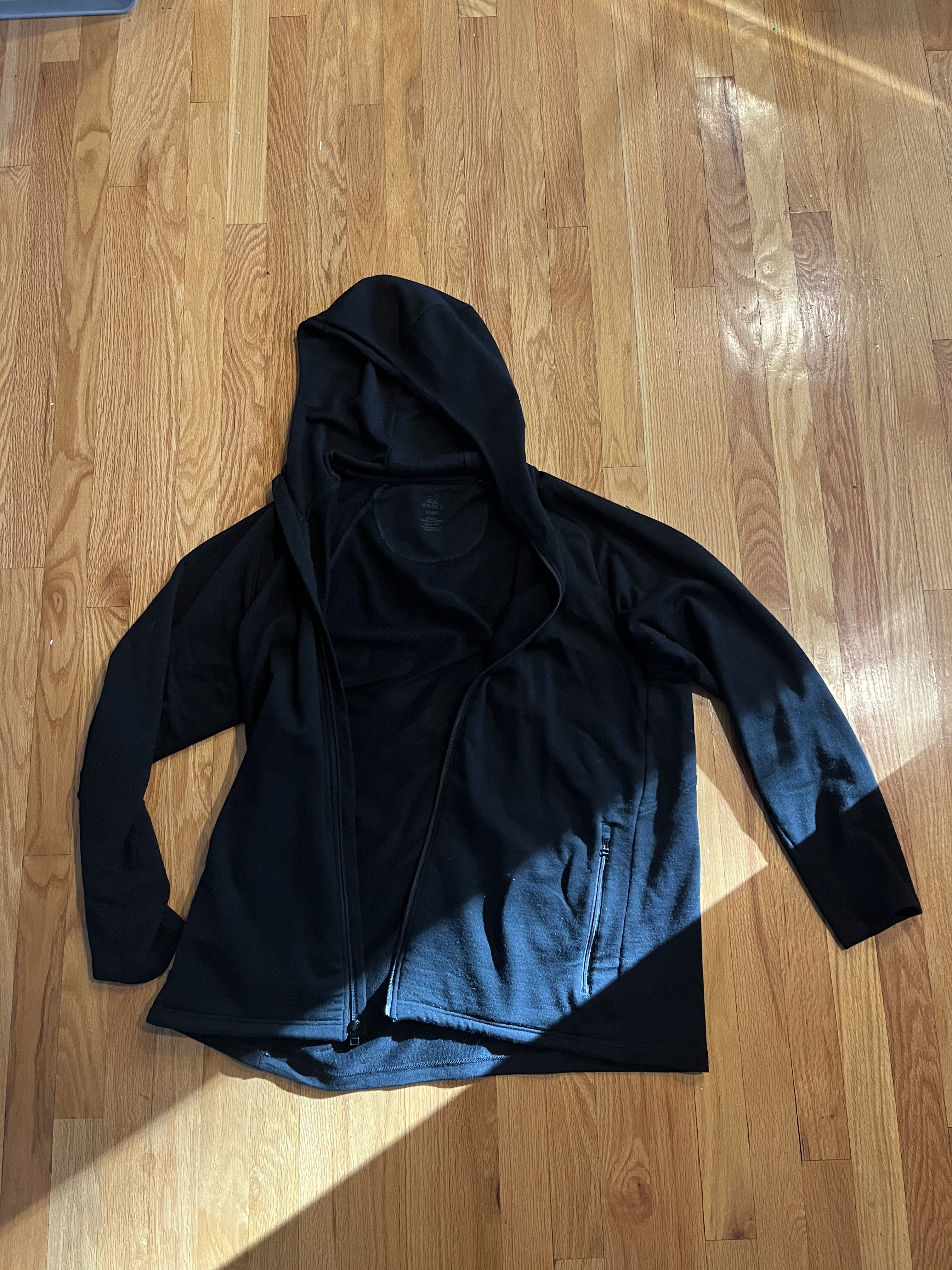
If it’s a little toward the cooler end of the spectrum, if there are higher winds or both it can be nice to have a layer slightly thicker than a 1/4 zip that has a hood you can pop up for colder spots. For this I have a Woolx Boulder hoodie. It’s lightweight enough to wear indoors in houses (like ours) that are cool – and it’s great for flying in – but it shines on walks that are cool but not cold, and as mentioned if the wind kicks up you can throw on the hood for an extra layer of warmth.

Pants

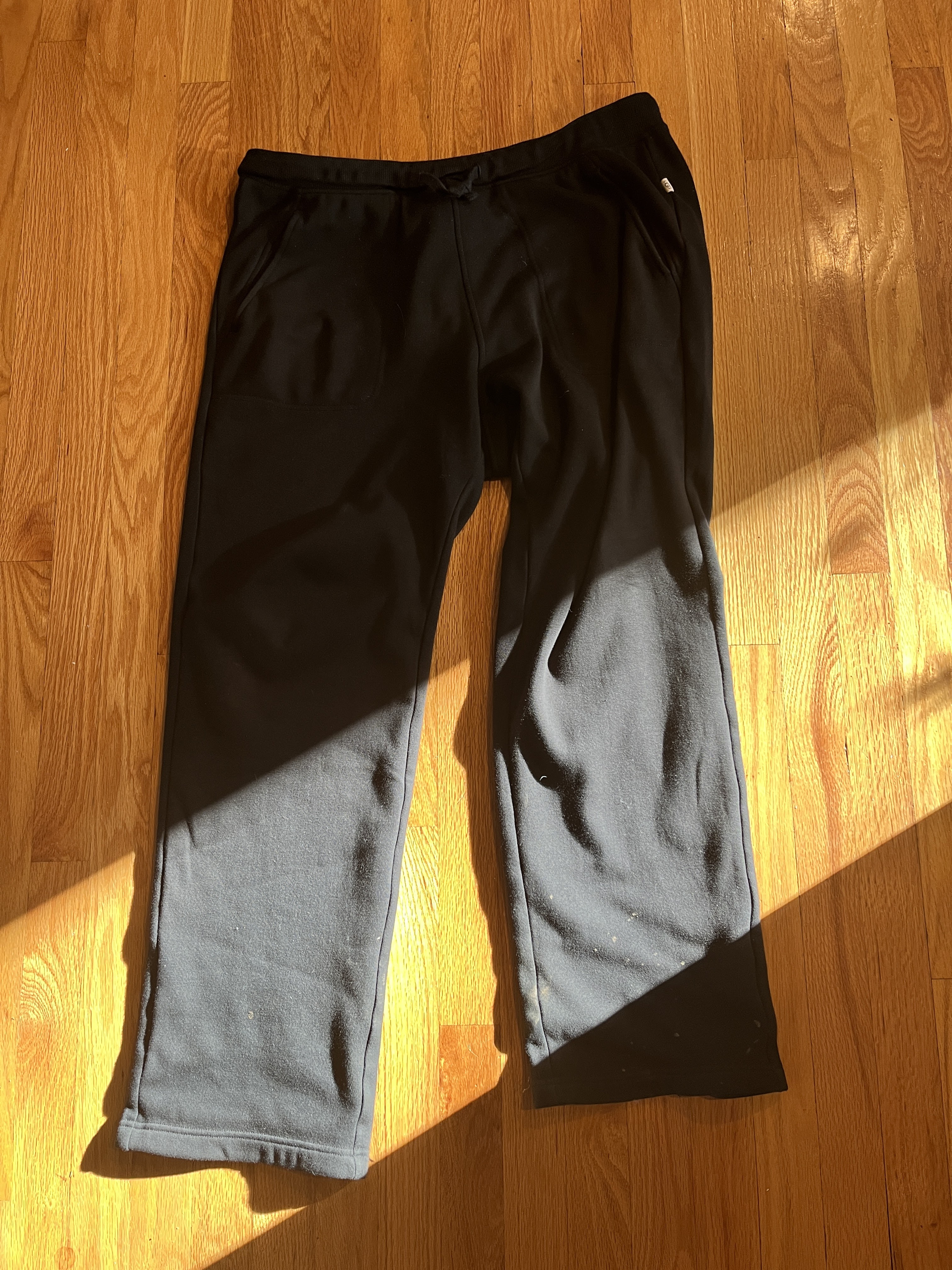
When people buy clothes for me it usually doesn’t go well, but early in the pandemic Kate got me a set of these “athleisure” UGG fleece pants – I know, I know – but they’re really excellent. They provide the warmth and ease of movement of sweatpants, without the irritating tight bottom cuffs that leave your ankles exposed in cold temperatures. Can’t say enough about them, and they’re great to fly in as well.

COLD

Buffs

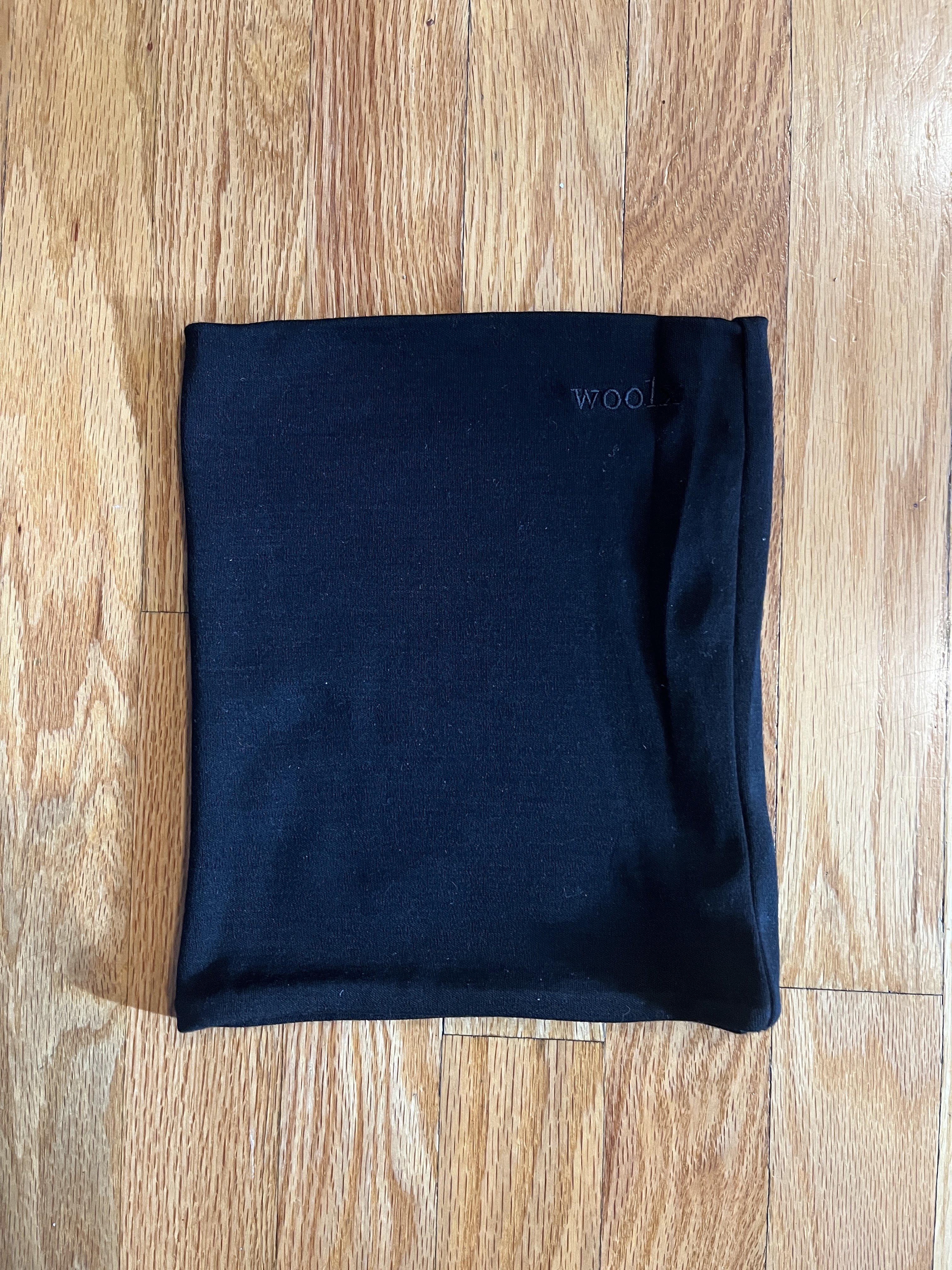
Surprisingly useful, buffs or neck gaiters are great for keeping your throat and neck warm, and optionally your face as well. I’ve got two: a synthetic one I got from my Flyathlon-running BFF Andrew Todd which is great for cool temperatures, and then a slightly thicker merino one from Woolx. Which one I choose depends on the outside temperature.

Gloves

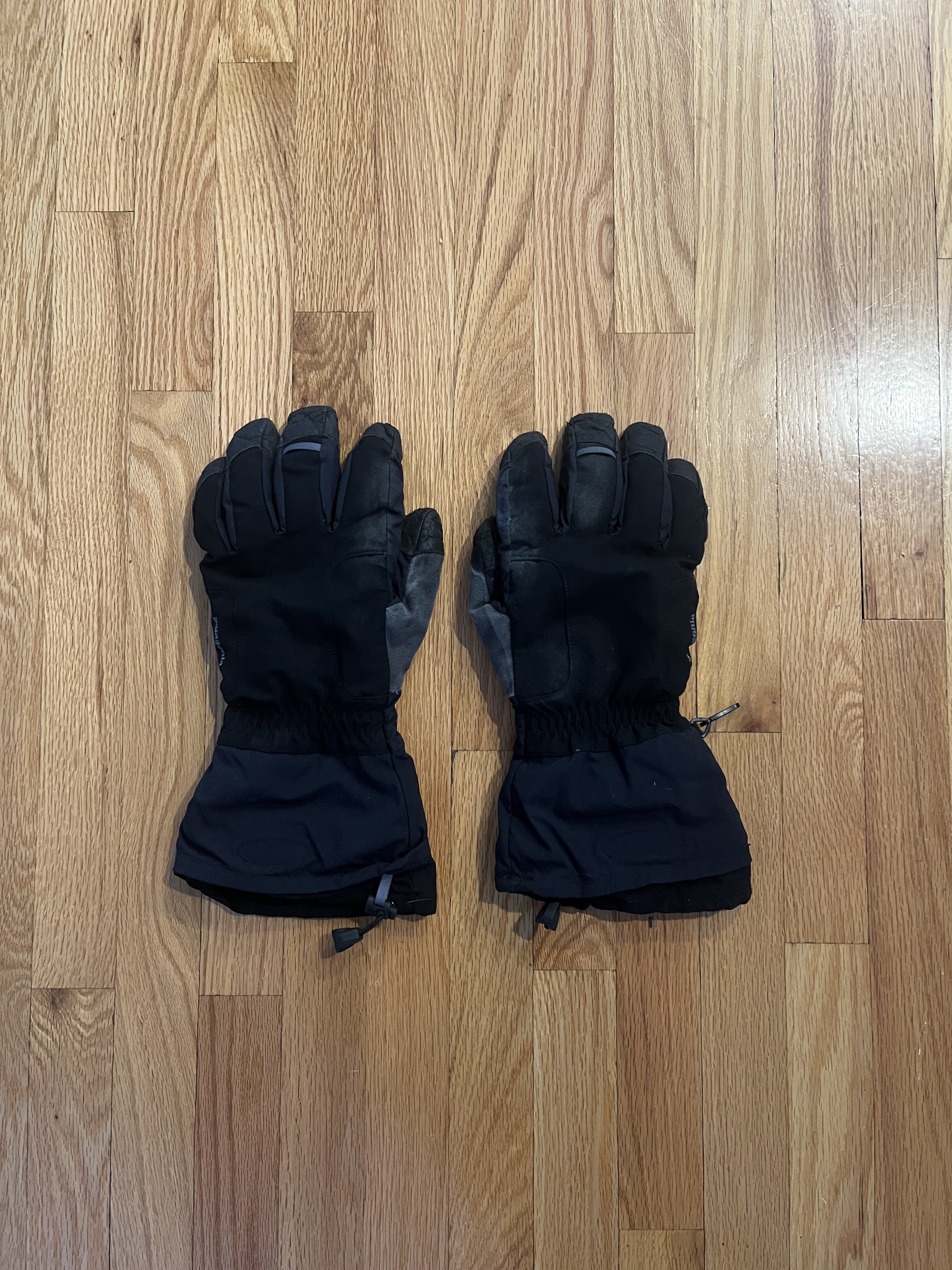
When it’s too cold for the glove liners alone, I bust out a very old set of Patagonia ski gloves. They wouldn’t be enough on their own, because as mentioned the liners are shot, but the combination of glove liner and outer gauntlet style glove is great for colder temps.

Heavyweight Hoodie

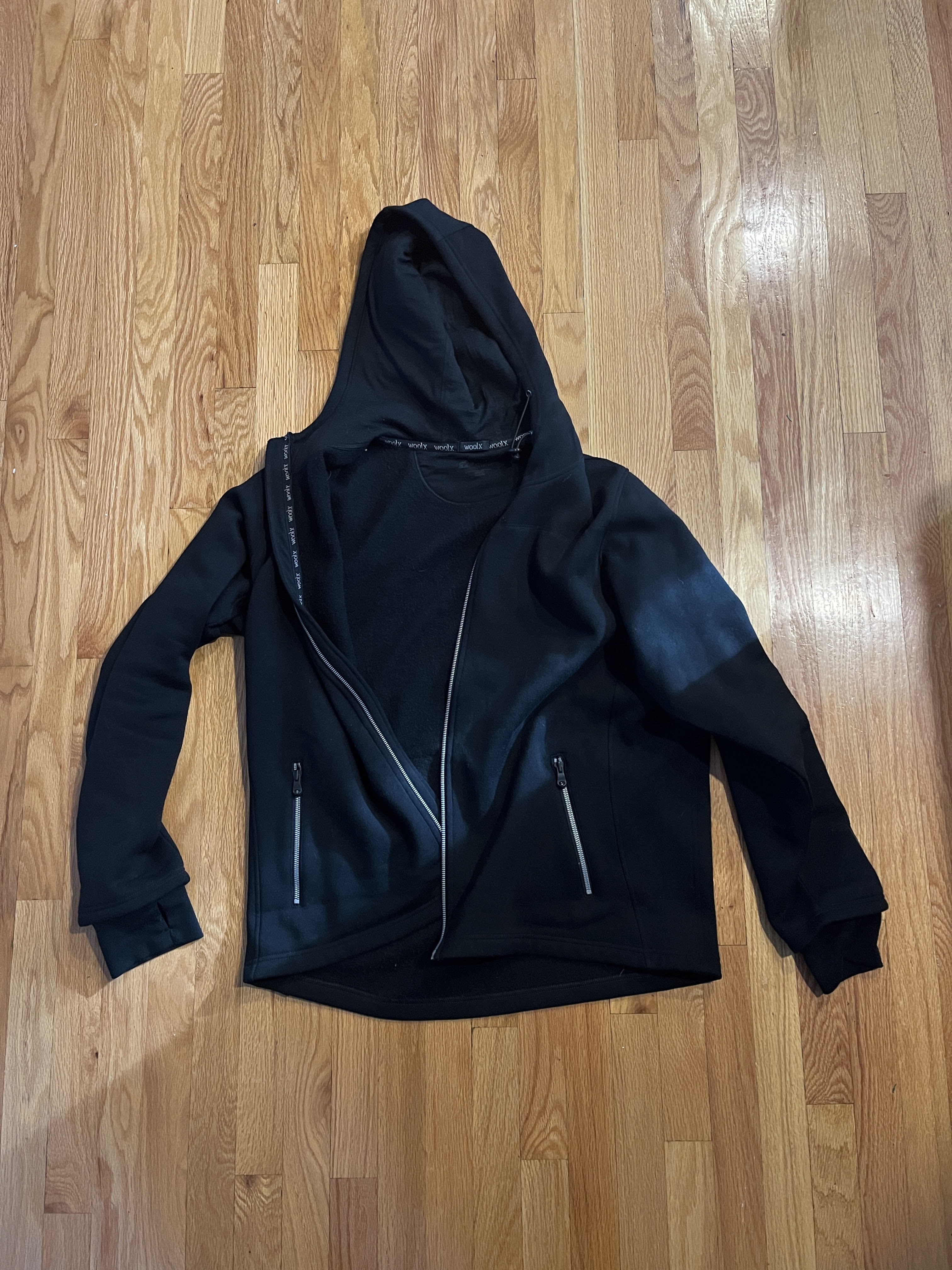
The midweight hoodie is great up to a point, but is thin enough that it can’t handle legitimately cold temperatures. For that, I swap in my heavyweight alternative, the Woolx Grizzly hoodie. It’s the heaviest weight merino hoodie I’ve found, and is perfect for colder temps either on its own at the higher end of the range, or with underlying base layers if it’s colder than that. This plus the 1/4 zip, for example, is great combination.

Soft Shell

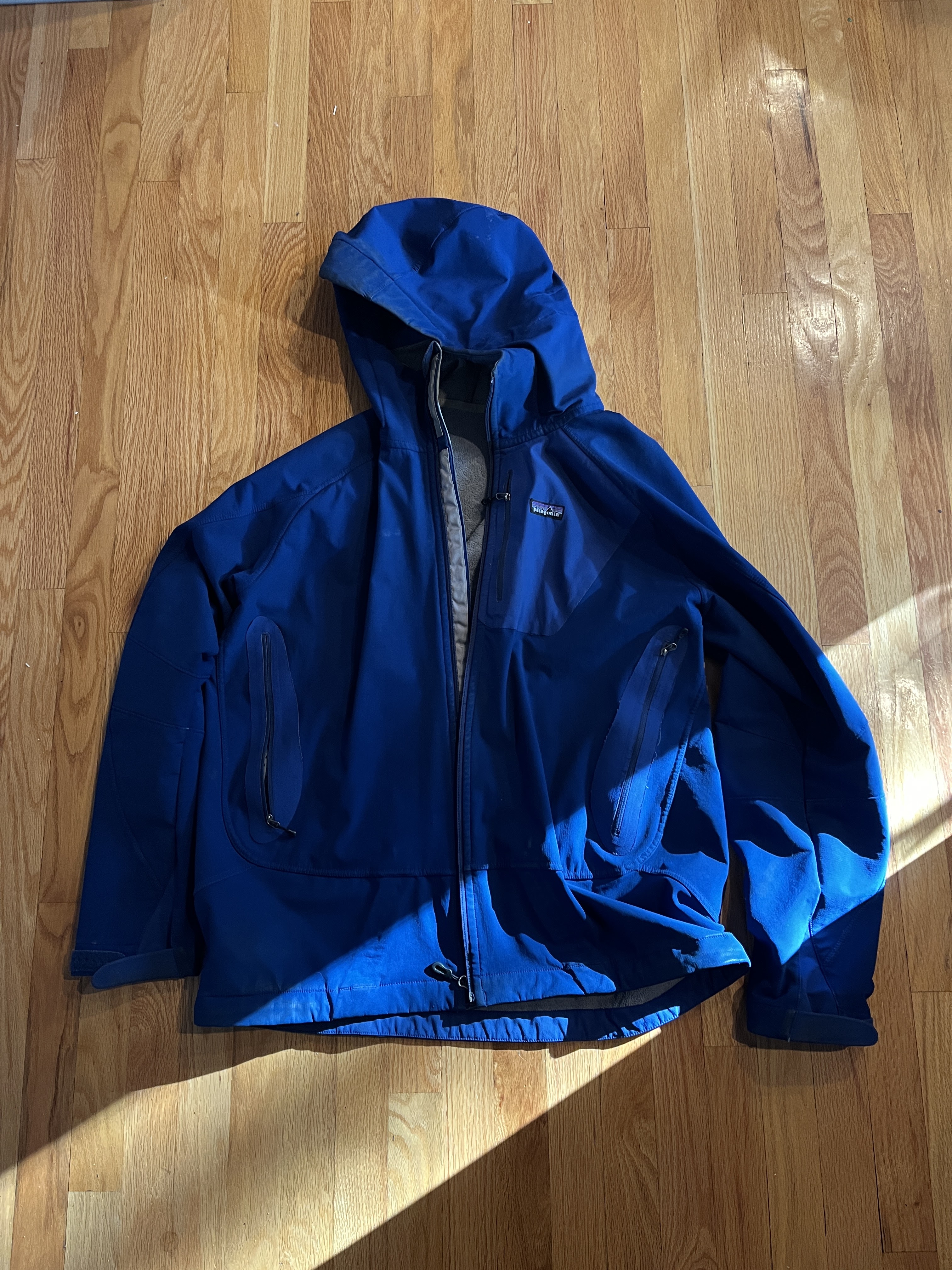
As mentioned at the top, my soft shell is an old Patagonia jacket – so old, in fact, that the label has rubbed off and I can’t tell which model. But basically the soft shell is a thin insulated layer with a mostly windproof and water resistant exterior. If there’s wind, rain or both, then, that makes the hoodie unsuitable, I throw on the soft shell. It gives me similar warmth but is better protection against wind, rain and snow.

Socks

Nothing fancy here; anything long and reasonably thick from Smartwool will do.

BLIZZARD / DEEP COLD

Hat

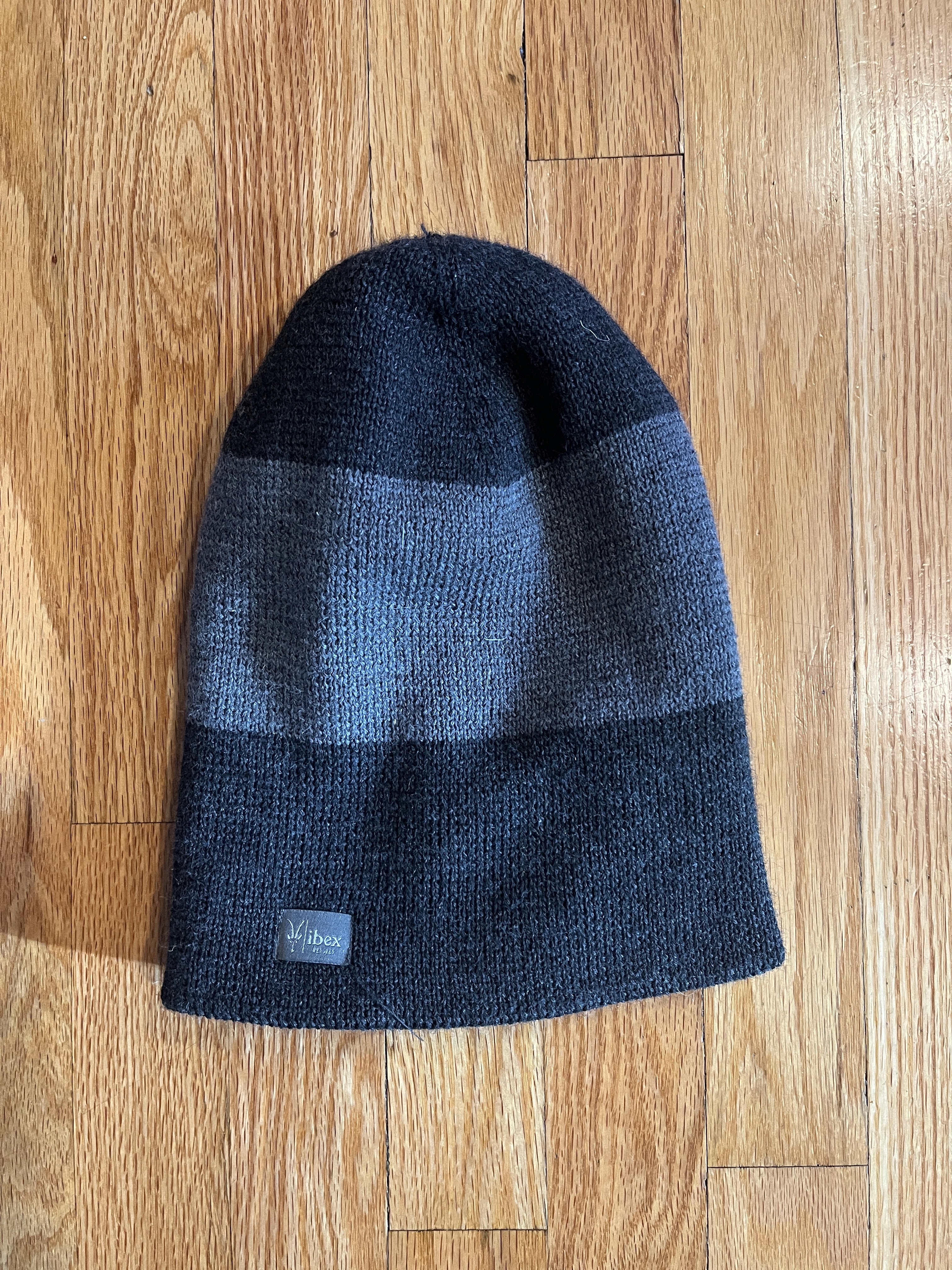
While the Minus33 hat I have above is excellent, it’s not all that heavyweight. When it’s really cold, then, I throw on a heavier weight merino hat from Ibex. It’s a little scratchier than the softer Minus33 hat, but a lot warmer for cold temperatures.

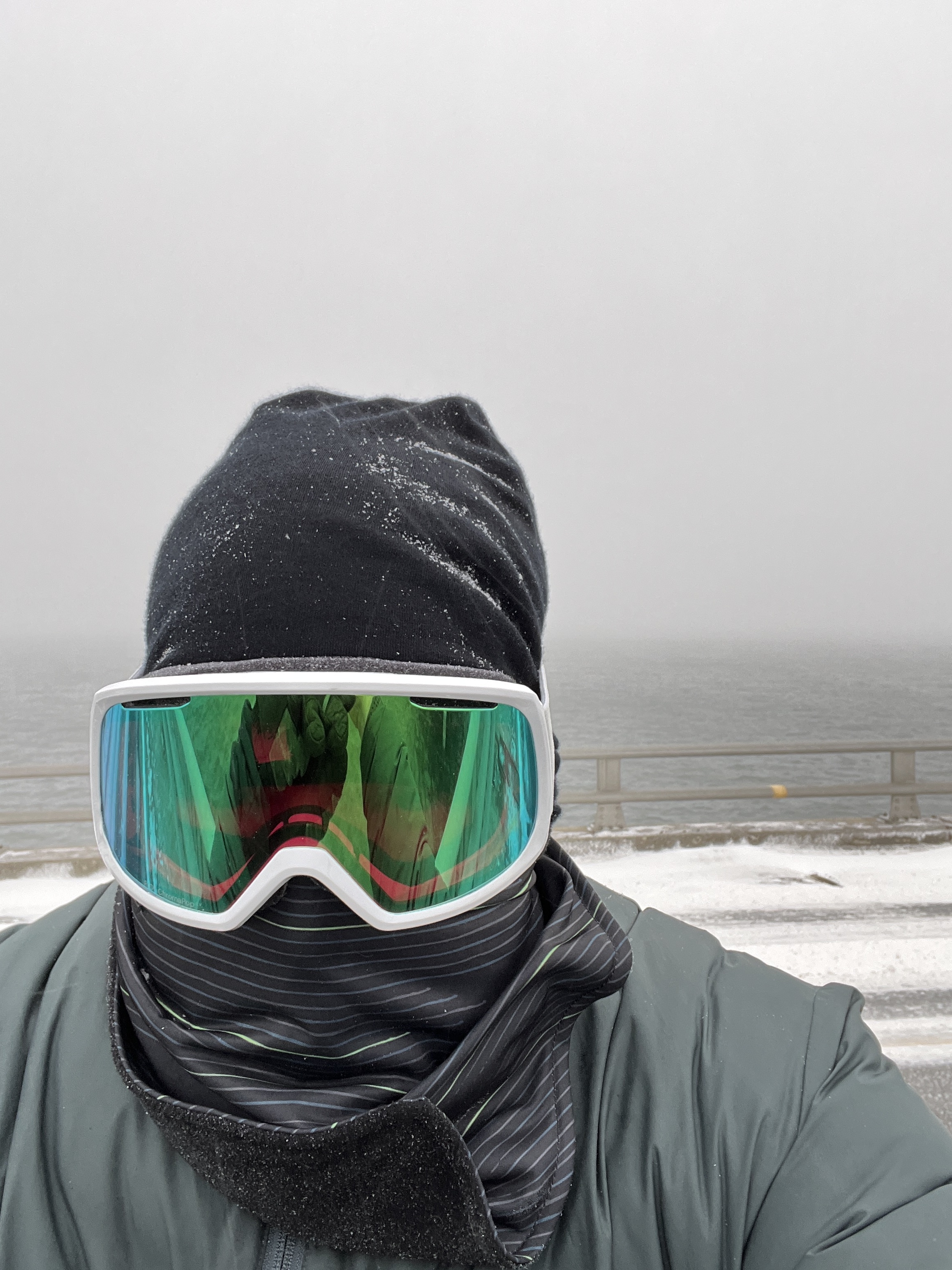
Goggles

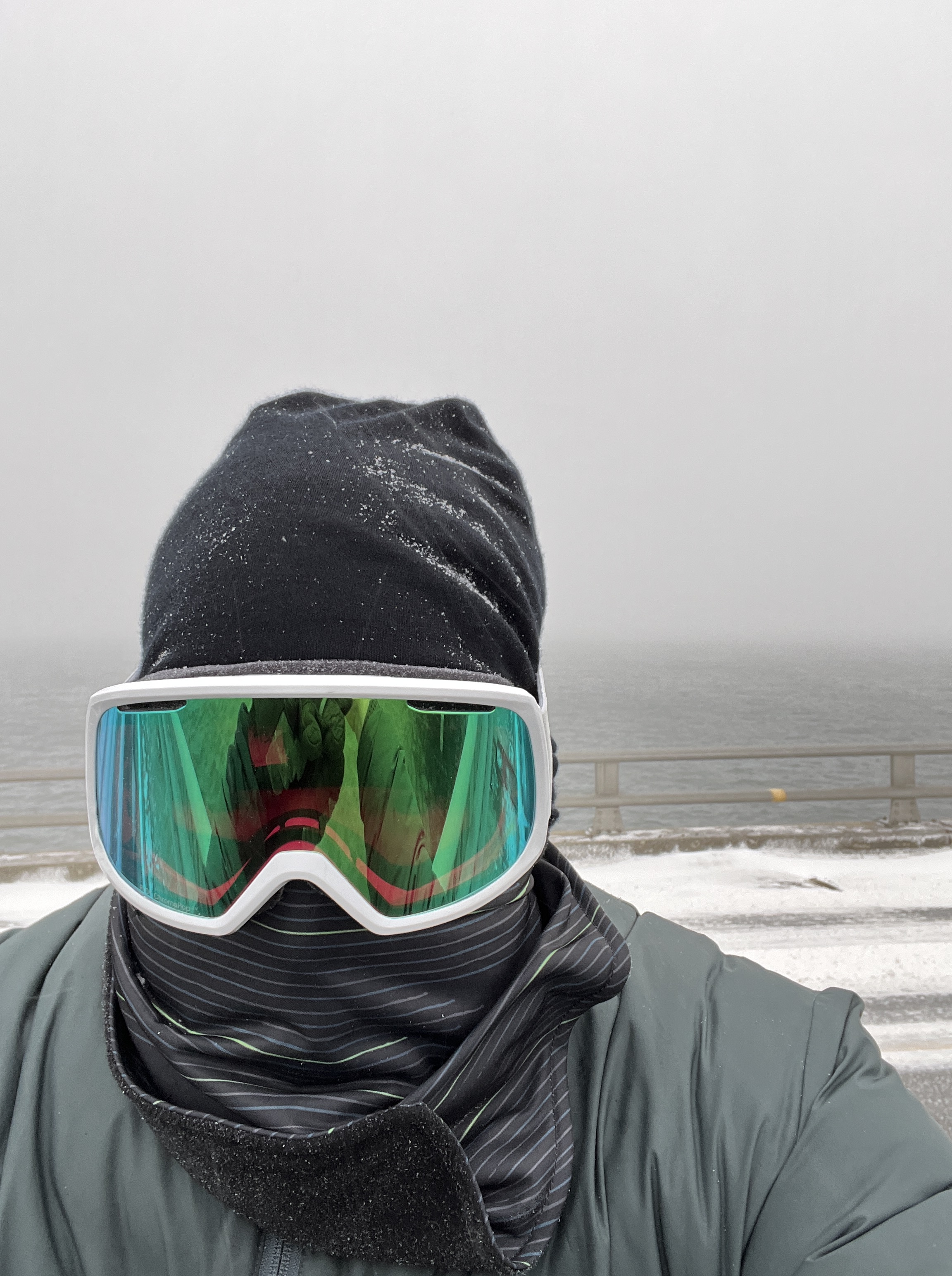
No specific recommendations here, just wear whatever ski goggles you have on hand.

Scarf

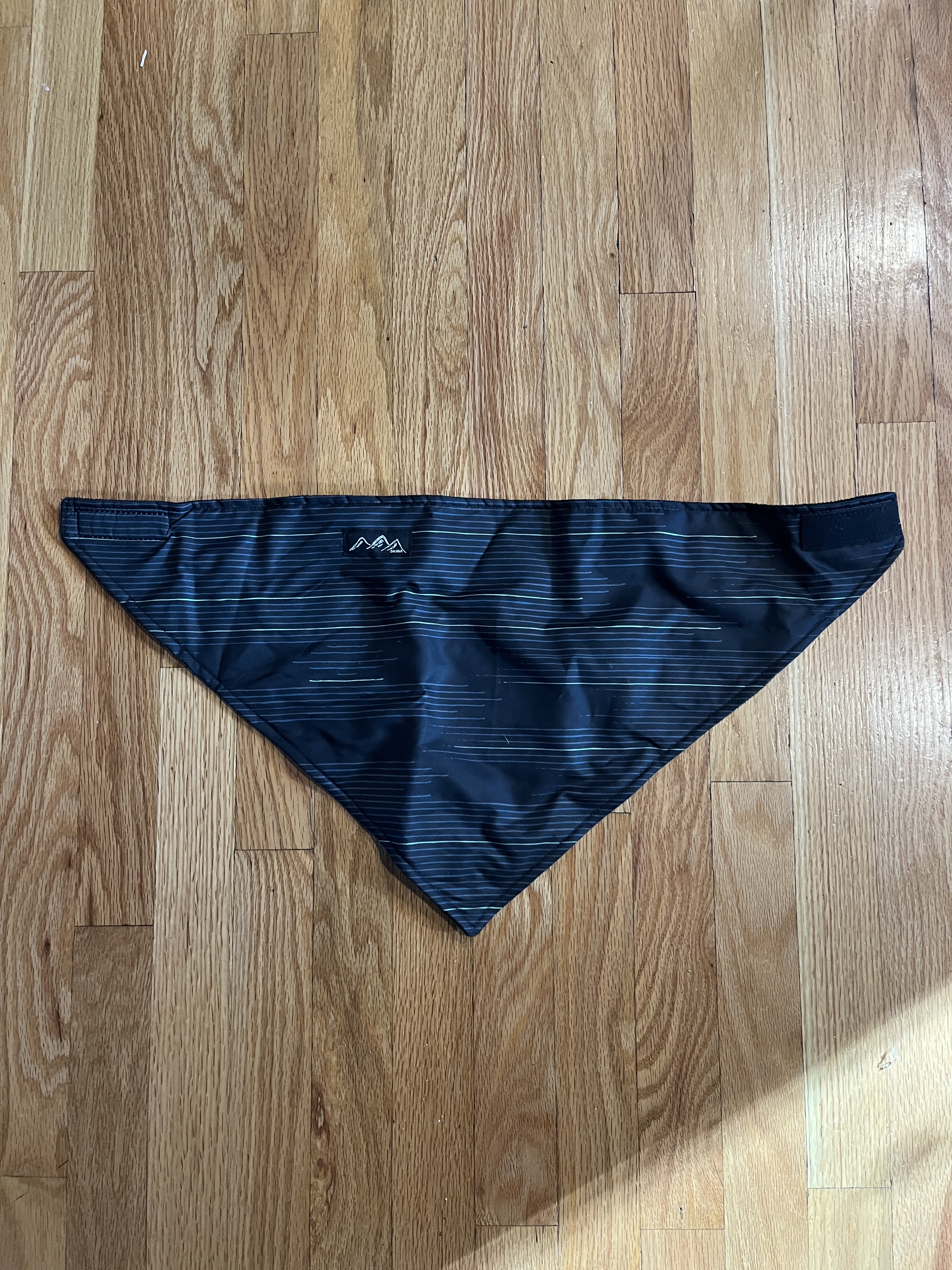
When the winds are high enough to cut through the buffs, I swap in a scarf – or what Skida refers to as a “bandana.” It’s got windstopping material on one side, and fleece on the interior, and it’s excellent at keeping wind off your face. Be aware, however, that if it’s cold enough, like anything else that is absorbing water vapor from your mouth in frigid temperatures, it will eventually freeze solid.

Long Underwear

Eventually I’ll replace this with a merino equivalent, but for now when it’s really cold I throw on synthetic long underwear – an old set of Patagonia long johns.

Hard Shell

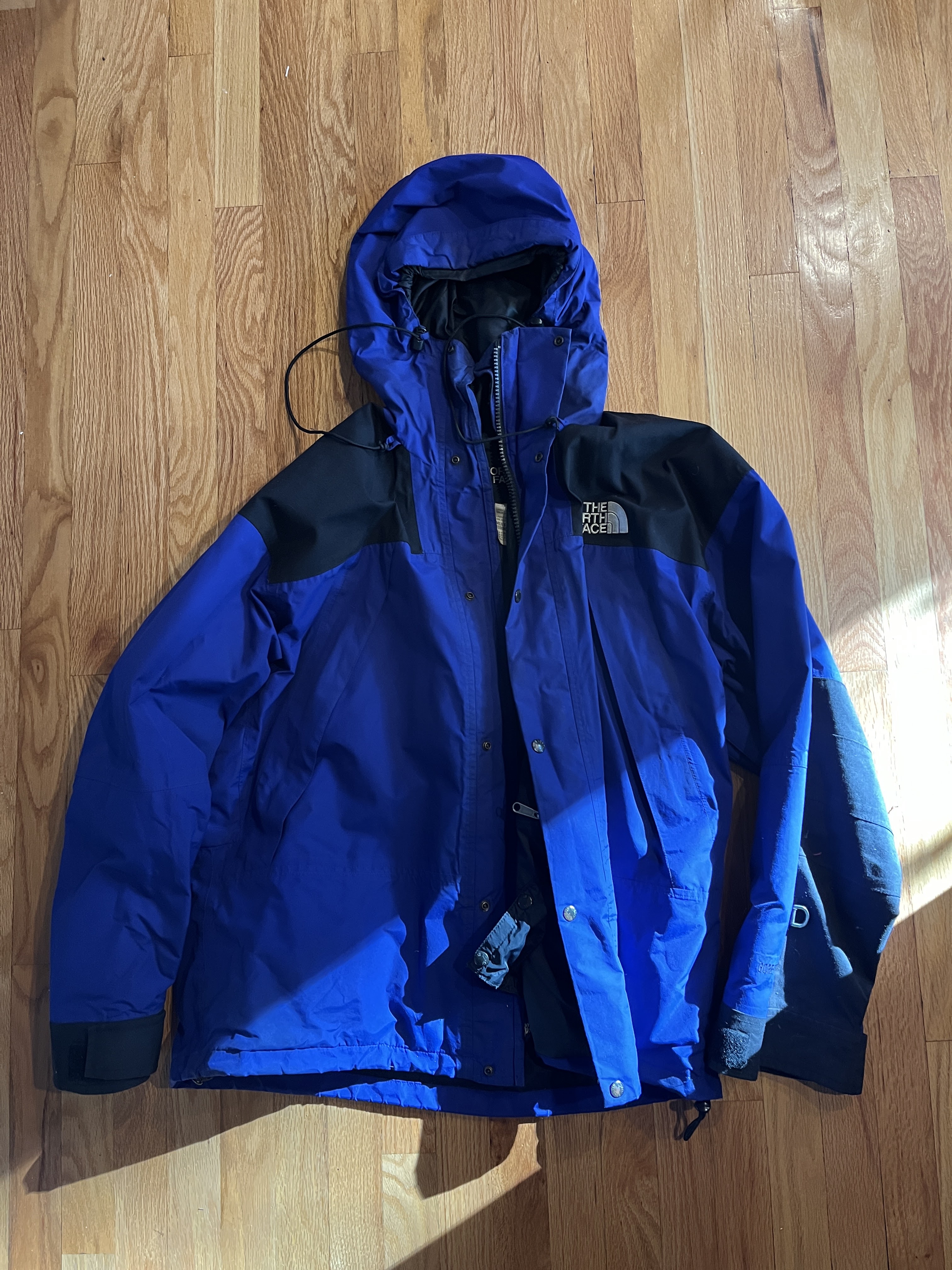
By far the oldest gear I still have is an old North Face ski parka. It’s a hard, waterproof shell that is a great outer layer in deep cold, high wind or very wet conditions. It doesn’t get used all that much, fortunately.

Down Coat

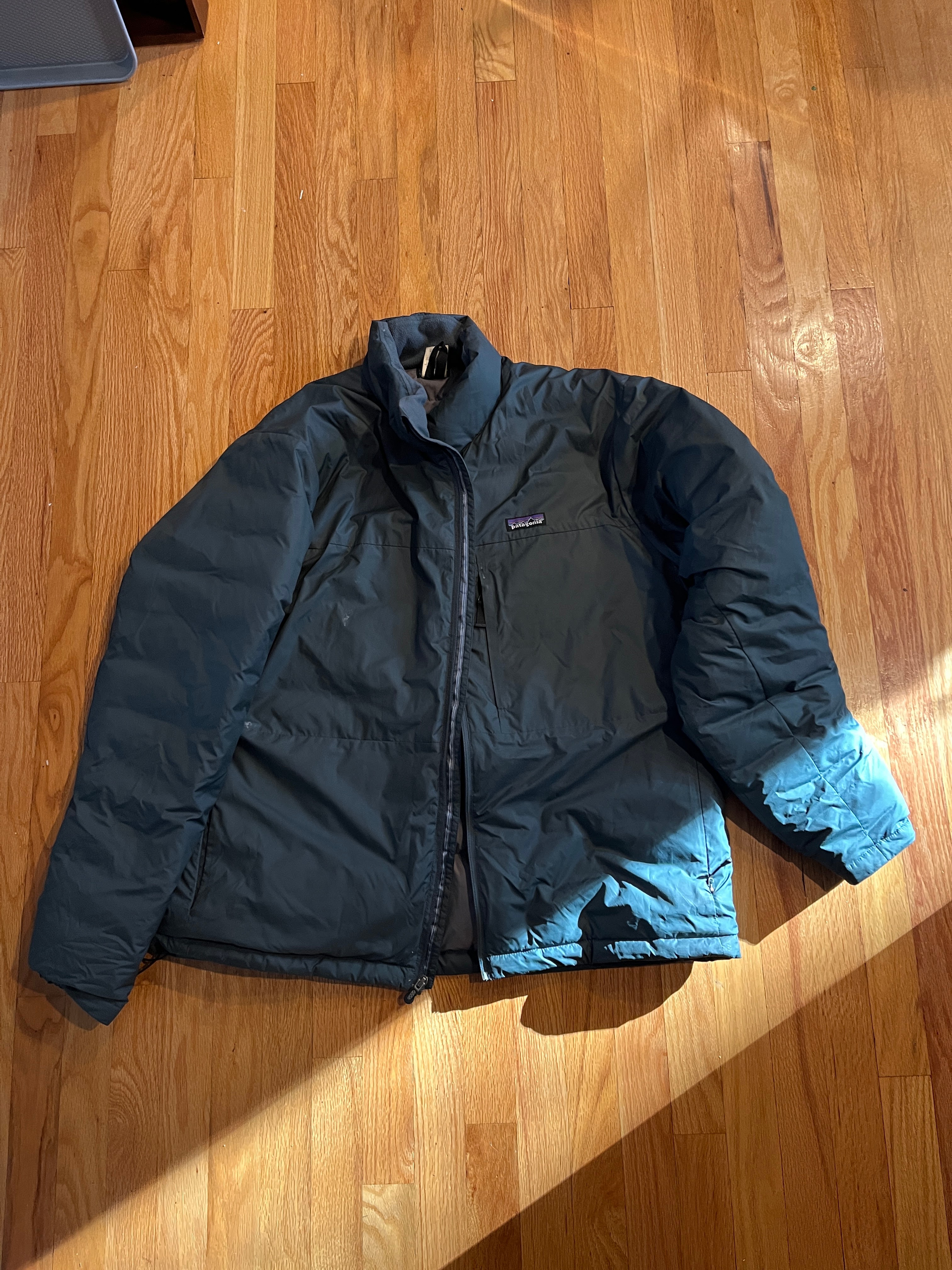
Another old Patagonia outlet find of indeterminate model, I only crank out my down coat if it’s legitimately cold – single digits or below zero. And even then, only if I’m not going too far, because it’s too easy to overheat while wearing thick down. Still, in deep cold over short distances, this is the easiest way to stay warm. I often don’t even have to wear anything more than a t-shirt underneath it’s so warm.

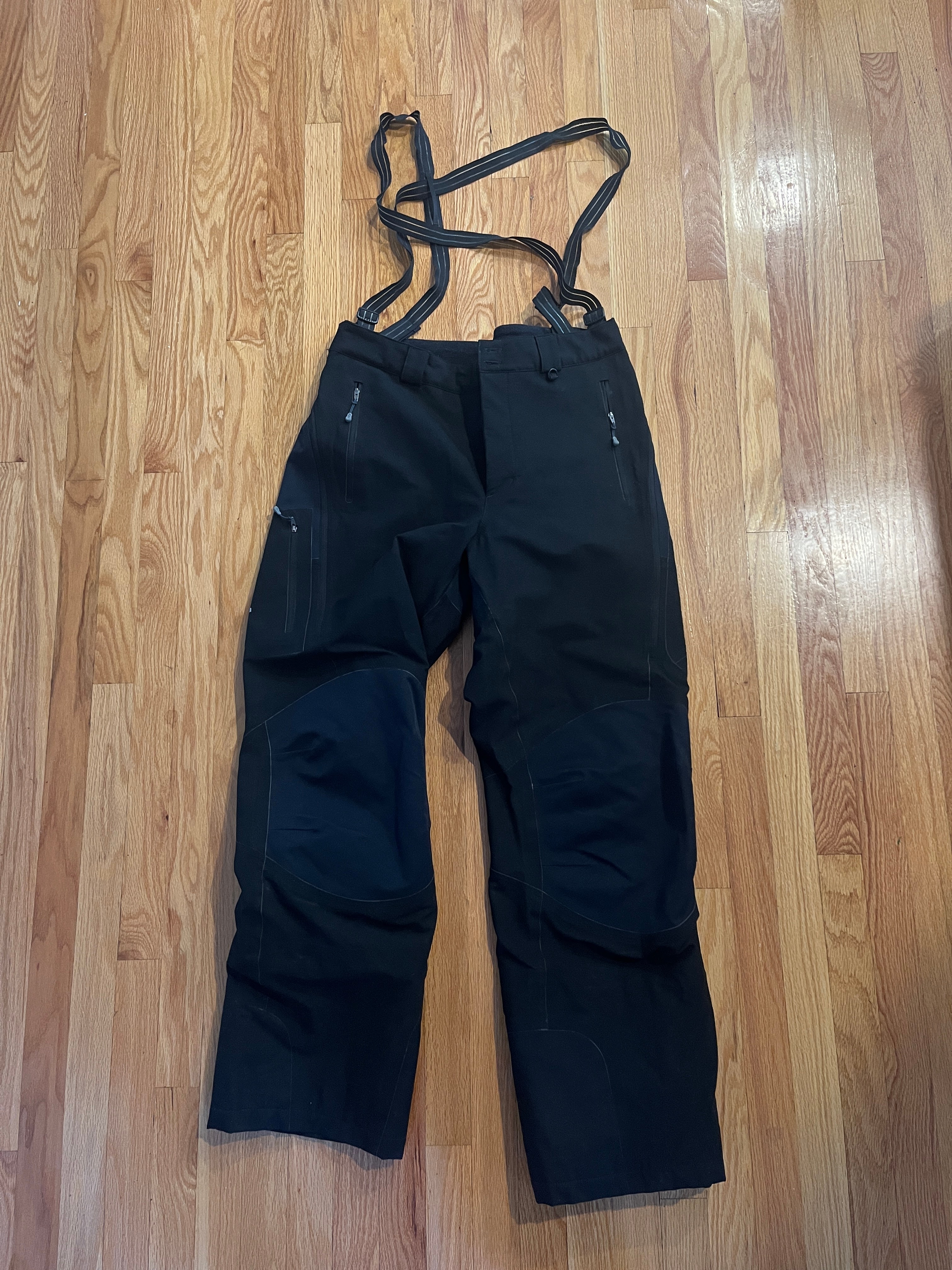
Snow Pants

This will be a new addition to my arsenal this winter, as I wouldn’t have fit in my old snow pants a year ago at this time. They fit now, fortunately, and it’ll be nice to have them back and available for the same conditions that might necessitate my hard shell.

ACCESSORIES

  • Books: Walk enough and you’ll want some audiobooks. Your local library is your cheapest route, but if you’re looking to give someone a present Audible gift certificates have worked well for us.
  • Headphones: I switched from Jabra’s to Airpod Pro’s after my brother got them for me last Christmas. There’s been no real difference sound-wise, but the Airpods are much better at relaying notifications from text, Slack and otherwise – except, oddly, I can’t get them to pipe in updates from the Workout app on my Apple Watch. Speaking of.
  • Watch: If you’re going to be walking long distances, you’re going to want to track that somehow. Both for motivational purposes as well as monitoring and managing your workload. The Apple Watch has worked well for me. While it’s battery life is abysmal relative to other fitness trackers from Fitbit to Garmin, it makes up for that by doing a bunch of things well. Whether or not an Apple Watch is for you, however, you’re going to want a tracker of some sort.

BONUS

Quick thoughts thoughts on merino vendors:

  • Ibex: the brand rebooted a few years ago, and they haven’t quite duplicated the old gear, but it’s high end merino wear aimed mostly at athletes and seriously outdoor types. Good, but pricy.
  • Minus33: the Carharrt of merino brands. Low(er) cost, workman like items.
  • Taylor & Stitch: higher end clothing brand that also has some nice merino items. Bonus: two of the founders are Mainers!
  • Woolx: specifically aimed “weekend warrior” types rather than high end outdoor athletes. More economical.

Even More Walking Questions

Before I get into the questions, let me just say up front that I’m sure most of you are probably tired of hearing about walking by this point. It is, after all, just walking, and I’ve already written about it multiple times. At the risk of beating a dead horse, however, I am still getting questions every time I talk about hitting some milestone or other. And if I’m getting questions from some of you, it seems at least possible that there are others of you who had the same question but didn’t feel up to asking. Which is why I want to make sure not just to answer those questions, but to do it in a way that makes the answers available to anyone who wants them.

It also belatedly occurs to me that the people who are tired of hearing about walking probably just didn’t click through to read this in the first place, so maybe the entire above paragraph was unnecessary.

Regardless, the following are questions I’ve gotten publicly and privately from people who want to know more about walking, how it can fit into your life and so on. And as always, if there are other questions not answered here or in prior discussions, drop a comment and I’ll either answer it here or queue it up for a future post.

Q: How do you carve out the time in your day to take dedicated, intentional walks?

A: This or some variation of it is the most common question I get by far, which makes sense. Walking is intrinsically less efficient than alternatives like running and therefore takes more time to achieve similar results.

Tl;dr: it’s a big time sink.

I’ve talked about this before, and there are a variety of tactical approaches, the summary of which are:

  • Get up early in the morning (or late at night, potentially)
  • Breaking up a long walk into small walks
  • Work while you walk
  • Walking during work hours and making up the work at night

All of which is true. But the longer answer is that like anything else, you carve out time by making it a priority.

This was the problem I had with most prior workout routines. I’d do well for a time, but eventually I’d get busy, demotivated or both and my habit would slack off. And when I eventually had difficulty motivating myself to get to the gym and lift or to get out for a run, I’d get down on myself for not making the time for those activities.

The good news is that I’ve never, not once, had this problem with walking. Hot or cold, rain or shine, walking has been easy for me to do because it’s motivating for multiple reasons. I like getting outside, I feel good getting my work in, I enjoy listening to a game or an audiobook when I don’t have conference calls or talks, and even on days when the weather is miserable there’s a sense of adventure. Walking out in single digit temps or in the middle of a monsoon has a way of making you feel alive in a way that working out in a gym never did for me.

So the real answer to the above is that I choose to make the time for walking because I genuinely enjoy doing it.

Q: I know you walk for, what, two hours? Is that the bare minimum?

A: Absolutely not. The two hour mark for me was nothing more than an artifact of my goal to walk 40 miles a week for a year. In two hours, I can – depending on conditions – walk just under seven miles or so, which is roughly the distance I need to hit six days a week to hit a 40 mile goal. So first, the two hour thing is nothing but an arbitrary number of mine.

Second, annual goal aside, I’ve tried to walk more than two hours regularly because it helped me lose more weight faster. You very probably have less weight to lose than I did/do, so two hours may well be overkill in your situation.

Third, I’m privileged to have a job in which the hours have some flexibility to them. I’m not a doctor making rounds, for example, so if I’ve got a two hour window between meetings I can pop out for a walk and make up the time later that night or listen to a work call or conference talk. That’s not a common arrangement, so two hours may well not be feasible for you, at least all at once. This is particularly true for the parents of infants and toddlers I’ve spoken to: you’re doing great if you can get yourself out of bed in the morning, so cut yourself some slack. I didn’t really get my walking going until my kid was in kindergarten every day.

My best recommendation when people ask this question is to forget about the time: just go for a walk. When I started, some of my walks were literally 15 minutes. If walking is something you enjoy, you’ll find a way to make it work with whatever your schedule is and you will very likely walk more over time than you do when you start. But the important thing is that every bit counts, and that there is absolutely no “bare minimum” to hit.

Q: Could you share your walking routine, e.g., do you go a certain distance every day, at a certain time?

A: The funny thing is that outside of my routes, as I’ll get to, I don’t have a routine. It’s funny because in general, I am highly routine oriented. I have routines for everything: what I do with my wallet and car keys when I get home, how I get my daughter out the door in the morning on my days to drive her, when and how I get to the airport when traveling. And so on.

As much as I’d love a routine for walking, though, and hope to have one someday, it’s just not feasible right now given my work schedule. Instead, I have a “take what I can get approach.” Every Sunday I look at my work calendar, and try to determine what my windows are.

It helps that I don’t commute any more, and it also helps that I don’t have to get in a car and drive to start my walks – I literally just walk out our front door. But basically I look for pockets in my calendar where I have a two hour open window, or a window with one to many briefings in which I’m not required to participate verbally. A lot of days, there isn’t such a window and instead I get up at 5. But if there is, I look at my queue of briefings, talks to listen to or even posts to write (walking can be very good for thinking through arguments and cases to be made) and slot those in if necessary.

But basically my only routine is “how much time do I have?” Some days it’s less, some days it’s more. When we had four day work weeks this summer, for example, and my daughter was in camp, I’d walk for four or more hours. Short or long, however, it all adds up.

It has been helpful to me, however, to have default routes that match my available window. I have one route for an hour, another for an hour and a half, another for two and so on. This helps keep things simple: my available window dictates my route and I don’t have to think much about it. I don’t have a single routine, then, but I do have a standard approach depending on my schedule on a given day.

Q: How do you deal with work pressures?

A: There are a couple of different angles here. Most obviously, with respect to the general pressures of business, helping to run a company and so on, walking is nothing but beneficial in that regard because it reduces my stress. On the days when I’m dealing with, say, a difficult person, the best part of my day is putting on my shoes, putting on an audiobook, walking out of the house and forgetting said person exists for a while.

Where walking and work becomes more difficult is the zero sum nature of time: while you can do some types of work while walking, at some point the two compete for your time. There’s no simple answer to this. There are strategies as mentioned above to working around your particular schedule and available windows or time, but there’s only so much you can do. If you’re working sixty plus hours a week, for example, something has to give – that time has to come from somewhere.

The only thing I can tell you there is to think carefully about your priorities, and ask yourself where your own health stands in that equation. If you’re working so much that you can’t fit even a half hour of walking in, it might be worth asking whether your schedule could use some adjustment.

Q: You live in Maine, right? Do you walk year round? How do you deal with weather?

A: I do live in Maine, and I do walk year round. Some of it is acclimation, obviously: we’re used to cold weather up here. But most of it is clothing. As mentioned before, there’s no bad weather, only bad clothing.

Here are ten things I’ve learned about how to dress for bad weather:

  1. Layering: it’s a cliché, but it really is all about layering. If you wear a thick coat, for example, it’s a binary on/off switch. That’s not ideal. Between the variability in the weather you’ll be walking in and your own internal temperature as you walk, layering affords you the flexibility to take layers off to cool down or put them back on to warm up. Or, as is the case frequently with me, add rain protection if Poseidon realizes you’re out and starts dumping on you.
  2. Storage: related to layering, the ability to add and subtract layers is dependent on having somewhere to store them. Because most of my walks are a half day or less, however, I don’t need or want a big heavy pack, so instead I carry this LL Bean ultralight pack when I need to carry extra layers. I barely notice it’s there, but in the case that I need to hurriedly throw on raingear or have somewhere to stash gloves I no longer need it’s perfect.
  3. Fabric Weights: one of the things I’ve invested in over time is different weight fabrics to give me more options depending on conditions. I have two different hoodies, for example: a midweight and a heavyweight. The former is better for cooler days as I won’t overheat, the latter is preferable when it’s actually cold. Similarly, I have two different winter hats: one that’s lighter weight for most cool/cold weather, and a heavy, thicker hat for when it’s legitimately freezing. The more conditions you encounter, the more apparent it is that one size – or fabric weight – does not fit all.
  4. Fabric Material: when I started walking last fall, I would go out in cotton t-shirts, cotton boxers, my cotton Carharrt hoodie and my insulated leather work gloves. This was fine until I started sweating, and then it got cold, fast. These days basically everything I have from socks to underwear to t-shirts to hoodies to hats to gloves is merino wool. It wicks moisture well, doesn’t stink after I’ve sweat in it and keeps me warm even when it’s wet. But merino isn’t good enough for some conditions, which is why I have raingear (as I’ll come back to), a soft shell (for cold and higher wind), a hard shell (for heavy wind / snow) and more. The point is that over time I’ve assembled an arsenal of different clothing options to protect myself from whatever weather I’m facing, but I’ve put more thought into what it’s made out of than I used to.
  5. Weather: speaking of weather, knowing what it is and what it might be is absolutely critical to dressing appropriately. It’s not enough to know the temperature; you need to pay attention to windspeed, dew points, humidity, “feels like” temps and so on. All of these will help you make an informed decision about the appropriate level of clothing for a given walk. Oh, and pay attention to thunderstorm warnings. Hearing a massive boom of thunder overhead while you’re out walking isn’t all that fun.
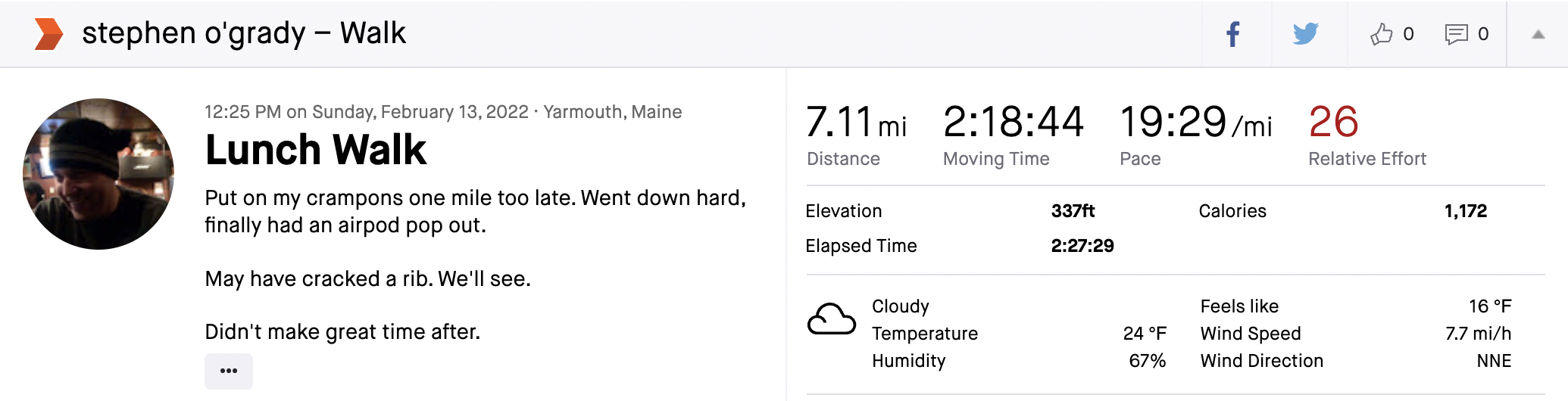
  6. Cramp-ons: this isn’t complicated: if you’re going to walk in the winter, and it gets cold enough to freeze where you live, you need cramp-ons. They’re awkward and not fun to put on, but after breaking my ribs last winter I’m not going to have to learn that lesson again. Take it from me: unless you enjoy not being able to cough or roll over in bed, you need cramp-ons. These are what I have.
  7. Raingear: when I started the only raingear I had was an old delaminated raincoat. This kept me dry under heavy rain conditions for around ten minutes. My lower half, on the other hand, had no such protections and would be soaked immediately – to the point that my shoes would fill up with water and overflow. Over the past year I first remedied the raincoat situation by getting a new one (Patagonia Torrentshell) and then invested in a pair of rain pants (Grundens Trident). Between those and my waterproof Hoka Anacapa boots, I can walk in a heavy rain and remain mostly dry. This is useful in all conditions, but is particularly important when it’s cold. Being cold is one thing. Being wet and cold is miserable.
  8. Shoes: the more and the further you walk, the more that you’ll care about your footwear. When I got started and was carrying more weight than I am now, I was worried about foot injuries in particular. So I Googled “best cushioned running shoes” and Fleet Feet recommended a brand I’d never heard of before – Hoka – so I bought a pair. Six pairs of Bondis later and I’m sold. I love my Hokas so much I went out and replaced a not yet worn out pair of Salomon hiking boots with the aforementioned Anacapas because I wanted the same cushioning and light weight while hiking that I got while walking. Whatever you end up getting, however, my own experience suggests that cushioning is a good thing. I once walked about seven miles in flip-flops and got plantar fasciitis as a result and struggled with it for months. Two plus thousand miles in Hokas later and I haven’t yet had a repeat.
  9. Headphones: I was gifted these, but the Airpod Pros my brother got me for Christmas last year have been very helpful. Unlike the Jabra headset I had previously, the Airpods will read out Slack messages or texts to me, for example, while I’m walking so that if there’s something urgent I need to weigh in on while I’m out I’m made aware of it.
  10. Apple Watch: one last minor item: if you have an Apple Watch and you’re out in the rain, be aware that if your raincoat gets wet, the soaked material can pause your workout without alerting you. The solution is to either pull the sleeve up beyond the Watch so that there’s no contact – which works fine if it’s not cold – or to have a sleeve or glove layer underneath to prevent the wet coat from making contact with the Watch screen.

Hopefully all of this has been helpful, but as always, if there are questions that I didn’t get to, feel free to drop them in a comment or post them to me in some other way and I’ll answer them when I can.

Cheers, and happy walking.

Twitter, Mastodon and the Fediverse: I Have Questions

Just under sixteen years ago, I joined Twitter. I did it reluctantly, because initially it seemed both trivial and self-important. Which was both right and wrong, as it turned out. Since that time, a lot has happened. The business I helped found has grown – thanks in part to Twitter. I met and married a girl – not thanks to Twitter, but also not in spite of it. And we had a child whose exploits and repeated ownings of me are objectively speaking the most popular things I’ve posted to that service.

I’ve got some history with Twitter, is what I’m saying. It’s why like a lot of people I’m sad about how completely, appallingly and predictably unqualified the new owner is to run it, and how shocked I am in spite of all of that that he’s driven a service widely regarded as a global town square to the brink of ruin less than three weeks after acquiring it.

If you’ve read any history, you’ve come across accounts of people wandering through abandoned cities. Once thriving population centers, they were where thousands, tens of thousands or millions lived out their lives. Fast forward some period of time – in some cases a very brief period of time – and they were ghost towns, emptied of people, trade and history. The most interesting and unanswerable question wasn’t when the city had been abandoned, or even why. The question was who was the last to leave.

No one necessarily expected to be asking that question about Twitter in November of 2022, at least until it became clear that the eventual acquirer had pushed his trolling too far and would be forced by courts to complete the acquisition lest even more embarrassing texts come to light, but here we are.

I’ll save the elegy for Twitter for another time. It’s not dead yet, after all, and it might feel like going for a walk. Like others, I can’t see it coming back from all of this, but it certainly wouldn’t be the first time one of my predictions missed the mark.

Instead I want to talk briefly about the primary proposed alternative, at least in my circles: Mastodon, and the distributed network it powers, the Fediverse. I’m not going to write a primer on that – numerous outlets have already done that, e.g. Wired – but I do have questions. And given that some friends are scheduled to chat about all of this tomorrow at noon ET, I thought I’d throw some of these questions out there for discussion. I’d ask them myself, but given that said discussion is smack in the middle of a consult I’m not able to attend.

As I consider the Fediverse, then, and Mastodon, I’m less focused on the experience and what it’s like for me personally than I am occupied with questions. Questions I’m trying to answer to understand what the future of both might be, and therefore whether and how to invest my time accordingly. Here are a few of those.

How accessible is the Fediverse?

If you’re a technical user looking to communicate largely with other technical followers, this may not be an issue. The technically savvy can probably traverse the gap between the world in which you just sign up for Twitter and the one in which you have to pick an individual server from one of dozens.

But speaking as someone who follows a lot of different communities on Twitter ranging from my technologist peers to baseball writers to shark researchers to meteorologists to historians to national security professionals, it’s not clear if all or even most of these populations will be able to make this jump seamlessly, if ever.

The difference between “go signup at twitter.com” and “here are a choice of different servers with different communities and rules” might not seem insurmountable, but it’s certainly not ideal. So I’m curious as to how the on ramps will be bridged over time.

What are the impacts and costs of a federated network?

While no expert on the Fediverse, in spite of having been a nominal member of it for five years or so, a couple of things have jumped out about the network during my usage.

  1. There are UI costs to a federated, decentralized network. In some cases, I can click a button and follow a user. In other cases, I have to cut and paste an identity URL into a search box, and click through twice to follow a user. In still other cases, I have to do the above, but first enter a URL of my own to follow a given user. None of these, again, are unsolvable UI problems. But they are highly likely to be discouraging to the casual user, particularly those accustomed to centralized services like Facebook or Twitter.
  2. One of the founding principles of the Fediverse is that each server can have its own culture, norms and expectations. Centralization is no panacea when it comes to content moderation, of course; Facebook, Twitter and the like are regularly referred to as cesspools, and with good cause.

    The Fediverse’s reaction to this, apparently, has been to allow individual servers to determine their own policies on content moderation. Which seems like an improvement, until it is more properly revealed as a tradeoff. In one example that is preventing people I know from joining the Fediverse – policies intended to limit the impact of racist discussion and behaviors as a means of protecting sensitive users from harm in practice have meant that People of Color (POC) are prohibited from speaking freely about their own lived experiences with racism, because non-POC don’t want to have to see it. That’s not the intent, but the intent doesn’t matter. It’s bad.

    More subtly, there are policies like this one from fosstodon.org:

    “Do not “shitpost” – while humorous posts are allowed, and actually encouraged, there is no place for “shitposting” on Fosstodon.”

    On the one hand, as someone who doesn’t particularly enjoy shitposting, this sounds good on paper. On the other hand, it begs the question: who is determining what is and is not a “shitpost?” Another question: who has the time to evaluate all of the posts on a given network to determine whether it’s shitposting, and are all of the accounts likely to be evaluated similarly?

    In many respects, the idea of federated cultural policies reminds me of the situation with alcohol in the United States. Because alcohol is regulated not at the federal but the state level in the US, the laws vary. Some states allow spirits of any kind to be shipped. Other states allow wine, but no other spirits. Other states prohibit anything from being shipped. I went to college in a state that did not allow alcohol to be sold on Sunday, so instead we drove across the border to a state next door that did. Some states have a maximum on the alcohol content by volume of a given beer; per the Sam Adams website, for example, their Utopia beer is illegal in Alabama, Arkansas, Georgia, Idaho, Missouri, Mississippi, Montana, North Carolina, New Hampshire, Oklahoma, Oregon, South Carolina, Utah, Vermont and West Virginia.

    Regardless of whether one drinks alcohol (I do) or Utopias (I don’t), the mishmash of conflicting rules and regulations seems both arbitrary and problematic for everyone involved to navigate.

    But in a federated world, this is the reality.
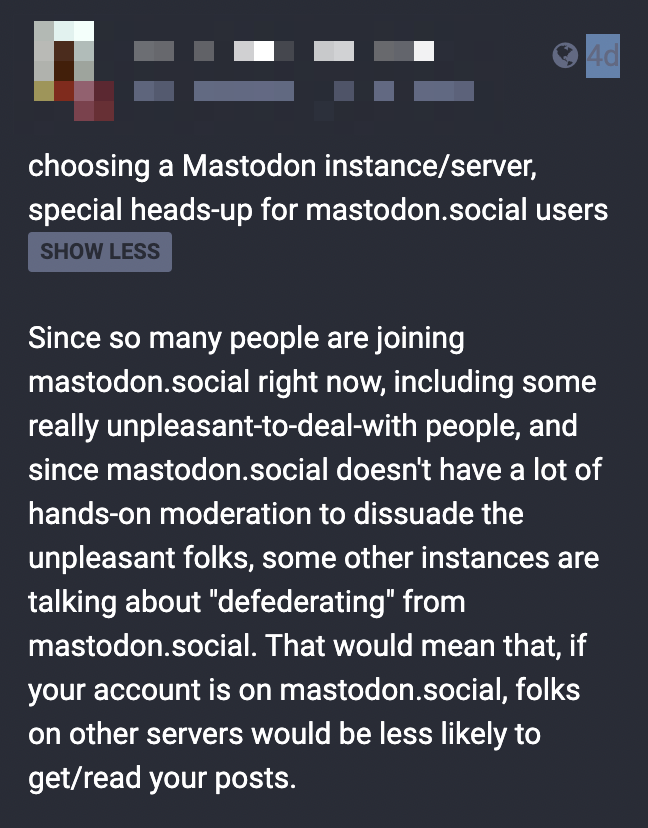
  3. Processing the deltas in expectations between federated servers might be challenging as an individual. What further complicates matters is the fact the behaviors of others on your server may be held against you. If someone else on Twitter behaves badly, other than a general sense that it makes Twitter a less pleasant place to be overall, the impact on my account is zero. I learned this week, however, that because the instance I joined five years ago lacks content moderation resources (we’ll come back to that shortly), my posts may be de-emphasized or even outright banned from other servers


    The good news is that the Fediverse makes it possible to up and move from one server to another with no loss of followers. But while I might be willing to undertake that given the right incentives, how many ordinary, less dedicated social media users would be?

    And given that servers are largely community run and thus – as pictured above – likely to be short on moderators, how long will it be before getting particular servers de-federated becomes weaponizable – with bad actors descending in concert on a targeted server with the express goal of having it become uninhabitable and defederated?

What about verification?

One of the dumbest decisions of the new Twitter owner’s tenure has been to mess around with account verification – the inevitable result of which has been chaos. See, for example, a random account temporarily shaving $15 billion off Eli Lilly’s market cap with a single tweet.

This is a theoretically solvable problem in a centralized universe such as Twitter – at least if you’re smart enough to not light it on fire because you haven’t thought things through. How this would or could be solved in the Fediverse is unclear, however. Registering a household brand name on any given server is a trivial thing, as is registering that brand name on lots of them.

How should users determine which identities they can trust? Should that burden be on them in the first place? Or is the idea that the Fediverse isn’t a network for brands at all – in which case, how do I actually get somebody like Comcast or Spectrum to respond to a support request? Because while Twitter’s good for that at present email sure as hell doesn’t work.

What are the economics of the Fediverse?

I remember talking to a friend working in the investment space many years ago about open source software. He could not comprehend or even believe in a world in which groups of software developers, often working without compensation on a volunteer basis, could possibly create something that would outperform a competitive project produced by a commercial entity. While I understood his skepticism, that model did not then and never has confused me. Obviously the monetary investments into open source software are and have been foundational to its ascent, but the intellectual challenge of solving interesting problems is something that has and presumably always will attract the interest of software developers, whether they’re paid for the work or not.

In my experience, however, this is not the case for the more mundane, and often thankless, task of operating that software on an ongoing basis. After the novelty of spinning something up wears off, it becomes tiring to run and maintain software. Which is why in most scenarios in which software needs to be relied upon, someone is paid to do the job of running it.

As a side note, if you’re reading this and objecting – “but I run my own email server!” – that’s great and I respect your dedication while questioning your priorities, but it is my sad duty to inform you are the exception that proves the rule.

Regardless, this is why I’ve been curious about the Fediverse and Mastodon’s financial footing. The software development, as far as I can tell, has been mostly crowd sourced. Which, ok. Maybe that can be made to work. But who is running all of the federated Mastodon servers? Will they keep running them? Why will they keep running them? What if they don’t keep running them?

Also, besides the cost of the time spent keeping the software up and running, there is the expense of hosting. I haven’t run a Mastodon server myself, but every indication I have seen to date by those that have suggests that it is likely to be non-trivial in cost for anything sizable.

For most social media historically, the cost of the service has been indirectly born by advertisers. Ad-based models are self-evidently problematic for any number of well known reasons. But user funded services come with their own set of tradeoffs, most obviously by privileging those able to pay for a non-critical technology service ultimately resulting in a less diverse user base.

I understand, for better and for worse, the business model of ad-based social networks. What is not clear to me, at least at present, are the economics of the Fediverse. And I’m not the only one with questions on that subject:

And what about funding?

Andrew Couts [WIRED senior editor of security]: I don’t actually know the answer to that. It’s a nonprofit, so I believe it’s mostly crowdsourced funding. I know they have a Patreon page, and so that’s who you would be giving to. You would be giving to the main Mastodon nonprofit. But besides that, I’m sure that there are Patreon pages for individual servers, individual instances, and it’s mostly just a crowdfunded thing. Nobody owns it, so there’s nobody to pay or anything of that nature. You’re not going to be charged $8 for using Mastodon. And if you were, you could move to another Mastodon server and ignore that.

Even if you wanted to monetize Mastodon in traditional ways, its federated nature might act to limit the ability to generate revenue. Much as the asinine decentralized pools of subsets of the population that represent regional health care networks here in the United States limit their respective ability to negotiate with suppliers and in so doing drive up costs, so too do the smaller pools of federated users constrain the economic potential of any given Fediverse server versus the centralized populations of Facebook, Twitter, et al.

Which might sound perfectly acceptable and even attractive if you don’t want to see ads ever, but then you need to figure out who’s going to pay for everything if it’s not advertisers. Because even if the software development costs can be figured out, the hosting and operational costs – not to mention things like content moderation, trust and safety, security and so on, which are both hard and expensive – have no clear solution from where I’m sitting.

So even if I want to believe, and I do want to believe, my fundamental question is: how is all of this going to work economically?

Last question: “Toots?”

Really? Toots? Toots? And I thought “tweets” was silly.

All of the above said, if Mastodon could import my Twitter archive, I’d definitely do that because skeptical as I am, I’m rooting for it – “toots” notwithstanding.

Walking, Weight Loss and Diet: Frequently Asked Questions

When I originally decided to write up the details of how I let my health and fitness fall apart and how I was trying to piece it back together, I did it for a simple reason. There was an outside shot, I thought, that hearing me talk about my own implosion and nascent recovery might be useful in the event that someone else found themselves in a similar, if hopefully not quite as deep, hole. I didn’t think this was likely, necessarily, but I figured there was at least a chance, and if it helped even one person that was enough to justify both the effort of getting it all down as well as the embarrassment, frankly, that comes with laying out your various failures publicly.

Surprisingly, however, after writing all of this up and talking through everything from the original reboot to the details of my walking routine to a bit on diet changes, I heard from a sizable number of people. Nothing crazy – none of the posts went viral or anything like that – but since pressing publish originally I’ve heard from a lot more people than I expected to. People that I talk to every day, in some cases, others that I haven’t heard from in decades. People I knew, people I didn’t. People that I knew were struggling in some way, people who I thought had it all together.

Some of those that reached out were just checking in with encouragement, which was of course appreciated. The majority, however, have had questions for me beyond what I’d written up. Questions about all sorts of details, things I hadn’t thought to document. A lot of these I’ve tried to tackle in the follow up posts on walking and diet, but there are other questions people have asked that I’ve been answering individually in private.

After doing this for a bit, however, it occurred to me that these questions I’ve been answering privately via email, text, comments or DMs might in fact be common questions – that maybe others had the same questions, but didn’t want to ask. Which led me to wonder if it might be helpful to roll them up and answer them in one place.

So here we are.

What follows, then, are the most common questions I’ve gotten from people. And just as a reminder, before we get into them, I am completely and totally unqualified to be dispensing health and fitness advice – so take all of the following with a grain or three of salt.

Q: How long did it take for walking to become a habit?

A: I don’t remember the answer to this, precisely, but I think the answer is a couple of weeks. I’m spoiled in that the island we live on is beautiful, so I never regarded getting out for a quick walk as much of a chore.

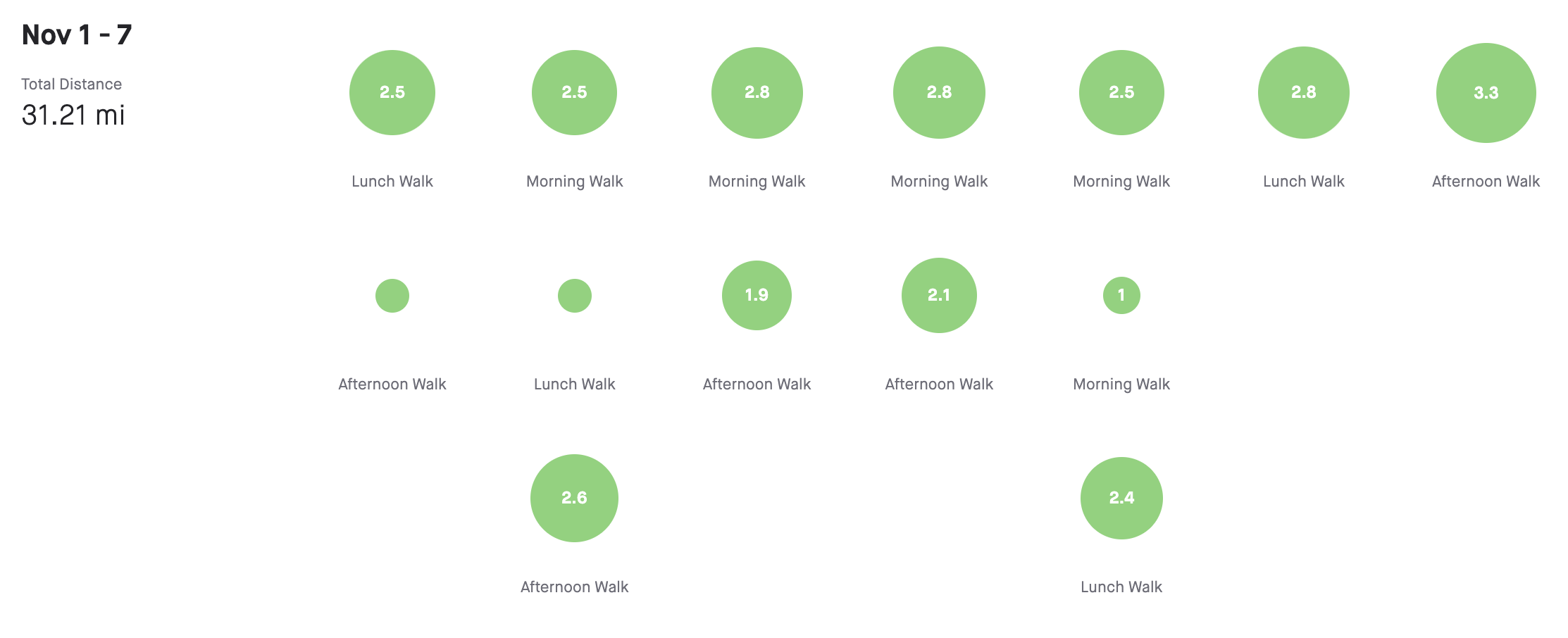
This was my first real, tracked walking week. As you can see, I was easing into the process with a couple of walks broken up over the course of the day.

After a couple of weeks of this, and gradually adding on distance, it evolved into something of a routine. One that I now plan my schedule around, with the help of an accommodating family.

Q: Is there anything that’s been useful in keeping you motivated?

A: After walking for a couple of months last year, I thought it would be useful to have an annual goal to work towards. So after looking at what I was capable of at the time and what I could reasonably expect to accomplish given my schedule and available time, I set a goal to walk 40 miles a week for the entire year. I take one rest day a week, so for six days a week that comes out to an average of a little under seven per day. This goal was highly motivating, because it gave me something to shoot for, and as I write this I’m a tick over thirty miles from completing it.

As a result, I’ve set new goals, like hitting the full Appalachian Trail distance (I’m probably not going to make the distance to City Beer Store this year, however).

Tl;dr: as any real fitness person will tell you, in other words, goals are a Good Thing.

Q: Do you use any particular tools to track your walking?

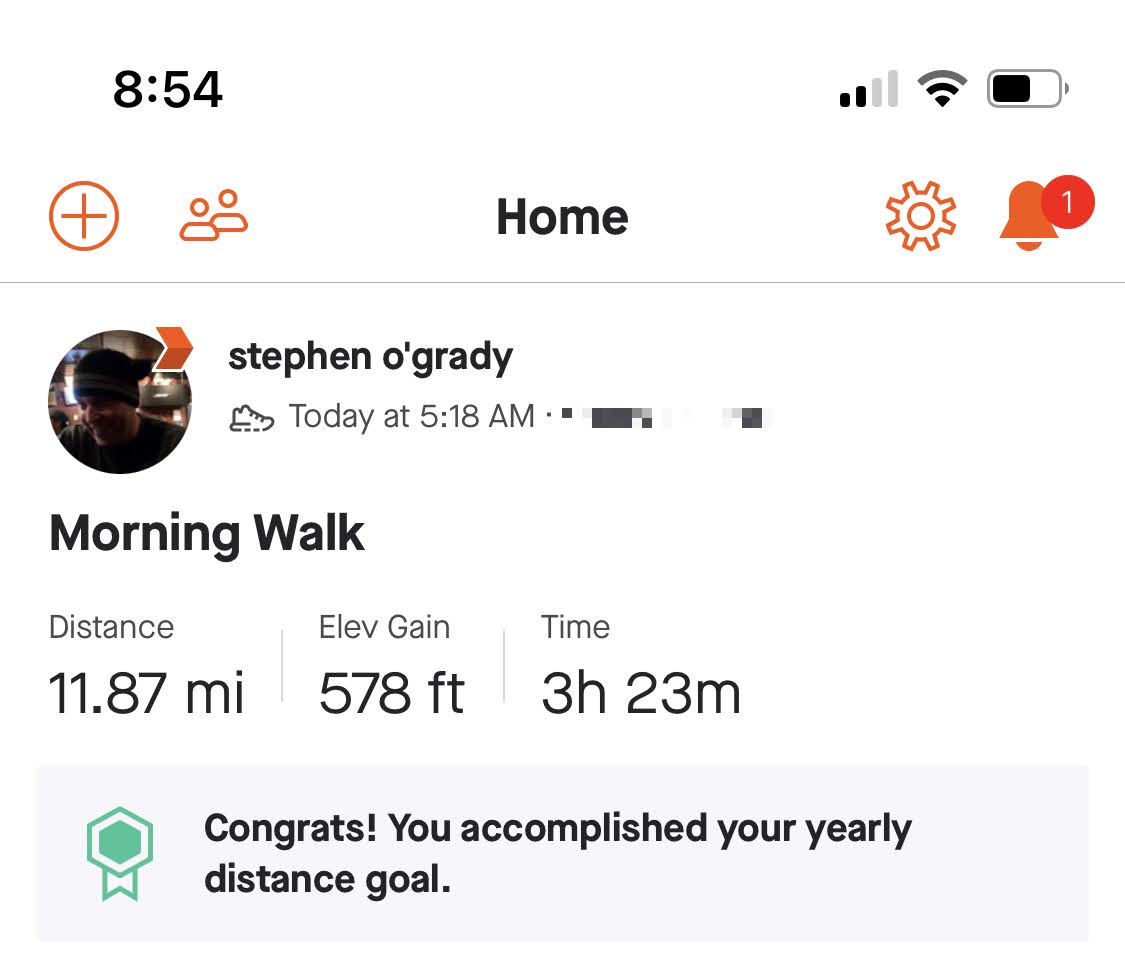
A: I use an Apple Watch and Strava. The Apple Watch is ok, except for its miserable battery life and its tendency to pause my walks because it apparently can’t differentiate between human skin and a wet raincoat.

Strava, on the other hand, is an absolute joy. It tracks my walks, my effort, my goals, my time – it even tells me when I need a new pair of shoes.

And as an aside if you’re thinking of trying to find me over there, my account is all private. It’s the one social network on which I am aggressively non-social.

Q: What is something you wish you’d done sooner?

A: Mostly I wish I’d started walking years ago, but more specifically I wish I’d gotten a full rain suit and waterproof boots. When I started out walking, I had an old delaminated raincoat that was not remotely waterproof. I eventually upgraded that to one that is waterproof, but after walking in the rain my entire lower half would be soaked. These days, I have added rain pants tucked over my waterproof Hoka hiking boots, and as you can see from the picture above even in a storm that dropped 3" of rain I stayed mostly dry.

There’s no bad weather, as the saying goes, only bad clothing. Given my Mom’s Scandinavian heritage, I should have remembered that sooner, but better late than never.

Q: Do you need to change everything overnight, and completely overhaul your life?

A: This is what I thought at one point, and you’ll see this advice frequently. As one example, over the last decade or so, I’ve watched a lot of YouTube woodworking videos. One of the folks who has made a lot of the videos I watched is Steve Ramsey. Off the topic of woodworking, he talked about his own fitness journey and had some very specific and dramatic recommendations – among them that you had to quit drinking, get up at dawn and that any exercise had to make you sweat – that you had to exhaust yourself with any workout you’re doing.

With all due respect to what he’s accomplished, which is fantastic and impressive, I’m here to tell you that none of that is true. And more importantly, I think that advice can be actively harmful when you’re starting out. If you’ve gotten yourself off track fitness and health-wise, and someone tells you that you have to start rolling out of bed at 5, quit alcohol completely and work yourself out until you’re crushed to make any difference, I think you’re much less likely to get started on the road to recovery. It’s too daunting.

Also, none of that is necessary. I still drink on weekends. I do get up at 5, but certainly not every day and that wasn’t until months into my process. And while some of my summer walks left me soaked through in sweat, I’m not exactly destroying myself aerobically. Yet I’ve lost a serious amount of weight not doing half of the things he recommends as essential.

Net net, if someone tells you that only massive, immediate and radical changes can get you back on track I’d reconsider that advice. Changes will be necessary, almost certainly. But every little bit adds up, and small changes that lead to progress can make it easier to make other small changes and so on.

Q: What got you started? What was the inspiration?

A: This one I haven’t talked about anywhere publicly before. My friends and family know this, but no one else has heard it. A year ago in late September, with Eleanor now back in school, I finally felt that I had the time and energy to start trying to reverse my slide. I started a line diet on September 26th. My progress was there, but slow and uneven.

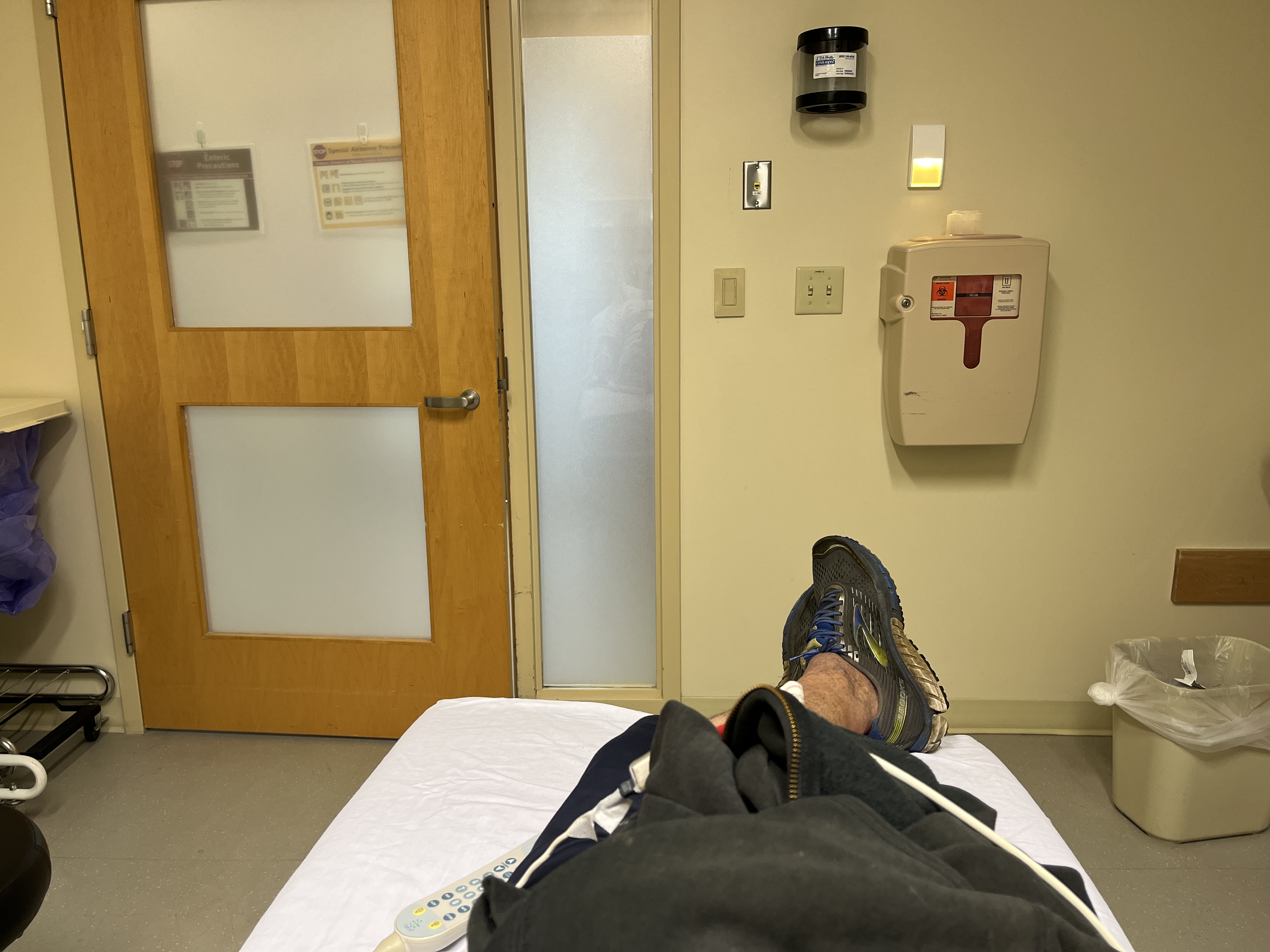
Twenty days later, I found myself in the ER. Here’s a picture.

The short version is that I woke up one morning with significant pain in my arm – my left arm. If you’re not a doctor, generally left arm pain is Not Good. I was pretty sure I had just slept on it wrong, but knowing that I was woefully out of shape and not too far away from a problematic age for that sort of thing, I called urgent care. They were full, but told me based on that pain that I should go to the ER.

I was admitted within twenty minutes of showing up, and they ran a chest X-ray, did an EKG and did bloodwork to see if I’d had or was about to have a heart attack. The good news was that all of that came back clean. I was not having a heart attack, nor did it appear as if I was about to have one.

But the bad news was that my BP was sky high, my resting heart rate was through the roof and as I sat there looking at my feet, the only thing I could think was that while everything was fine this time, on the track I was on I’d end up back here sooner or later. And with the way things were headed the next time I probably wouldn’t be that lucky. As I sat there on the gurney, then, waiting for the test results to come back – by myself, because COVID – all I could think of was how I’d be letting down my family if I let things continue on as they had been.

In my family growing up, there was no greater sin than not doing your job, and I had not been doing my job. I had failed. But fortunately it’s not how you start, it’s how you finish.

One year later, I still have work to do, but I’ve come a long way.

Q: What’s the hardest part?

A: For me, at least, it was getting started. By far. Getting on the scale for me, and seeing how far I’d let things go, was deflating and discouraging. I know this has been true for a few of you as well. The thing that made that bearable, however, was the line diet. Because once I’d gotten on that scale, and absorbed that blow, I could forget about that number and just focus on hitting the next number the next day. Without that feedback, and being able to measure progress, I would not be where I am now.

Q: What do you listen to while walking?

A: Other than work briefings, conference talks or Red Sox games, it’s mostly audiobooks. I tried podcasts, initially, but I didn’t want to have to keep juggling episodes mid-walk. Having to get my phone out on the bridge to the island – which is windy and always twenty degrees colder than the rest of the island – in the middle of winter and manually pull up new episodes with gloves off gets old fast, so I switched over to audiobooks pretty quickly.

One of the common reactions from people I’ve talked to about audiobooks is that they prefer the experience of real books, and my reply was "so do I." My retention from audiobooks, for one, is not the same as when I physically read a book, whether that’s on paper or in digital form. But the audiobooks I prioritize for walking are primarily for entertainment, so retention is not a real concern.

Back when I was getting started, I made the decision to re-read – or in a few cases, read for the first time – Stephen King’s back catalog. I was fortunate, in that they were all available as audiobooks, and I’d accumulated dozens of them from an old emusic.com subscription (subsequently I’ve started using audiobook service of our local library). When King started walking himself for fitness, audiobooks weren’t a thing so he had to pay his children to read books onto tape for him to listen to. Most of the things I listened to I had not read since I was a teenager, or in a couple of cases, since I was ten or eleven. If you’re looking to kill time while walking, King’s books are tough to beat. They have the twin advantages of being both long and entertaining, so I killed mile after mile after mile listening to It, The Stand, The Dark Tower novels and so on. I’ve since gone on to read a great many other authors – most recently it was revisiting Susanna Clarke’s transcendent Jonathan Strange & Mr Norrell – but I feel a particular debt to King, in fact, for playing a part in getting myself back on track health-wise.

King or otherwise, if you find yourself needing to be entertained while walking, then, audiobooks are your friend. Now’s your chance to "read" things you’ve been meaning to read, or re-read things you haven’t checked in on in a long time.

Q: Do you have a link to a line diet spreadsheet?

A: I do. I didn’t find this myself, so I can’t claim credit for discovering it, but unfortunately I can no longer remember who did find it and point me at it. Regardless, this is the public spreadsheet that I made a copy of and have used ever since.

Q: What if you’re not seeing improvements?

A: I’ve gotten this question several times, and my response has generally been two things.

First, make sure your goal is reasonable. If you’re trying to lose too much weight, too quickly, that can become self-defeating. If it’s taken time for you to dig yourself into a hole, it’ll take you time to dig yourself out of it – regardless of how quickly you might have been able to drop weight in the past. Give yourself a reasonable pace, and just try and hit your mark every day. And on that note…

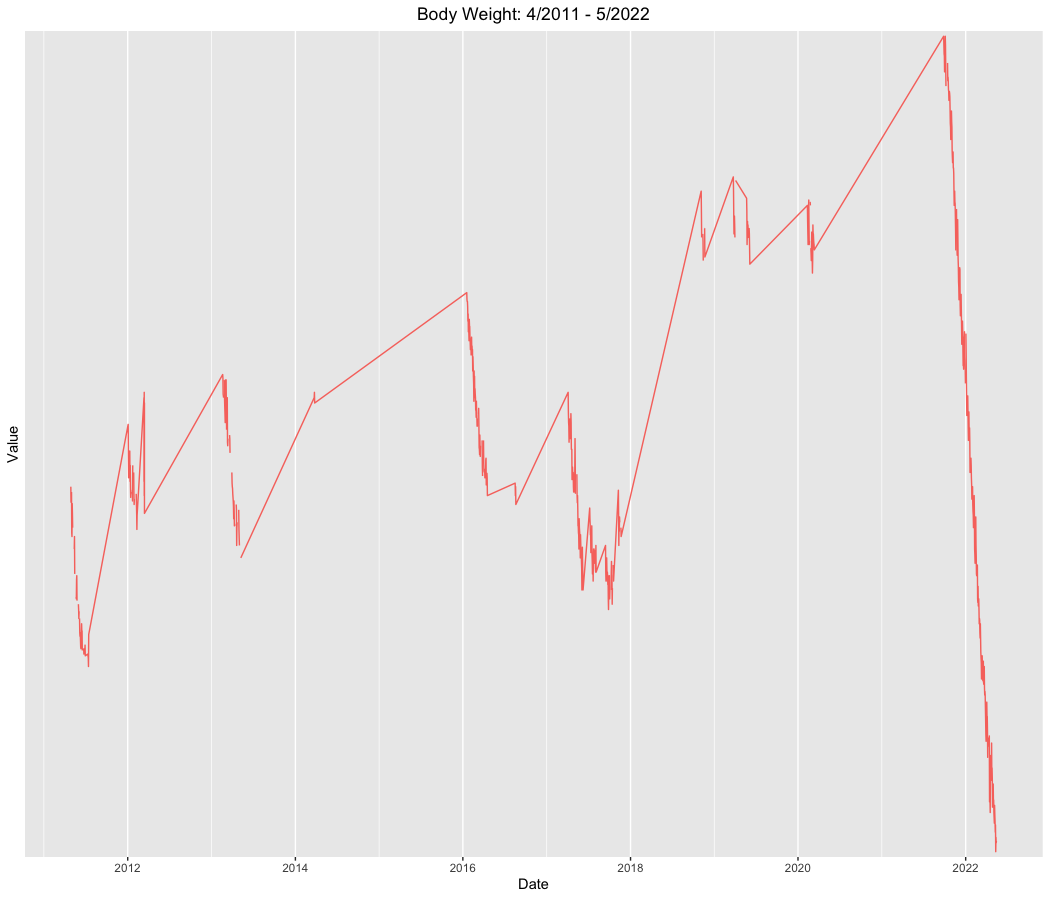
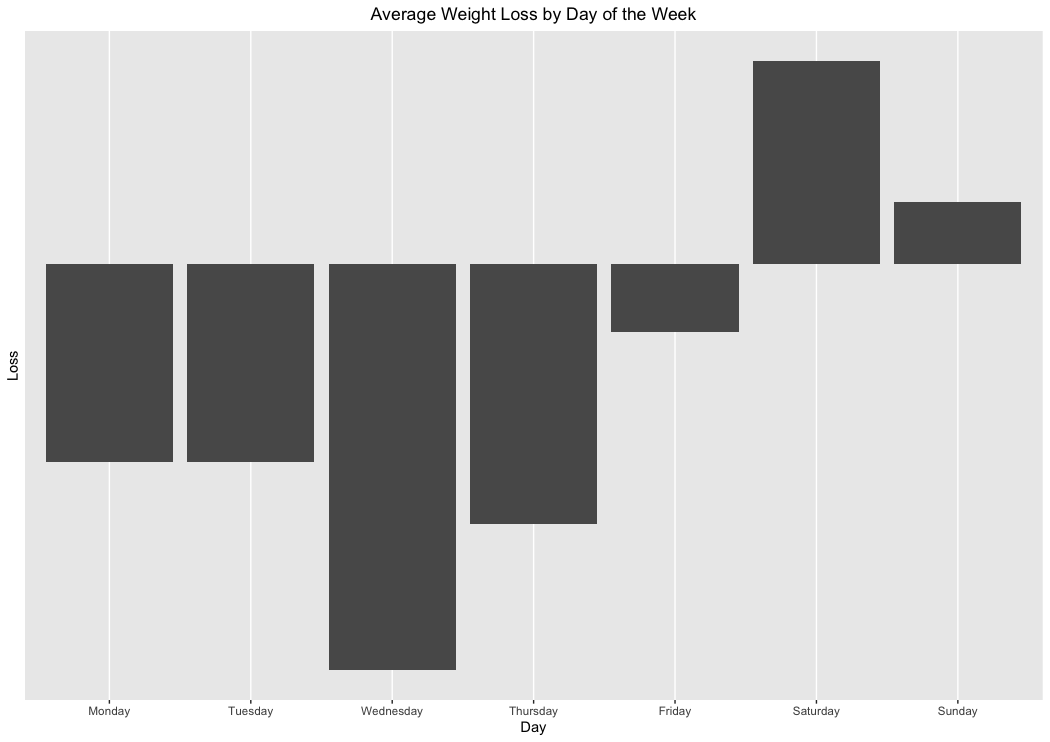
One thing I have definitely learned is that weight loss is decidedly non-linear. I’ve had stretches where I’ve eaten light, walked 14 or 15 miles in a day and lost minimal weight or even gained a bit, only to "drop" four or more pounds overnight a day or two later. It’d be nice if weight loss was a straight line as it is on the graph, but that hasn’t been my experience. And even if you end up going up a bit from that new low mark, the baseline is now lower. Over time, if you’re putting in the work, that number will inch its way down one way or another.

Doing this for a while, I’ve learned to not really sweat today’s number. My focus instead is always on the baseline. As long as my baseline continues to drift down, I don’t sweat the occasional gains from things like weekend indulgences – because they allow me to live my life in a way that makes this whole process not onerous.

So my advice is to just keep on it. You’ll get there.

Q: How much weight have you lost?

A: I haven’t gotten this question as much as you’d think, but it’s one I’m still not going to be public with. My condition could have been worse, to be sure, but it could have been a hell of a lot better. Let’s just say that it’s a significant fraction of my prior body weight, and enough that I’ve had to get new, smaller jeans once already and (hopefully) will need one more set before I’m through.

Bonus Questions

Q: How often do you need to replace your Hokas? (I find I need to replace mine every 4-5 months)?

A: I’ve settled into a routine where I replace them between 450 and 500 miles. I’ve got Strava set to email me when I hit 400 miles, and after that I play it by ear with the shoes. If I begin to feel smaller rocks or acorns underneath the forefoot and midsole, or if I start feeling the miles more than usual, that’s a sign that it’s time for a new set. I’m on my sixth pair now. Four pairs of Bondi 7’s, and now on my second set of Bondi 8’s.

For what it’s worth, however, my walking mentor Dean has something like a thousand miles on his shoes. I chalk it up to him being a lot smaller than I am.

Q: Have you encountered any injuries along your journey?

A: The only real injury I’ve had was when I fell on an icy trail this past winter and broke a rib or two. That was a funny injury in that I could not roll over in bed, cough or sneeze, but walking was mostly fine. I got my 40 miles in each of the weeks after I fell, because per my Strava comment the day after:

Didn’t get lucky with the ribs, pretty sure at least one is cracked. Only hurts when stopping or starting, though.

Other than that, I haven’t really injured anything. Lots of aches and pains along the way, of course. Usually it’s a tight back because my posture sucks, but I’ve had some very transient knee pain, a couple of scary days when I thought I might have been coming down with plantar fasciitis and numerous other bruises from falls.

But otherwise, I’ve been lucky so far. Fingers crossed that continues, because I can’t imagine not being able to get a walk in every day.

Q: Are you curious about adding anything in to your wellness – for example yoga? massage? Acupuncture?

A: I have, and in fact, I’ve been doing yoga daily longer than I’ve been walking. Initially, it was an accessible way to ramp up to some physical activity, and more recently it’s been a way to try and heal and stretch out some of the aforementioned minor aches and pains I accumulate. I was telling someone a couple of weeks back that my primary practice now consists of me Googling "yoga with adriene + body part that hurts the most today." They thought I was kidding, but I was not kidding.

In addition to the yoga, I do some basic bodyweight work. Pushups before yoga every day, and then some simple upper bodyweight routines via TRX straps in our basement three days a week. Nothing terribly fancy or sophisticated, but trying to make sure the upper body gets some work in as well.

As for acupuncture or massage, I haven’t yet tried those yet, though I have no doubts about the therapeutical value of either. It seems probable that I end up trying one or both before too long.

I Have Squandered My Days With Plans of Many Things

For the better part of the last decade, I’ve spent the bulk of my summer vacation working on and being injured by various home improvement projects at the house, briefly interrupted at some point by a week’s vacation in a cottage on the water somewhere up north. This year, things were a little different.

  • First, because we’ve moved. The new(ish) house is larger but more importantly in significantly less need of repair than the old house. Which means that there’s just not as much for me to do – in spite of the ceiling fixtures and curtain rods I replaced last week. And all of the missing sheetrock in the basement from our flood which I have yet to replace.

  • Second, because we moved to an island. Our original plan was to skip the cottage entirely and just enjoy our first real summer on the island, though we pivoted on that to take a week at a cottage earlier in the summer to overlap with a friend’s kids. We followed that up with weekends camping with friends, Eleanor’s first sleepover with friends, visiting a friend’s Vermont lakehouse, making two separate trips to another friend’s place on a private island in Casco Bay, and one to my sister-in-law’s cottage up in South Bristol.

  • Third, because unlike in her early years there was no daycare for the six year old. The front part of her summer was loaded with all kinds of day camps – acting, STEM, magic and more. The last couple of weeks of August, she was home with us. Which meant dreaming up new ways to keep her entertained.

We did our best.

Anyway, here’s what I did on my summer vacation.

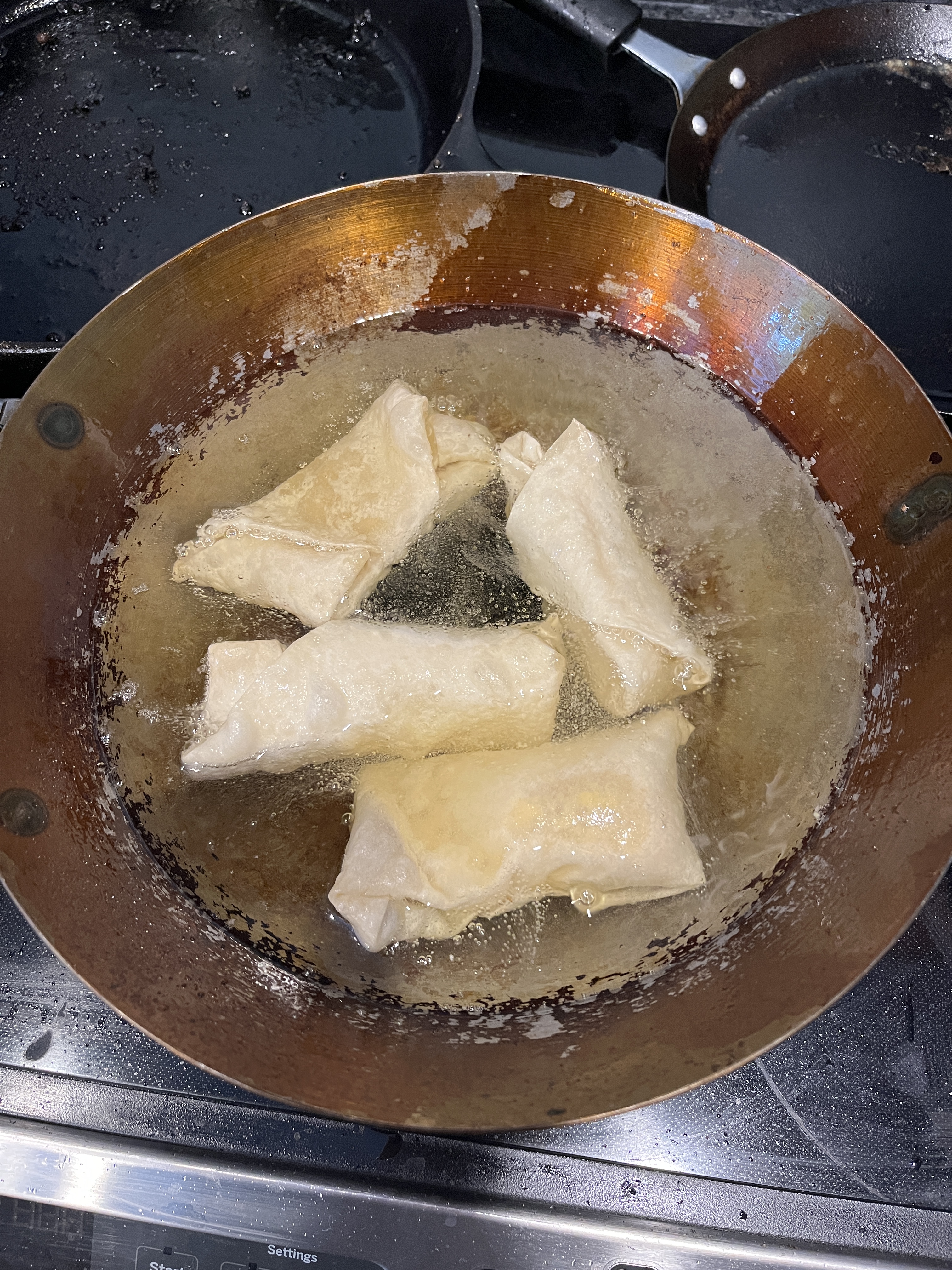
I opened the first morning of summer vacation by trying to kill time with Eleanor by making breakfast eggrolls. Not only did she not want to eat them, she managed to repeatedly scald me with molten oil by dropping them in from a foot above the wok.

Not good times, bad times.

Later that afternoon, however, we were up at Kate’s parents’ place for a birthday party and some cousins time.

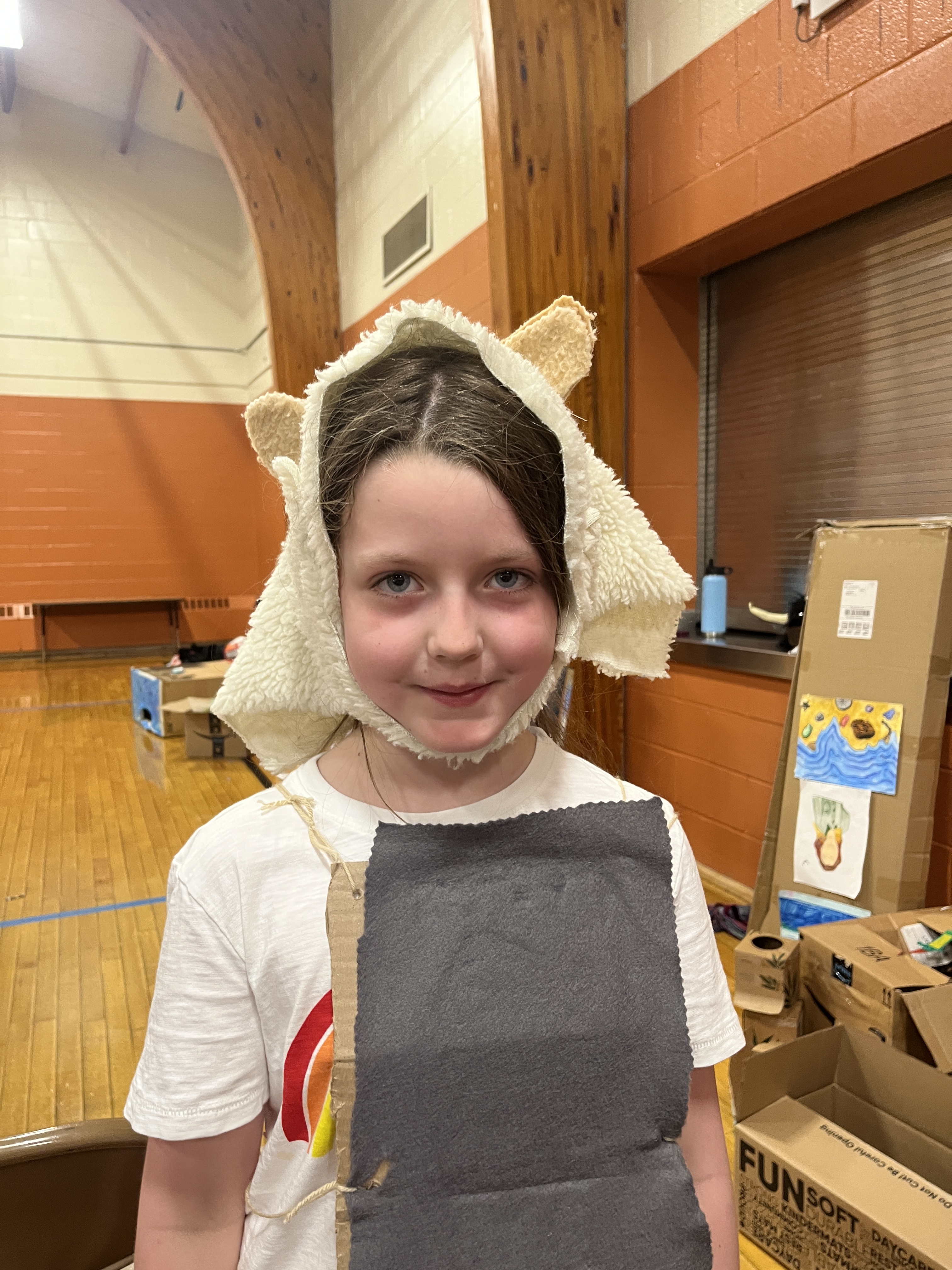
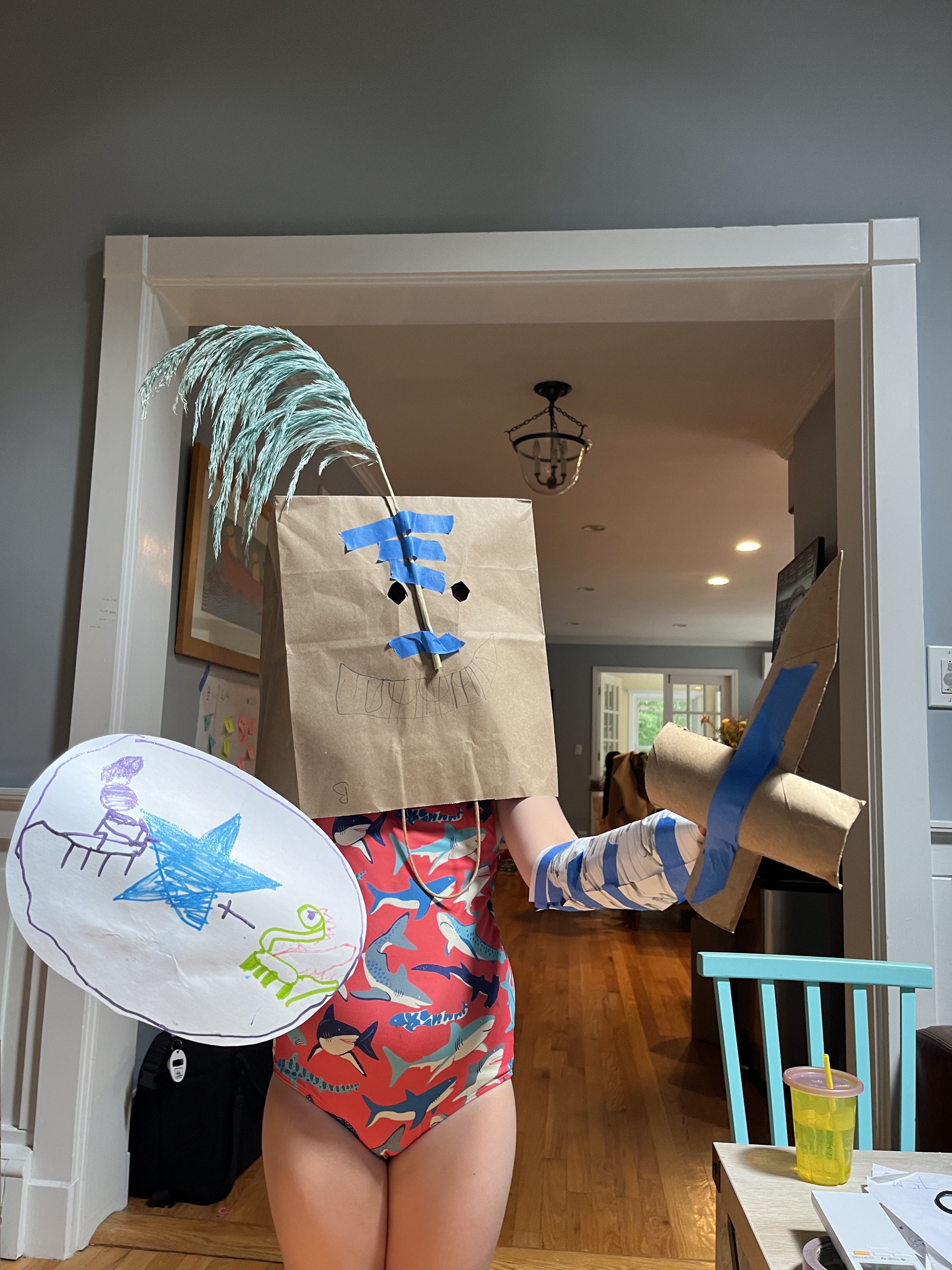
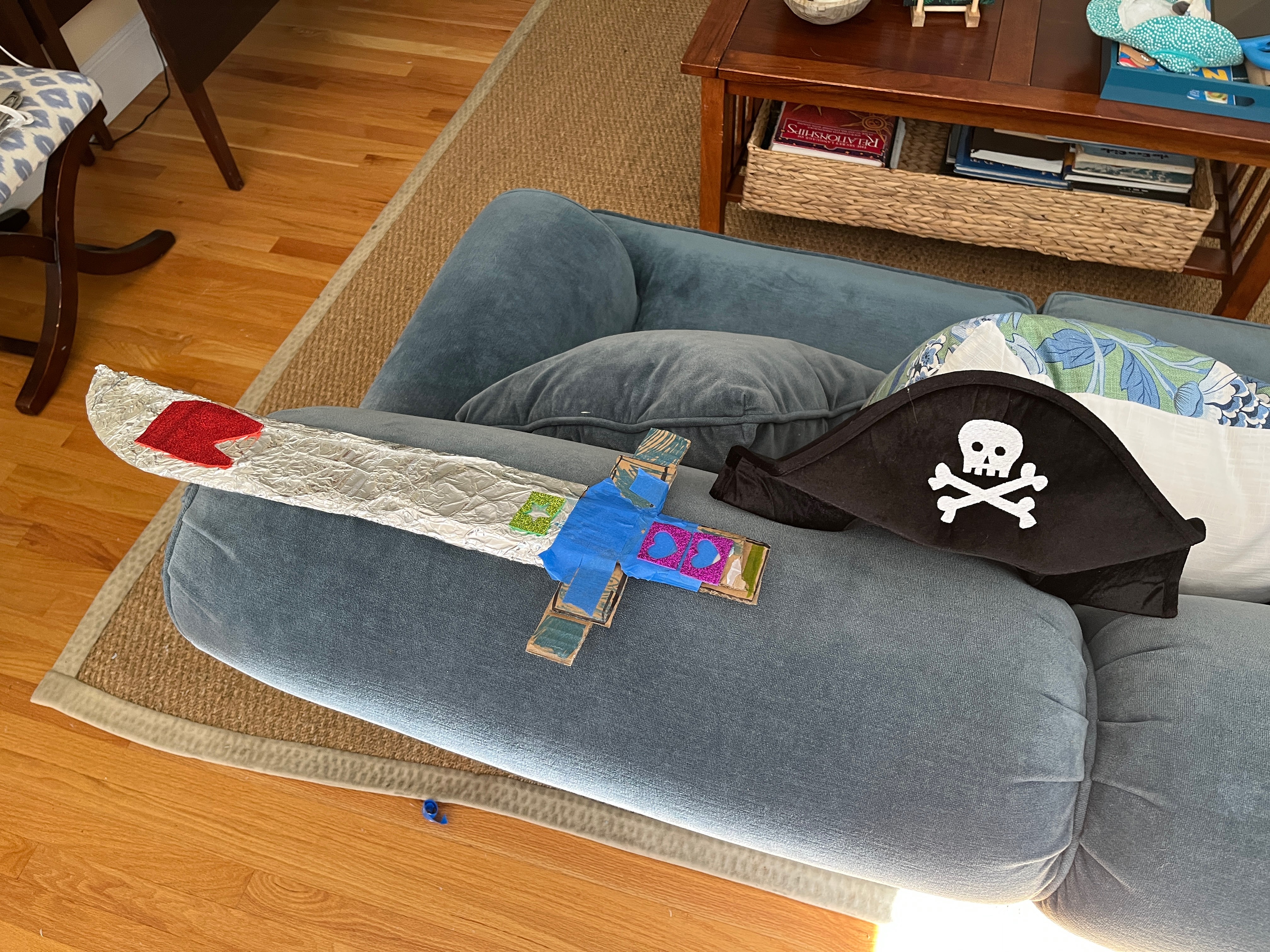
The next day, she disappeared for an hour and wouldn’t let me see what she was doing until she emerged with some homemade – and hand decorated – armor.

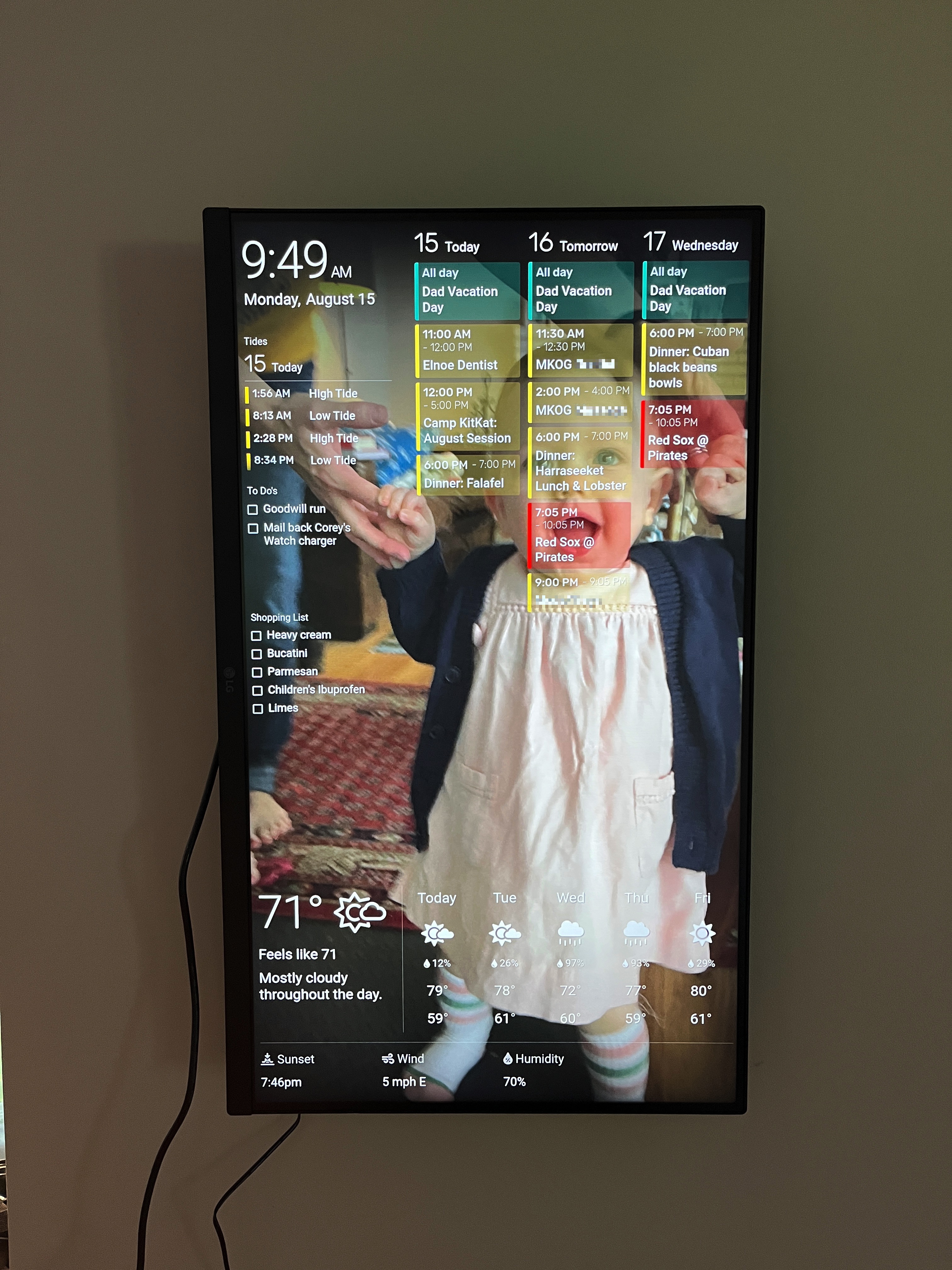
Out of both a desire to be productive and a need to begin prepping for school re-entry, I took some time to set up a combination digital calendar/picture frame/weather station/family to do list/tide chart. So far, so good.

With the girls gone for dinner at a friend’s house, I took the opportunity to try and make dumplings from scratch by hand. Unsurprisingly, things didn’t end well and I did not even ask them to try them later.

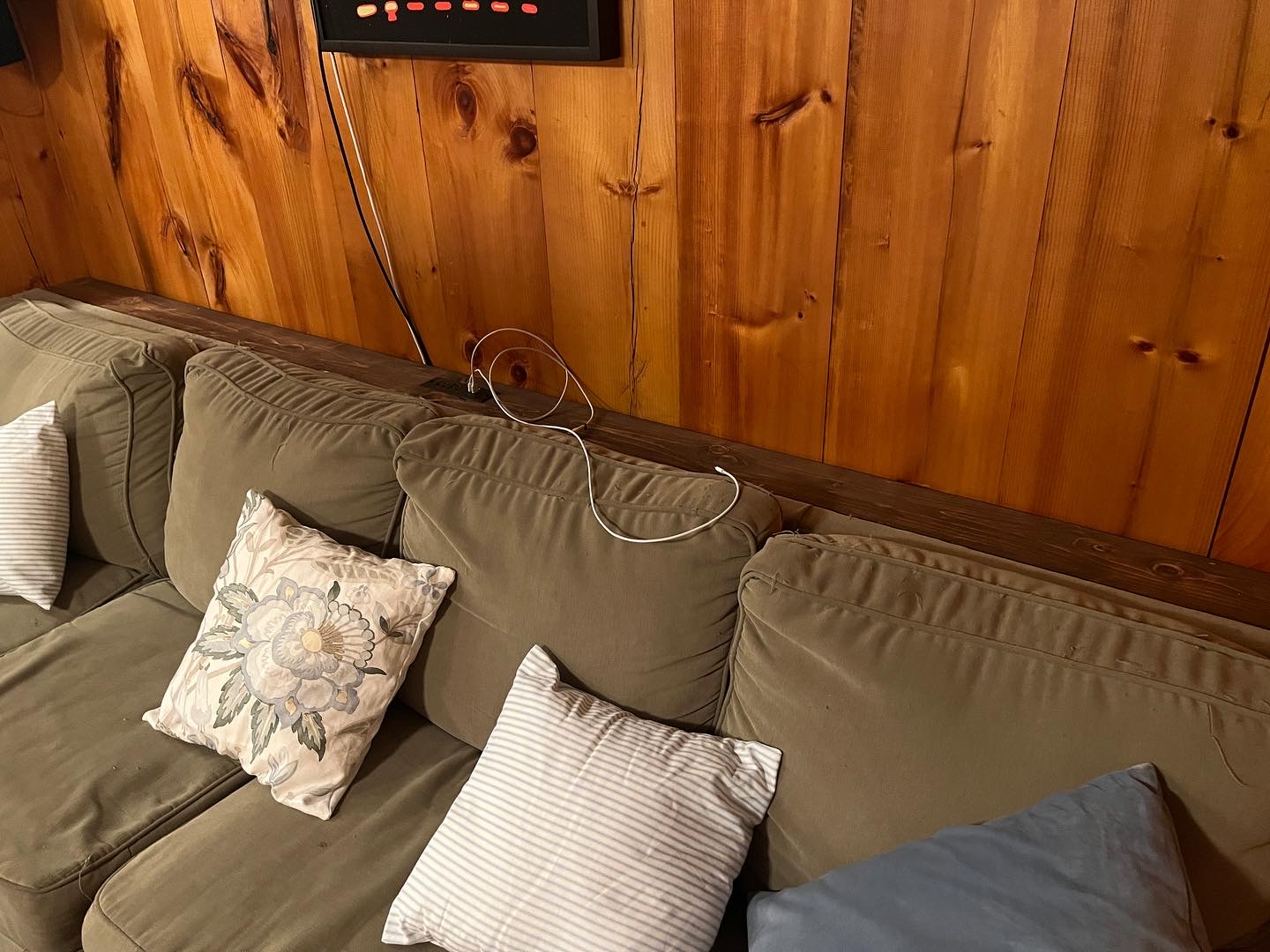
Apart from the aforementioned light fixtures and curtain rods, the only real home improvement project was building a shelf behind the old, inherited sectional couch in our basement. I cut up the same 2×6’s that once were part of the wheelchair ramp I made for my Dad, stained them, dropped in a power outlet and called it good.

I’m not sure that I’ve ever caught a sunrise while on vacation before – in fact, I’d bet against it. But I was there for a couple of good ones.

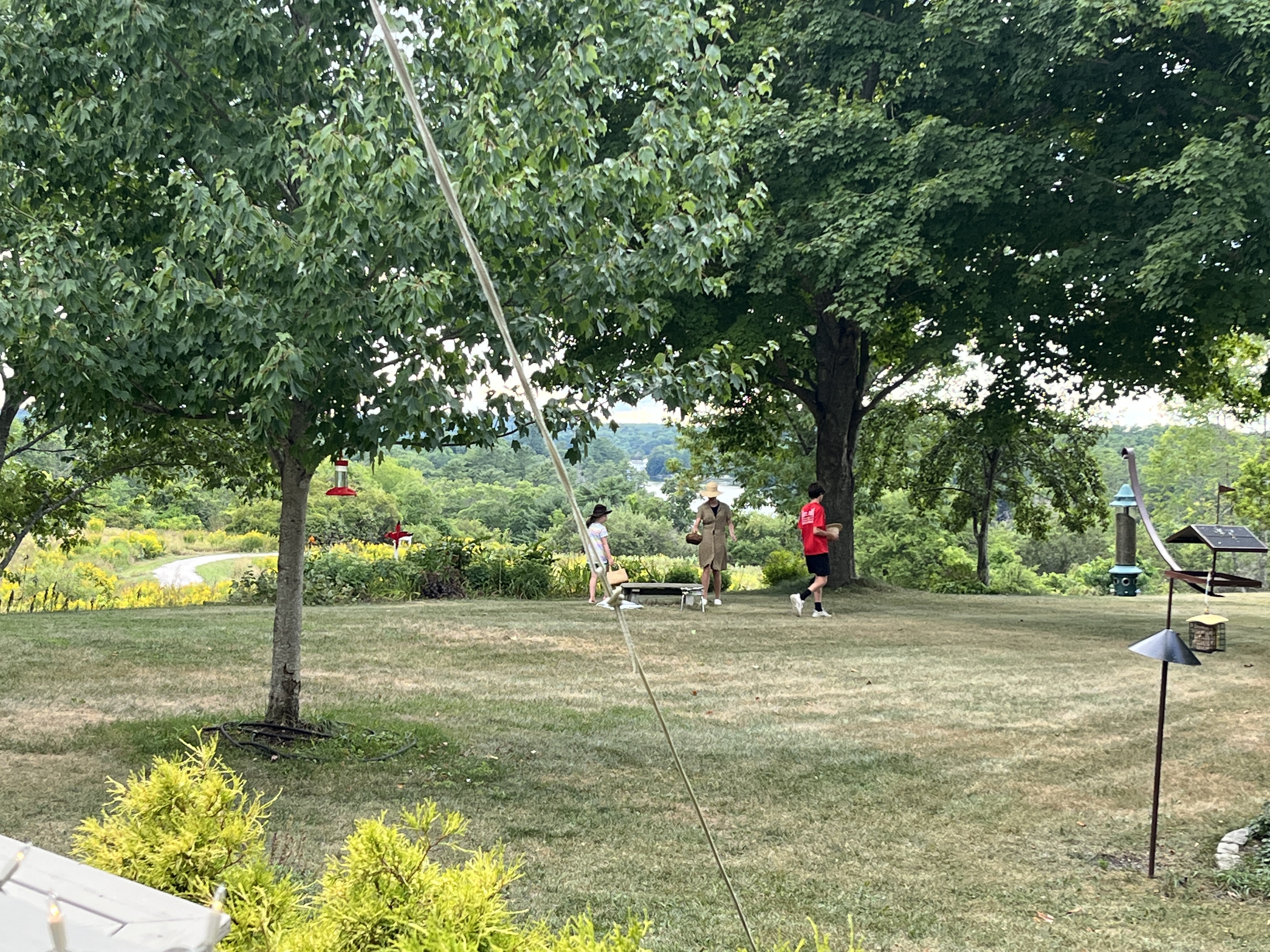
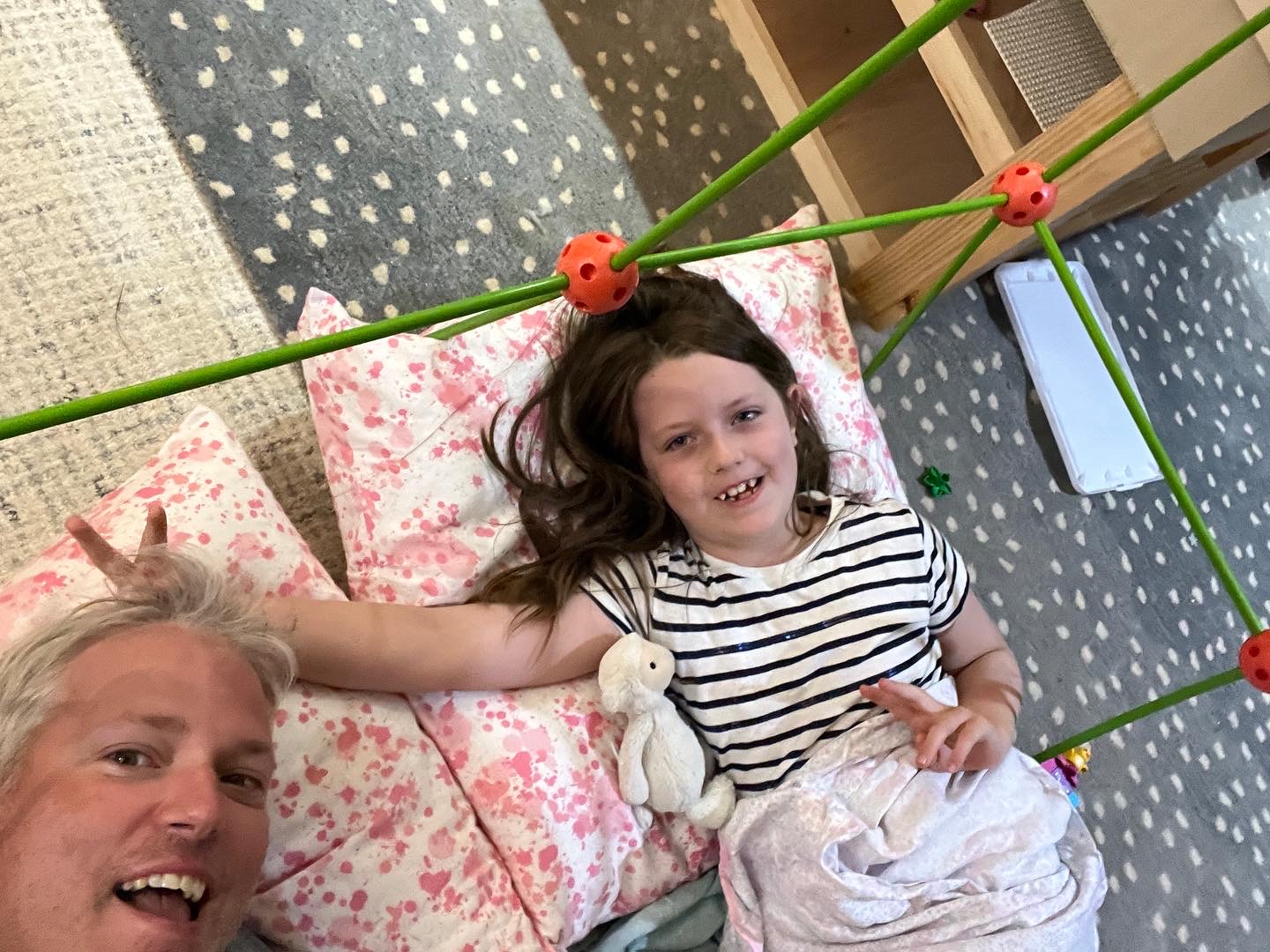
Later, we built a fort.

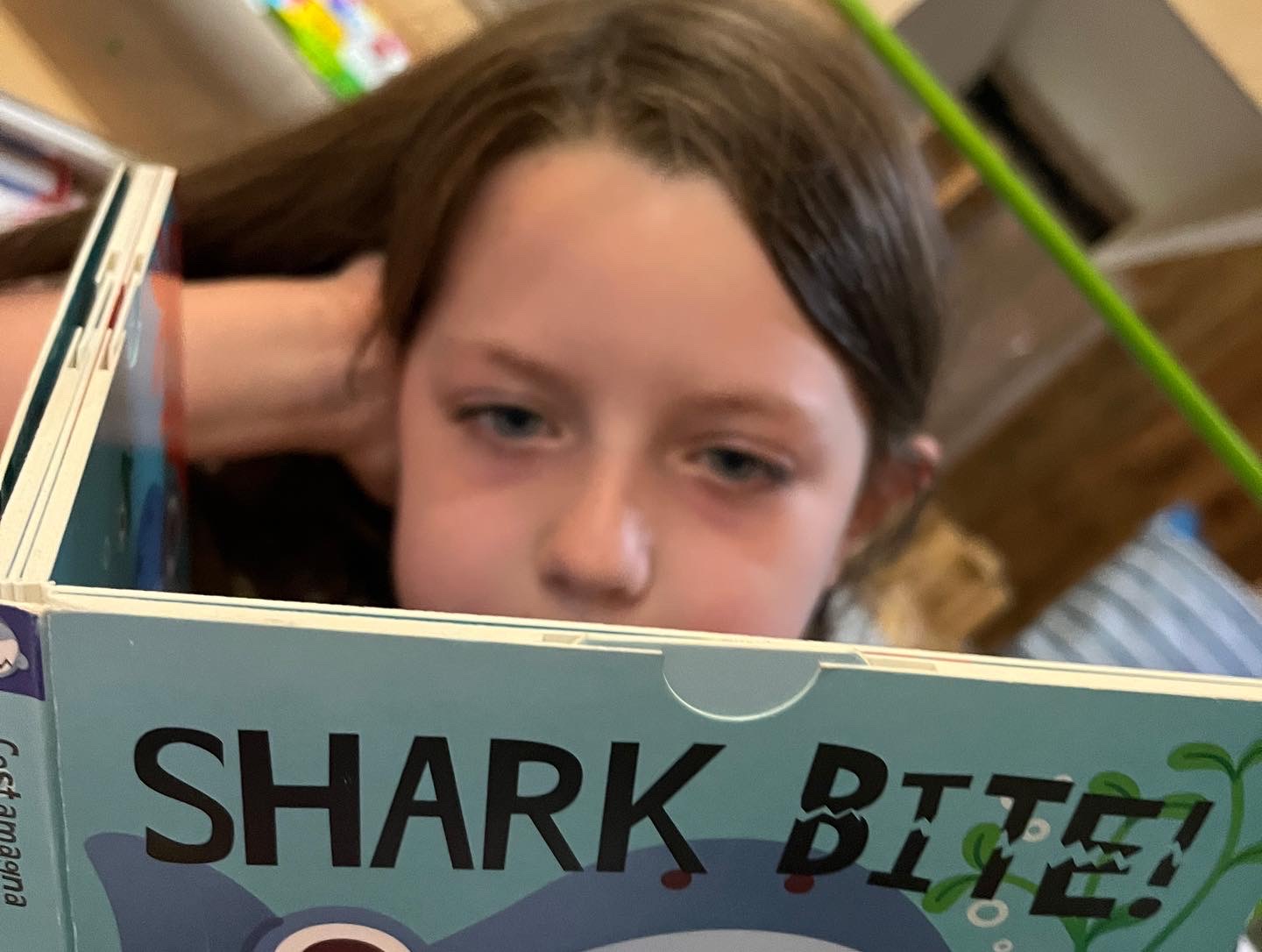
And she read to me in it.

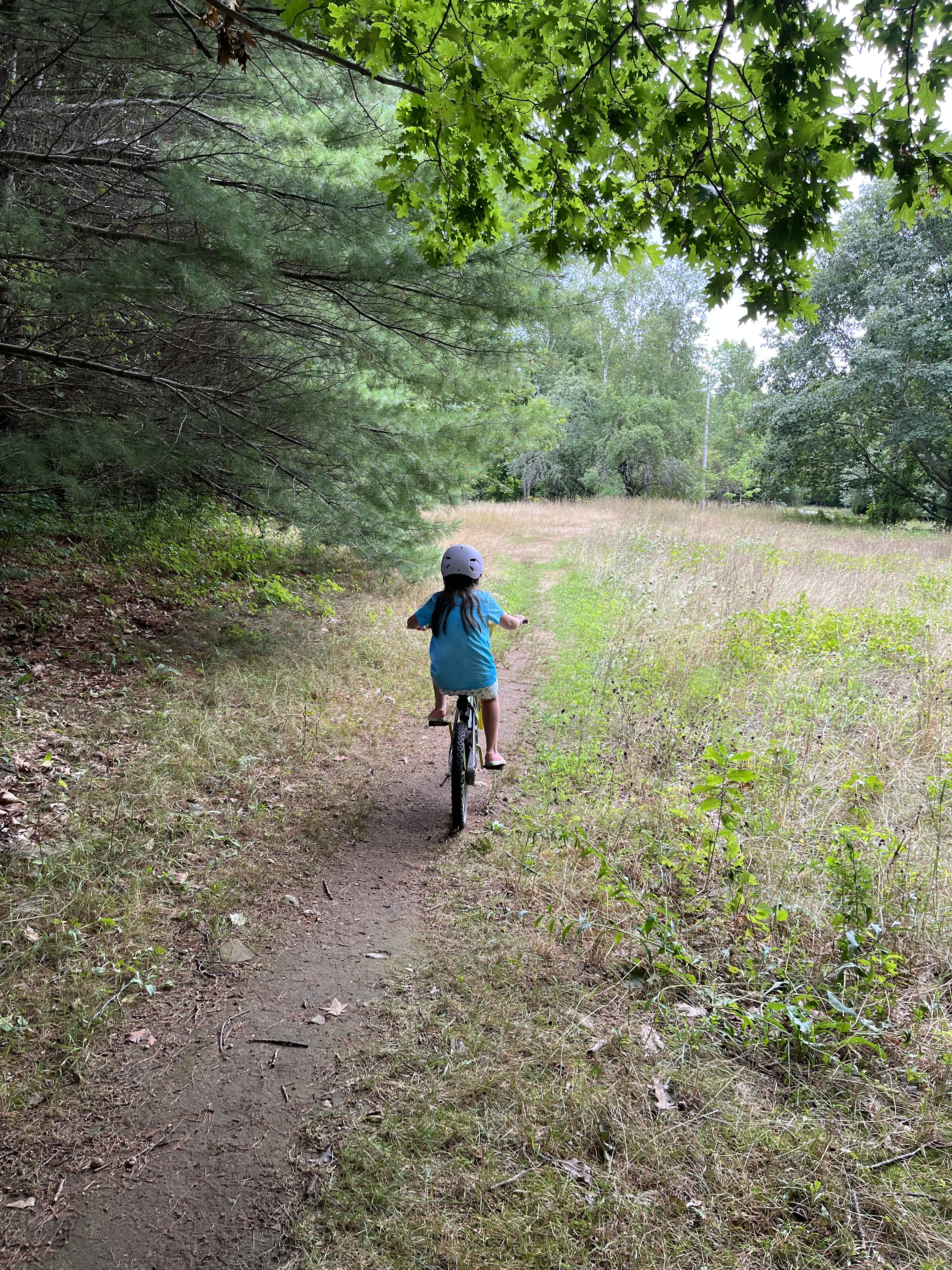
We rode bikes all over the island, which was mostly fun. Except for the days when it was hot and she’d want to walk the bikes back halfway across it.

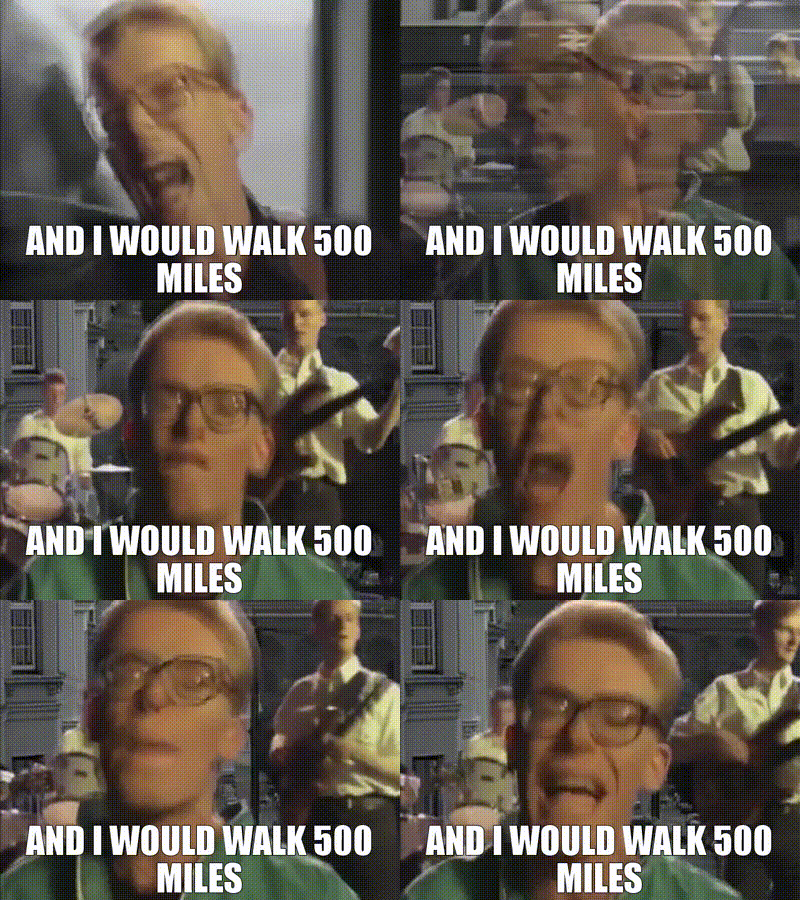
Set a walking goal before the start of the year, and after crossing a particular milestone there was only one GIF to talk about what was left.

Headed up to my Mom’s place to see my brother and nephews, and, well, the usual weather followed.

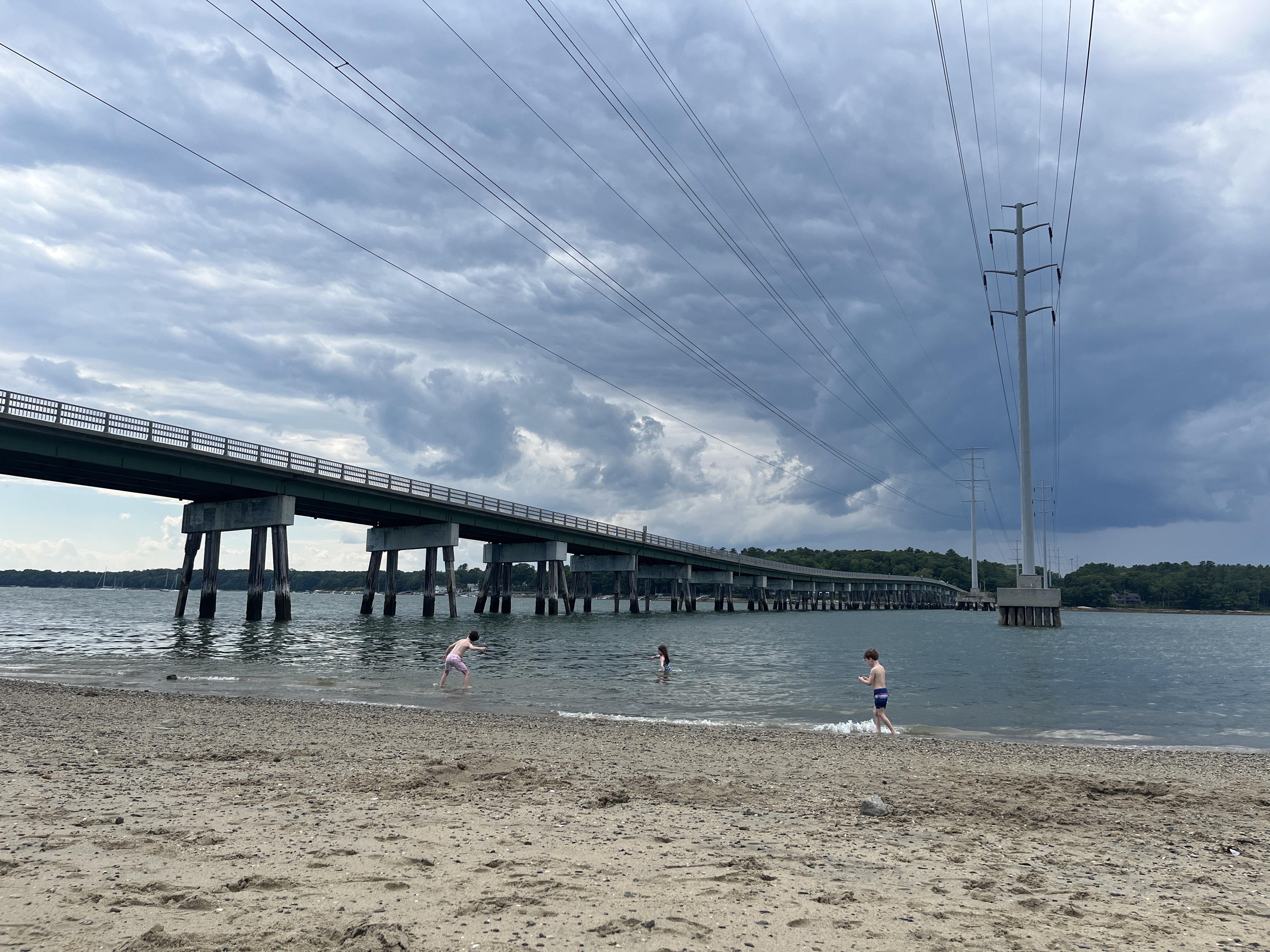
The next day the cousins came down to the beach by our house and, well, the usual weather followed.

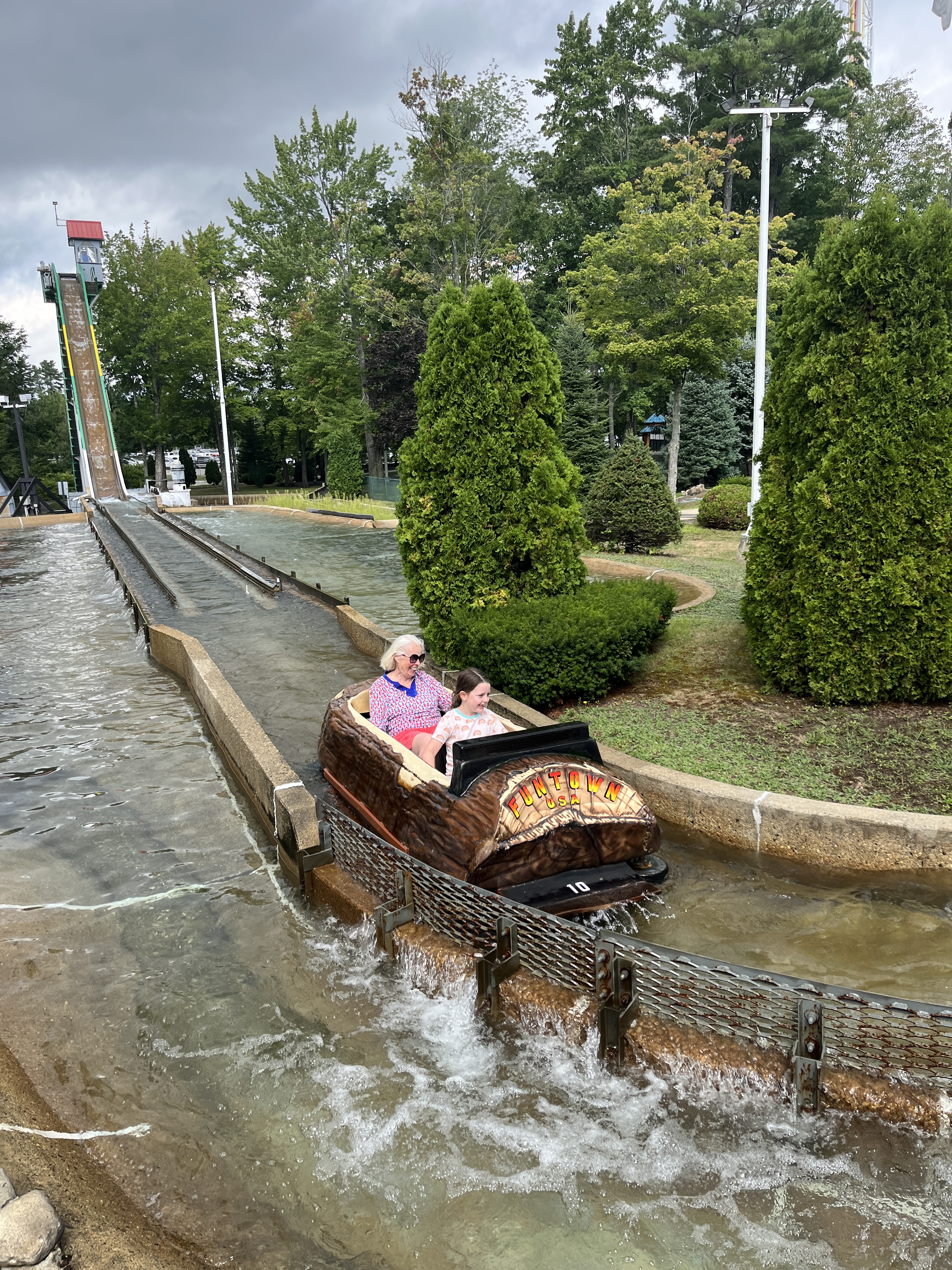
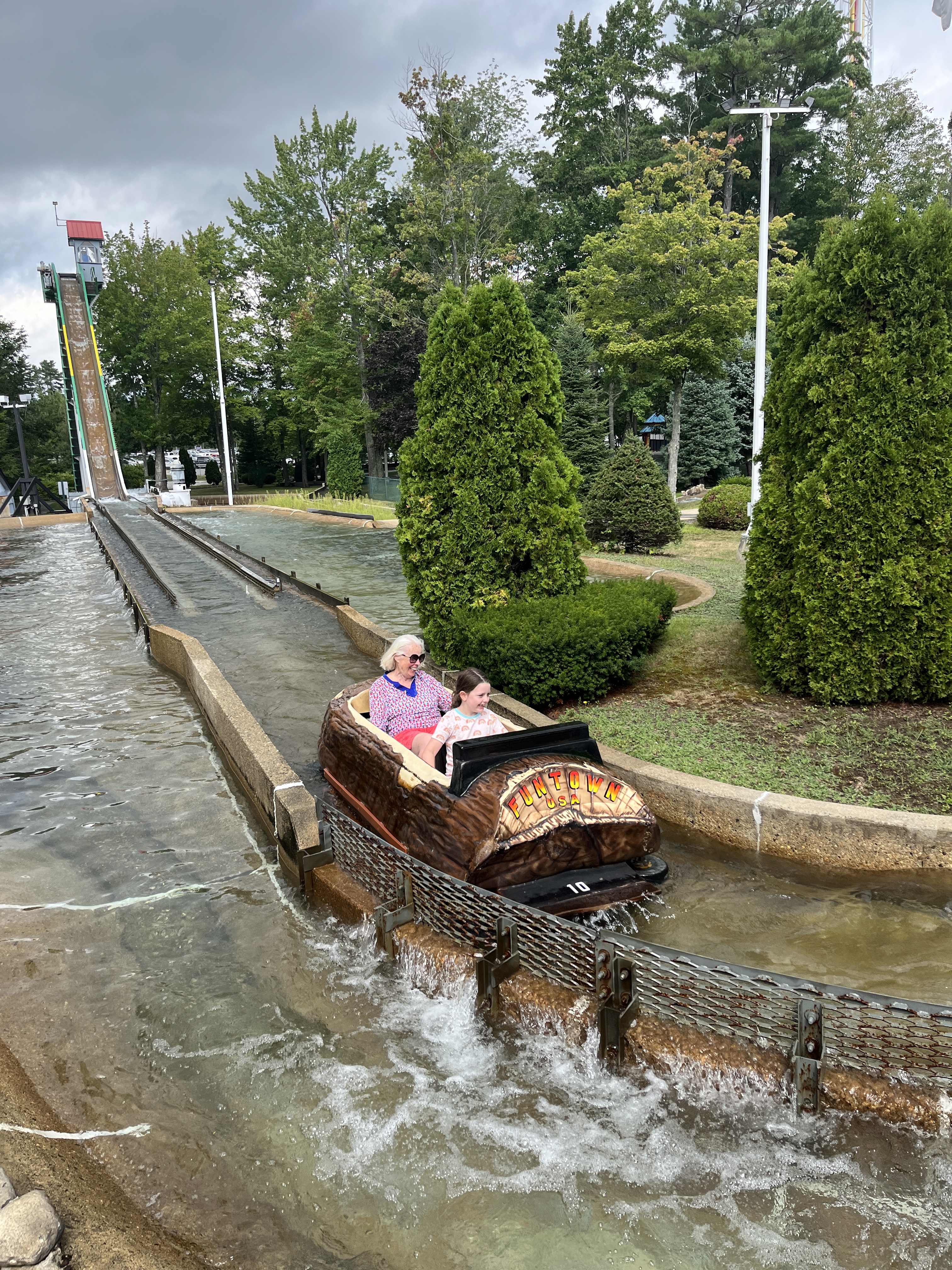
Two days later, we all went to Splashtown Funtown. It was as advertised, though just take my word for it: don’t get on the Tilt-a-Whirl. Even if your beloved daughter says “Daddy, will you take me on the Tilt-a-Whirl?”

In between our various adventures, Eleanor and I spent a lot of time sitting together on the couch reading while poor Kate had to work.

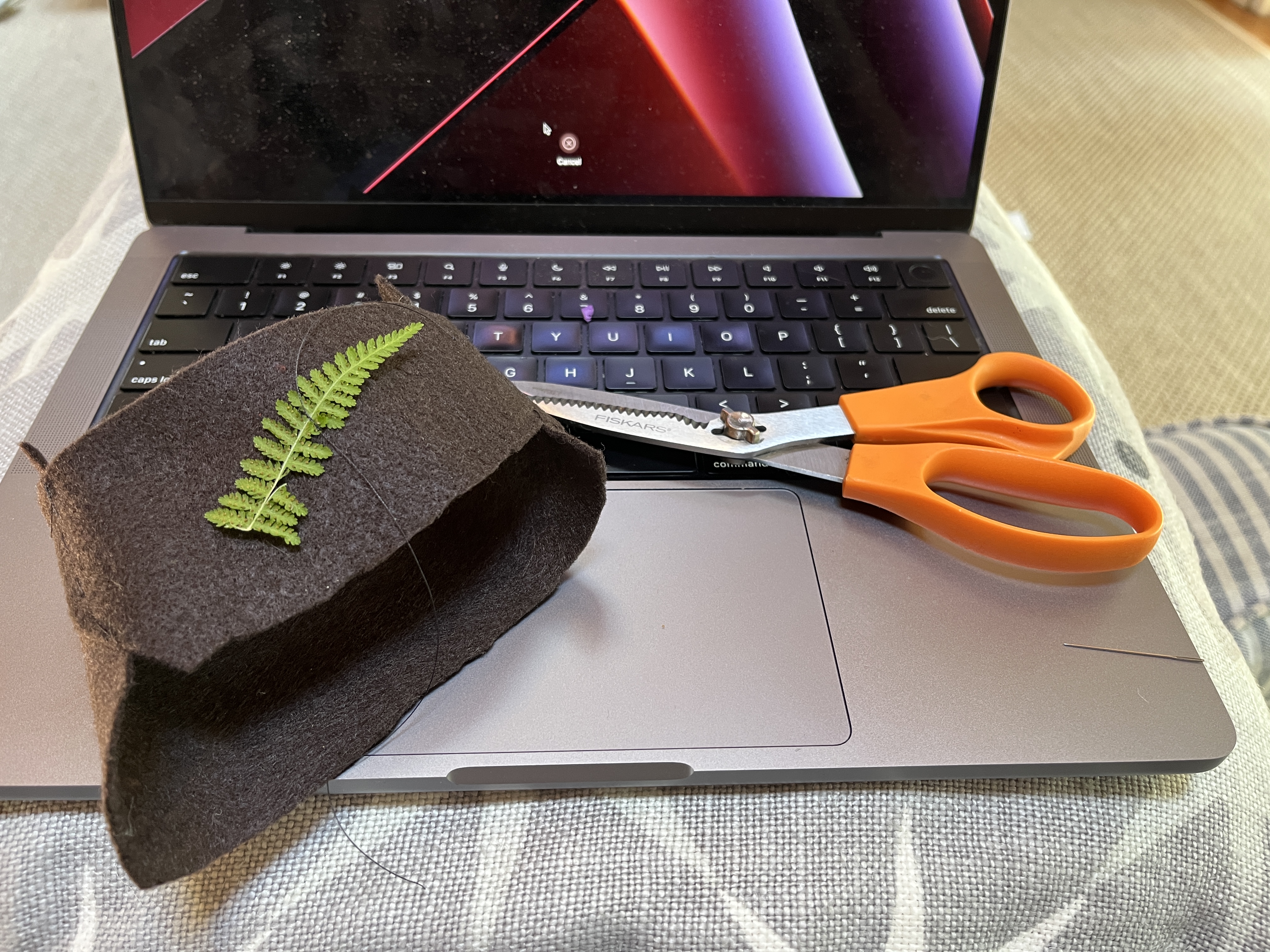
Then there was the day I was tasked with sewing together “vests” for her stuffed animals, and sewing tiny ferns on to those vests. Turns out I’m a lot better at reading to her than I am sewing.

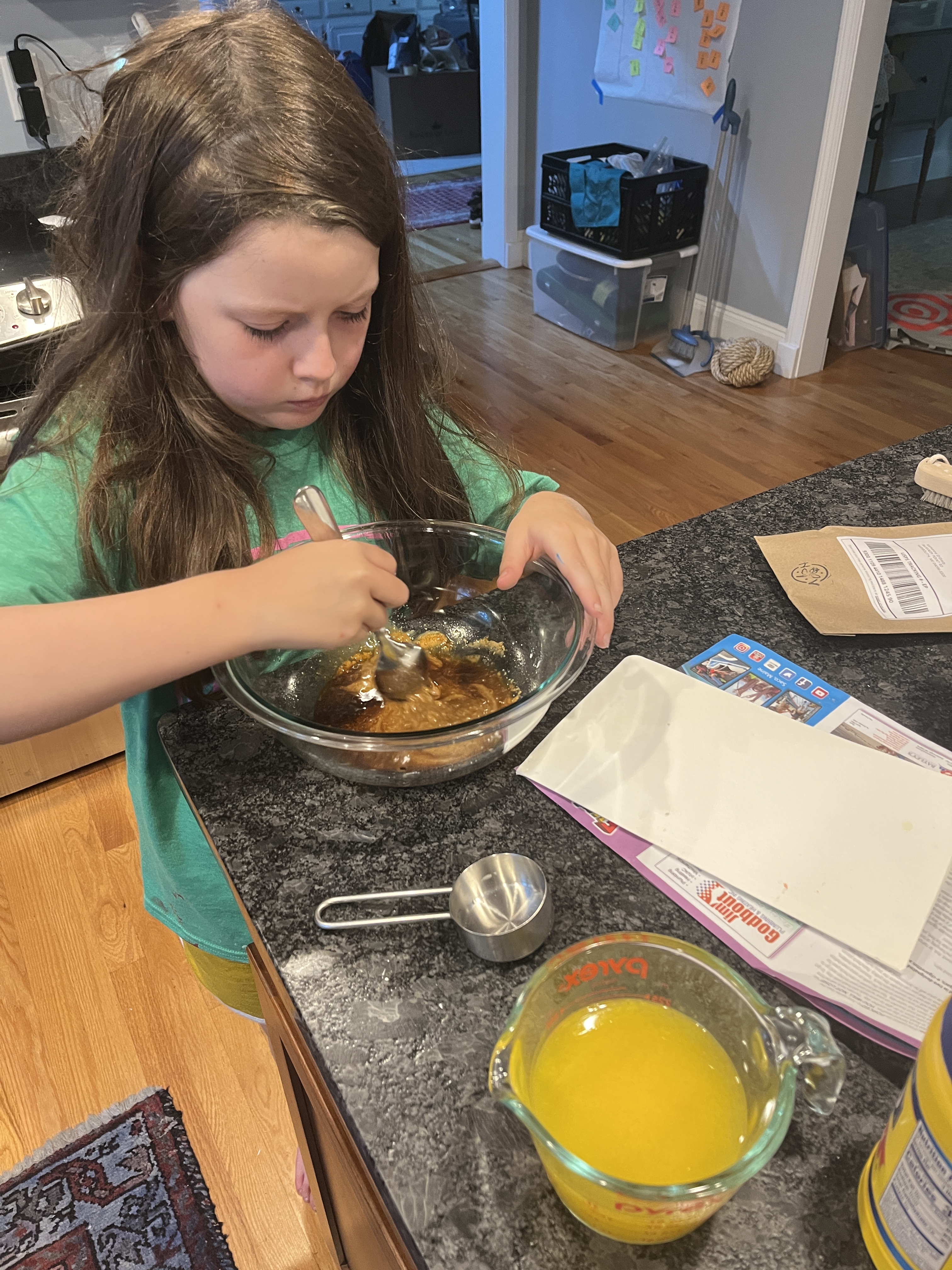
Another night, one when Kate had to work, Eleanor and I made orange chicken together. The bad news is that she didn’t like it and wouldn’t eat it. The good news is that she didn’t manage to burn me this time.

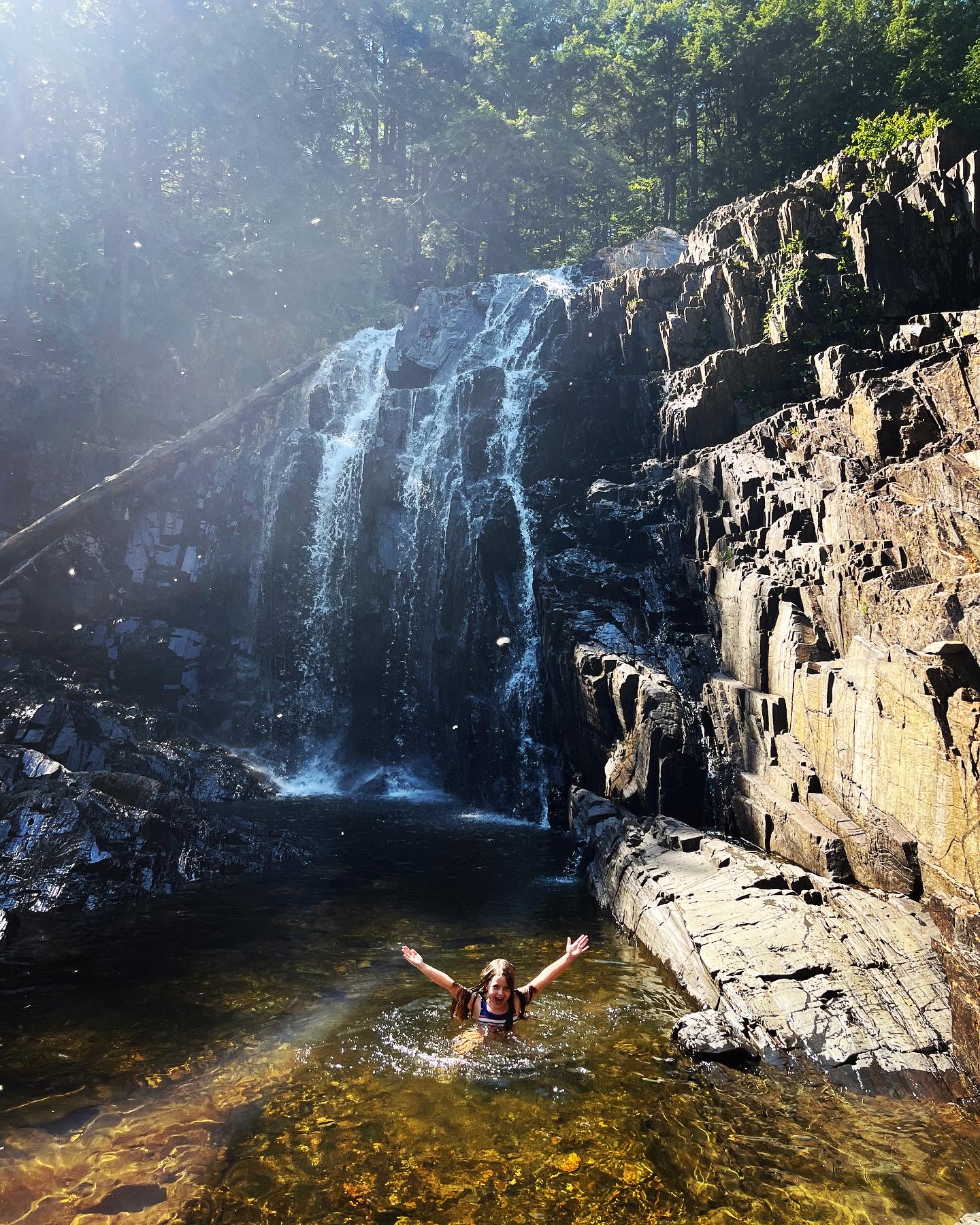
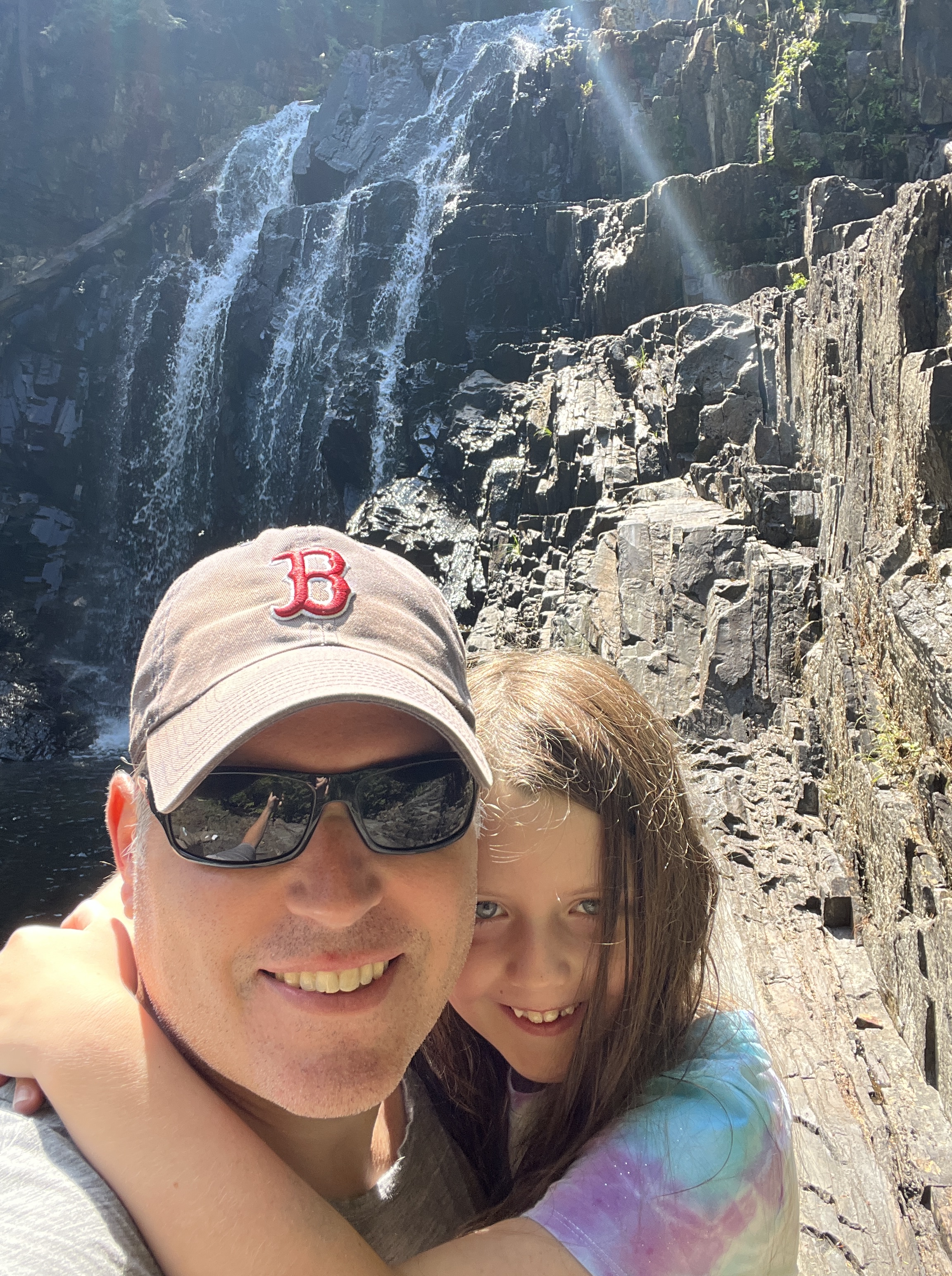
Arguably the highlight of my vacation was taking Eleanor up to my happy place, one I’ve visited every summer for well over a decade. We were supposed to do this as a family, but the weather and schedule didn’t cooperate the week Kate had off, so instead I just took my sidekick.

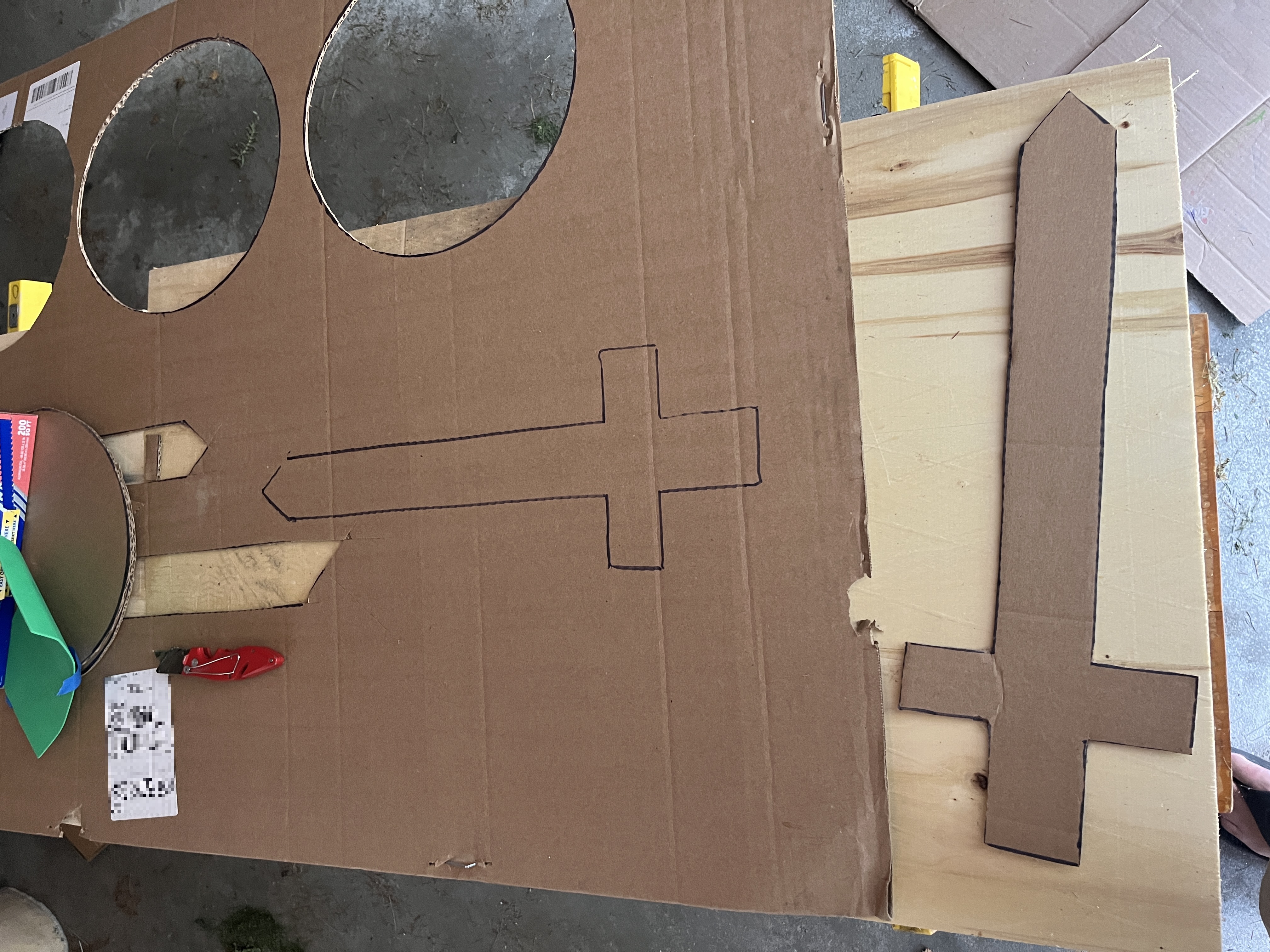
Over the weeks I was out, I got a lot better at making cardboard weapons.

To the point that I ended up having to create an assembly line of sorts to manufacture them at scale.

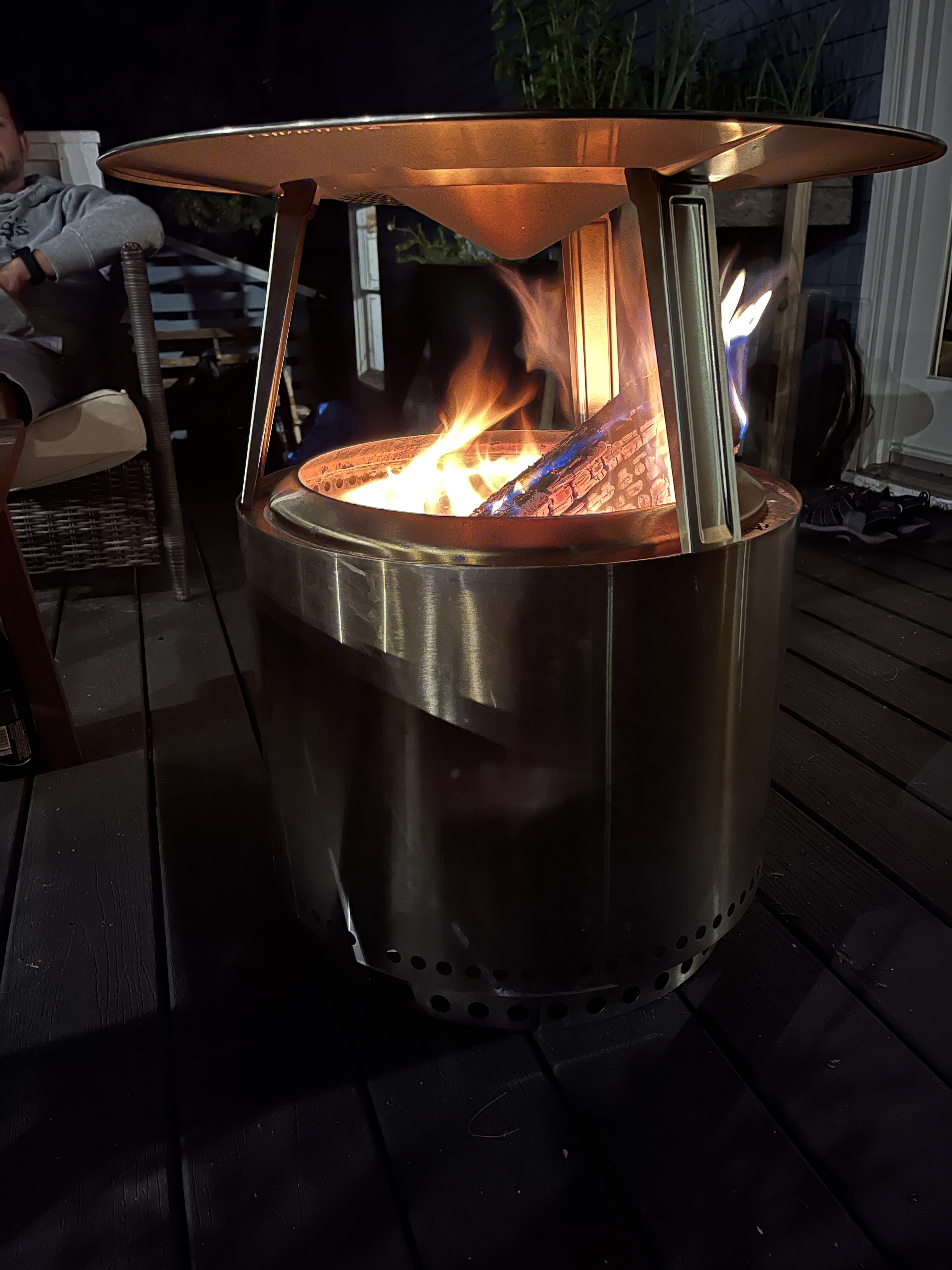
By the end of vacation it was cool enough for firepits, and we got to deploy the new Solo heat deflector for the first time. Early verdict is that it does work and deflect heat to the sides, but you have to be close.

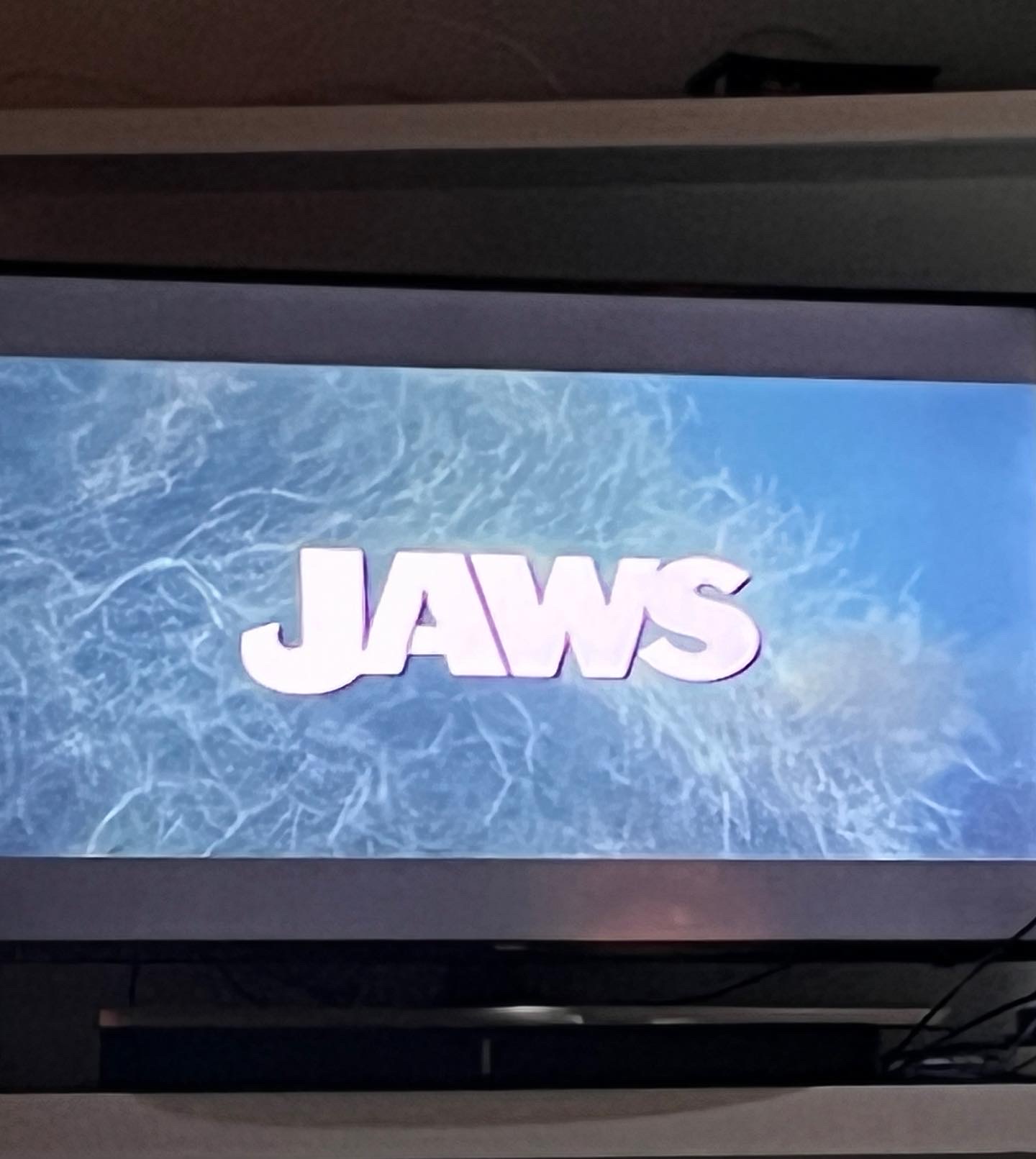
Vacation nights, I’d close the day by watching the kinds of movies that I hadn’t seen since a sleepover at a friend’s house when I was a kid. And probably didn’t need to see again because they were awful and should never have been made.

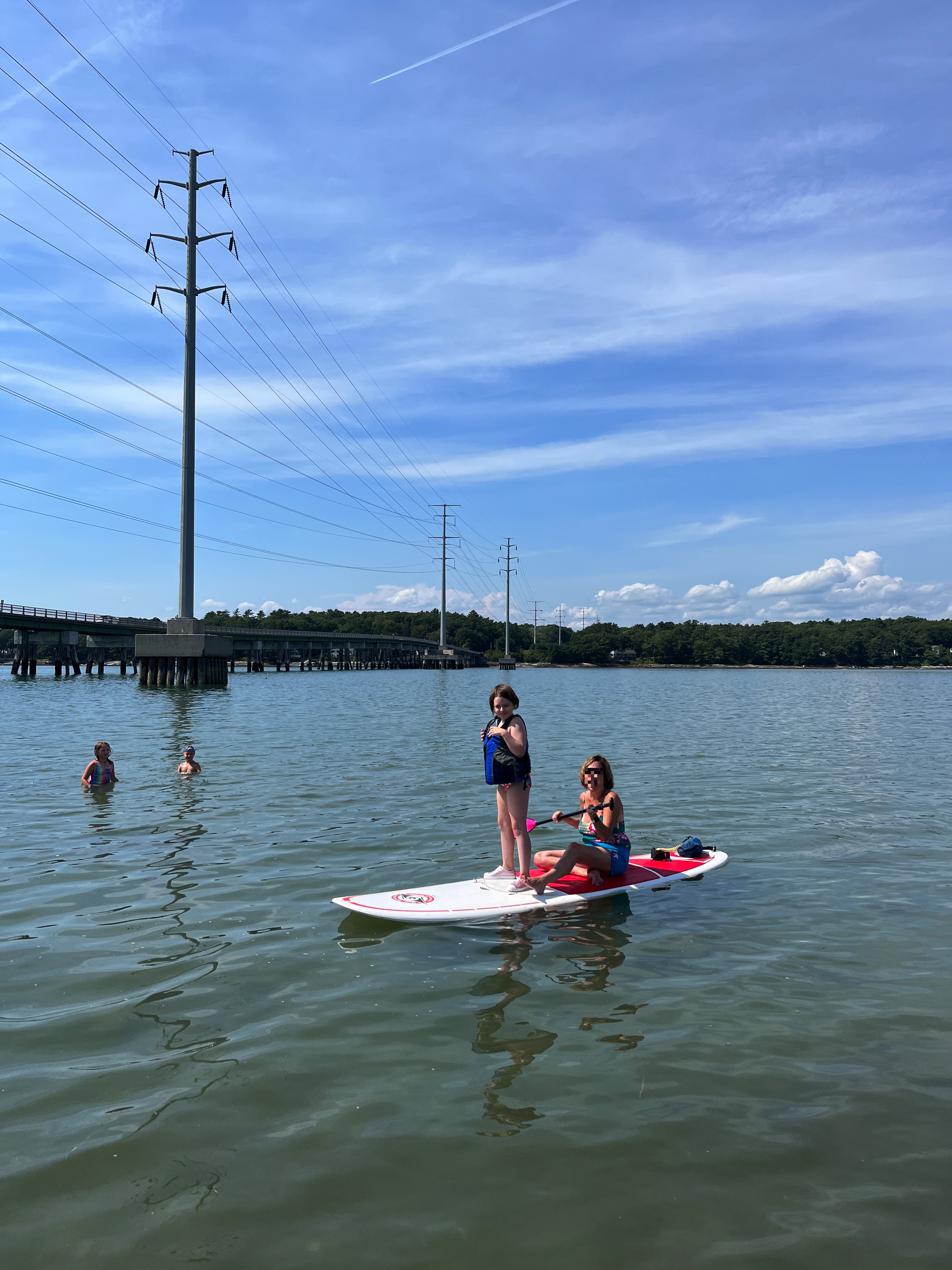
And then, on one of our last beach days of the summer, Eleanor got to make her paddle board debut thanks to an incredibly kind neighbor.

All in all, while it wasn’t all sunshine and unicorns – there were some rainy days in there – it was a summer of adventures that Eleanor hopefully will remember for a long time. And worst case and she forgets, I can always send her this.

Why I Set Up a Family Dashboard

When I was in the middle of installing our Dakboard-based family dashboard / calendar / to do list / weather station / Red Sox schedule / etc display for the third time (we’ll come back to that) Kate asked me if my botched installation was going to be a part of my writeup. I demurred initially, saying that I had no intention of writing this up and her response was laughter. "Of course you’re going to write it up. Here’s what worked, here’s what I messed up, and so on."

Well, chalk one up for Kate because here’s the writeup I said I wasn’t going to write up.

Why set up a Family Dashboard?

I blame my colleague Rachel for this entire debacle exercise. She posted a picture of her family’s Dakboard set up with calendars and so on a month or two back, and while I resisted for a while, eventually the sheer potential utility of it wore me down. So I tapped my personal fun money budget and here we are.

What do you use it for?

There’s no one thing. In contrast to some of the devices we have at the house that serve a single, specialized purpose – think the Honeywell D6 thermostats we have that control our heat pumps – the family dashboard performs a number of tasks.

Some examples:

  • Kid Activities: when you have kids, there are activities. Plural. Keeping track of them all is hard, and as with a lot of people who live by their calendars my rule has always been that if it’s not on the calendar, it doesn’t exist. So from camp to grandparent sleepovers, keeping track of kid activities is huge.
  • Tide Chart: we live right near a beach, and said beach is tidal. So the tide chart is useful for determining whether the local beach exists at any given moment or whether it’s underwater.
  • Pick Up and Drop Off: we haven’t used it for this yet, but having a display that tells us who is responsible for dropping Eleanor off at school and who’s responsible for picking her up will be a lot easier than frantic last minute texts. "You’re getting her, right?"
  • Dinner Plans: when your life is busy, it can be difficult to remember what you’re supposed to be having for dinner. Hence the calendar entries that tell us what we’re supposed to be having for dinner.
  • Shopping List: living on an island means that a trip to the grocery store is not a mere "pop over to the corner store" excursion. Instead, what’s useful is making sure that any trip to the mainland – to pick up your kid at school or camp, say – a two birds with one stone operation. Which means that having a running shopping list is very handy. This one’s especially useful because Todoist – the app responsible that integrates with Dakboard for our shopping list and to do’s – can updated by voice via the Google Assistant that lives in our kitchen. So when we run out of, say, pickled jalapenos, rather than having to remember that, as I’m cleaning out the jar in the sink I can just say "Ok Google, add pickled jalapenos to my shopping list." And they appear automatically on the dashboard as a visual reminder.
  • To Do’s: think shopping lists, but instead of groceries it’s things we’re supposed to do. Like email Corey back the Watch charger we stole by accident.
  • Weather: when you live in Maine, knowing what the weather is and might be is more important than it is in a lot of places. So having that available at a glance rather than having to paw through a phone is incredibly useful.
  • Sunrise/Sunset/Humidity: just as the weather information is useful, understanding what time the sun is going to come up is useful for early morning walks, understanding what time the sun is going down is useful for planning evenings around the fire pit and understanding what the humidity is is useful for understanding why you feel so miserable.
  • Red Sox Game Start Time: self-explanatory.

Why Dakboard?

The short answer to "Why Dakboard?" is because it’s what Rachel and her family used. The longer answer is that after looking around at a bunch of alternatives like Mango Display or Magic Mirror, Dakboard seemed to be the most mature and appropriate for our usage.

I will say that having gone down this path and spent money on it, I have essentially guaranteed that one or both of Apple and Google will very shortly make available a superior and potentially cheaper option. Certainly one that is less of a hodge podge than what I’ve thrown together.

Amazon has something similar-ish in the Echo Show devices, but they had some limitations in their service compatibility as well as features we didn’t want or want to pay for like cameras and speakers.

How much does it cost?

The cost could be $0 if you have a spare computer and display lying around – especially if you’ve got free counter space and don’t need to deal with a wall mount. In our case, the extra monitors we have on hand were either too old, not fit for a wall mount or both, and the only surplus computers were way too big for our kitchen, where we decided to put the device. We ended up spending maybe $340 or so all in.

Could we have saved money by taking a DIY approach?

Certainly, but I noped right out of that. The $50 or so I might have saved would not have offset the hours of research into compatible models, sourcing accessories and so on. That kind of thing would have intrigued me when I was 20 and didn’t have as much going on. These days I’m busy and only too happy to make that someone else’s job.

I did not, however, go for pre-integrated displays and compute elements because the premiums attached to those seemed higher.

What are the requisite pieces of a dashboard?

This is what’s necessary as well as what we did about them.

  • Monitor: Most obviously you need a display. Almost anything will do, but I opted for a basic 27" LG IPS display – IPS because that apparently makes it viewable from wider angles, useful for a wall display. It weighs less than eight pounds as well, so is easy to wall mount even on drywall.
  • CPU: Again, you can use almost anything, and I briefly debated wiring the display to an Intel NUC we have in the basement that serves as the basis for our local Netflix equivalent, sogflix. That would have meant drilling a bunch of holes in floors and walls to pass through an HDMI cable, however, and Kate understandably wasn’t super keen on all of that given that this is something of an experiment. So instead I opted for a Dakboard-built CPU which is basically just a Raspberry Pi that they preload and configure for you. As mentioned above you can save some money by investing more of your time in a DIY setup, but I wasn’t willing to make that trade.
  • Wall Mount: So this was a bit of a debacle, as mentioned above. Having never set up a wall mount before, I simply looked up the specifications from the monitor – which were 100 x 100 VESA, four screw holes that are 100mm apart in other words – and found a universal monitor mount (this one). Technically this worked, but it was way too big and whether I set up the monitor in portrait or landscape mode the wall mount stuck out obtrusively. So I went back to the drawing board and ordered a second wall mount (this one). The good news was that this one didn’t stick out at all and was perfectly hidden by the display. The bad news was that once the wall mount was attached to the display, you could no longer plug in any cables. Third time was the charm, however, and if you are looking for a wall mount for the LG display above this is the one you want.
  • Adapter: One last thing that I had not anticipated was the fact that when there is (ideally) not a lot of room between the display and the wall, this is a challenge for most HDMI cables that don’t have a right angle in them. Fortunately enough, however, I discovered that they make right-angle pass through adapters for exactly this purpose. You can grab them here.
  • Dakboard: Oh and we pay Dakboard $5 a month. Technically it’s not necessary, as they have a free offering, but a) that didn’t let us do a few of the things we wanted to do and b) having invested in the gear I’d like the software it runs to stick around. Your mileage may vary there, however.

How long did it take?

The good news is that the set up is simple; wall mounting the gear took less than a half hour. Of course I’d already done it twice, so that likely was a factor. But the hardware setup – particularly if you know the gear works – is easy.

The software side of things is just as easy. Particularly if you pay Dakboard the couple of bucks a month, you can start with one of their templates and just drop in what you need. Connecting your calendars, to do lists and so on is the matter of a few clicks.

I have zero front end web skills and the design sense of a blind monkey, and it was still easy. In terms of degree of difficulty, then, this one is about as hard as setting up an Apple TV or Roku.

What was harder than expected?

  • Finding a wall mount, obviously. Basically you need to know three things: what mount pattern the display uses, how physically large the wall mounting hardware is and whether it will be concealed by the display, and lastly how large the mount plate is and whether that will obscure the cabling connections. You can measure the first two things and the third was pretty easy to figure out once I knew to look for it.
  • The other thing that was tricky was which calendars specifically we want to use. Historically, for example, I’ve only maintained one calendar, my work calendar. If I used that, however, all of the screen real estate would be gobbled up by my various meetings. Likewise for Kate. So in addition to easy adds like our tide calendar or the Red Sox one, we had to create a new third family calendar. As an aside, if anyone does this from their Google Workspace account and finds that they are unable to grant their partner/spouse edit rights to it, tell whoever administrates your account that they have to change that permission in two separate places. Thanks for nothing Google. Anyway, neither of us was thrilled to have to create another calendar, but it’s actually useful in some ways to separate family and work items and has been manageable so far.

Was it worth it?

We’ll know more after the school year starts, but so far it’s doing exactly what it’s supposed to do: providing easy visibility to a bunch of useful information in a high traffic area. No more having to turn to our phones to look things up. It’s all right there.

Particularly if you can learn from my mistakes, then, I think it’s worth it.

What’s your favorite part?

Surprisingly, as I’ve never thought much about them, it’s the digital photo frame. One of the features you can enable is photo backgrounds that pull from sources like Flickr, Instagram, Google Photos, Smugmug and so on. Most of the default templates just have standard landscape pictures for their backgrounds, but I connected it to a Google Photos album of pictures of Eleanor. A couple of times a day, then, one of us stops and says, "Oh, I remember this, come check it out." As with the picture of Eleanor dressed up as Eleven for Halloween in the picture at the top.

It’s pretty great.

What’s next?

On the software side that will depend on what Dakboard adds as far as further integrations. There seem to be more since I started playing with it, so that’s promising.

On the hardware side, assuming that we continue to leverage this and find it useful, I’ll be hiding the currently exposed cables with cable sleeves. And if we really like it, I’ll ultimately probably try and drop in a new electrical outlet behind the monitor so they don’t need be hidden at all. But I wasn’t ready to start playing with electrical boxes and Romex cable until we knew this was going to be here for a while.

The SOG Diet

After I talked last month about walking and how it’d played a role in my weight loss, a couple of people reached out to ask me what I was doing about food. “If you can’t outrun a bad diet,” one of them asked, “I’m pretty sure you can’t outwalk it either.”

Which is true enough. If you’re eating badly, unless you’re running the Iditarod and burning nine thousand calories a day it won’t matter how much you exercise. Walking has been critical to helping me burn more calories, but as I had a big hill to climb that wasn’t going to be enough. I had to reduce my intake of them at the same time. Here’s how I’ve done that. But first, the caveat.

The Caveat

If you read a review on the Wirecutter, one of the first things they’ll do is explain why you should listen to a particular reviewer. They’ll go through their various qualifications, the testing methodology and so on in an effort to establish their credibility.

I’m going to do exactly the opposite here. I am not credible, and I have no relevant qualifications whatsoever. I’m not a nutritionist, I haven’t tested and compared different diets or approaches – I haven’t even really studied them. Literally the only reason to pay attention to any of this is the fact that, as pictured here, I have had a little bit of success losing weight in recent months so I can at least relay what has worked for me.

My goal here therefore is not to convince you that my approach or particular diet is right. It probably isn’t. What I’m going for here instead is to walk you through my thinking on the chance that something in here can be applied to your situation. And perhaps more importantly, serve as a reminder that a few small, doable changes can add up to meaningful gains.

What I Was Not Willing to Do

  • Calorie Counting: A lot of diets that work for people come down to counting calories. Either literally doing just that, or via some system of points that are easier to count than the calories themselves. That sounded tedious and exhausting to me, so I’ve steered clear of that entirely. My hope – thus far born out – was that if I both increased my caloric burn and just broadly decreased my intake of food, I could skip the calorie counting. So far, so good.
  • Metabolic Hacking: Similarly, a lot of people have had great success with keto or other metabolic hacking diets. I didn’t want to do something like this, first because I wasn’t particularly keen on dramatically specializing my diet out of a concern that it might be depriving me of things that I might need, but more because that didn’t seem sustainable to me. Even if I was successful taking off pounds using one of these plans, it seemed likely that I’d just put them right back on unless I adhered to the diet indefinitely. This wasn’t what I was looking for.
  • Rigid, 24/7 Restrictions: Lastly, I didn’t want any set of rules that I had to follow 24/7. I didn’t, for example, want to get together with friends on a weekend and have to navigate around a bunch of restrictions. Instead, I try to do the right most of the time and not get in a twist about the occasional indulgence (read: beers on weekend nights).

What I Was Willing to Do

  • Track my Weight: This is a non-starter for a lot of people and I completely get it. It’s hard to get on a scale if you’ve let things go. But what success I’ve had with losing weight historically has come from the line diet, so for me weighing myself daily was not optional. And after that first weigh in, I just keep my focus on trying to beat my number each day.
  • Eat Less: As I’ll get to momentarily, I started with exercise, not diet, but that just made it easier for me to make the decision to eat less. It’s not like I was eating fast food all the time or anything crazy, but I had to be willing to make some cuts to my food intake. Otherwise my progress, if any, would have been slow.
  • Make Some Changes to What I Ate: Again, I didn’t have to do anything really radical here because I wasn’t gorging on burgers or eating pints of ice cream in a sitting. But I did make a few small changes here and there for nutritional purposes as well as weight loss.

The Rules

  • No Breakfast: This wasn’t a big deal for me, as I haven’t eaten breakfast regularly since I was a kid. My PCPs over the years have had varying opinions on the importance of breakfast, and it seems like one of those medical subjects where each new study contradicts the last. For me, at least, I don’t have any less energy if I don’t eat breakfast – I walked over ten miles this morning without any – and I actually tend to feel sluggish if I do. Your mileage may vary here.
  • No Eating After Dinner: This was a more significant change. Because I had a tendency to stay up too late, I’d end up getting hungry around midnight and would raid the fridge for leftovers. Under the new plan, I don’t eat anything after dinner, and with very rare exceptions I do this pretty much seven days a week. Eating before bed is not super helpful in general per the science, and it’s additional calories I just didn’t need.
  • Eat a Varied Diet: There’s not much question that eating a diet heavier in protein versus, say, carbohydrates is helpful from a weight loss perspective. And as I’ll get to, I’ve tilted my consumption there just a bit. But I also wanted to make sure that I was getting an appropriately diverse set of nutrients – carbs included.
  • No Beer Four Days a Week: When the pandemic began, I was adhering to a pretty strict schedule of only having beer Thursday, Friday and Saturday nights. I held up for about a month or two, then that went out the window. I wasn’t getting shellacked every night or anything, but I was having at least a beer or two every night, if only for medicinal purposes. Those extra calories had to go. So for several months now I’ve been back to the Thurs/Fri/Sat schedule, and you can see the difference quantitatively.
  • These Are More of a Set Guidelines, Not Rules: If the time that will work to meet friends for a beer around a firepit is Tuesday night, I have beers on a Tuesday night and I don’t think twice about it. If I’m at my college reunion and we make food late night, I eat after dinner – so be it. The core assumption here is that if I do the right thing most of the time, the good will outweigh the times when I have to make an exception to the above rules.

The SOG Diet

Enough with all the rules and guidelines and caveats: what’s the actual diet? The joke is that there actually isn’t one. Basically, I eat two meals – lunch and dinner – and occasionally a snack in the afternoon if I’ve walked a lot.

Lunch: is always the same: what I refer to as “terrible tacos,” pictured above. These consist of a tortilla into which I place first some sort of protein. Could be turkey, bacon, left over actual taco meat or most often chicken or turkey sausage. On top of this I throw in a bunch of different random vegetables from our fridge: some combination of lettuce, avocado, pickled jalapenos, onion, carrots, cabbage, cukes, carrots or tomatoes. The more different colors that are represented, the better. Then I add a fried egg – my cholesterol numbers have always been pretty good – and some sort of hot sauce. It’s thai sambal above, but I rotate regularly through a bunch of different sauces from Big Tree Grocery (which, as an aside, is so, so good). One day it’s sambal, another it’s chili crisp, next it’s gochuang and so on. I leave out filler I don’t need and probably wouldn’t be able taste anyway like cheese.

None of the ingredients make any sense, there’s no cohesion or thought into how they might taste together, but the terrible tacos cover a couple of bases for me:

  • They get me both protein and more and more varied vegetables than if I was having, say, a basic turkey sandwich
  • I can make and eat them in ten minutes or less, which is helpful on busy days
  • I don’t need any specific ingredient; I can work with basically whatever we have as long as we have tortillas
  • The Big Tree sauces are excellent, and either hot, overpowering from a taste perspective or both, so I get some variety in how my lunch tastes
  • The taco is filling, if mostly comprised of vegetables, so I’m never hungry after eating

That’s pretty much it. I eat these things close to seven days a week, unless we go out for lunch or pick something up special. So far I haven’t gotten sick of them, though I’m not much of a food person in any event so that’s not a major surprise.

Snack: is always something small. A protein bar, maybe, or a wedge of cheese. Maybe a small portion of this tabbouleh salad our local market makes that has kale in it, but in which, mercifully, you can’t taste the kale.

Dinner: basically I eat whatever we’re having. Could be rice bowls, could be a grilled chicken salad, could be sushi – or it it’s Tuesday, it could be normal, non-terrible tacos. Basically the only adjustments I make are first by going lighter on the carb portions than I might have otherwise; a little less pasta, for example, or a little less rice, and second by eating a little more protein than I might otherwise. These adjustments are very slight, I’m still eating both carbs and protein, just a slightly different ratio than I might have otherwise. Overall, however, it’s simple: eat a little less overall, and a little less of foods that aren’t great for your weight and a little more of foods that can be helpful in that regard. And after dinner, that’s it. No more food until the next day.

And that’s it. That’s the “diet.”

Things That Aren’t a Problem for Me That Might Be for Other People

  • No Dessert: For the most part, I have no sweet tooth. I don’t care for cake, ice cream, pie or most desserts. So skipping desert is not a big deal for me. I do, however, really like peanut butter, and got a couple of bags of peanut butter cups for Christmas. They’re still up on the shelf. I find it’s easier to not eat them if I don’t have a fresh memory of what they taste like. So while I could indulge myself per the guidelines/rules item above, I’ve just dropped anything sweet entirely.
  • I Eat the Same Thing Every Day: After he retired, my grandfather ate the same thing for lunch – a bowl of corn flakes – every day for decades. I appear to be cut from a similar cloth in that respect, because as mentioned above I eat basically the same thing for lunch seven days a week, week in, week out. That’s probably not something everyone wants to do.

When to Start

Personally, I found it easier to start with an exercise plan and then gradually adjust my diet. As I ramped up my physical activity I was burning enough calories via walking that I was seeing some weight loss, which meant that dieting for me was essentially an accelerant. This meant that I was getting concrete, tangible results faster, which made the challenge of making adjustments to my diet much easier to swallow. If you’re losing, for example, a quarter of a pound per day on average and then you can watch yourself double that after a few small diet changes, the incentive to make and keep those changes is much higher.

How to Roll Out Changes to Your Diet

Much like an exercise regimen, I think diet changes are best rolled out incrementally. If your entire diet is different overnight, it’s a shock to the system that’s more difficult to sustain over time. If you make one change, learn to live with it, then make another, and so on, you can boil the frog, so to speak, and wake up after a couple of weeks with a significantly different diet that seems to have materialized out of nowhere. I’ve described a bunch of different changes above, and they were all made at different periods over time, and thus the changes while significant in the aggregate at no time have seemed onerous.

The Net

As stated above, the way I’ve done things is not for everyone. My version of the tacos, as but one example, is not going to work for a vegan. For those of you that don’t have access to a kitchen for your lunch, likewise. But the idea isn’t that you have to do what I’ve done. If anything in here is helpful to you, that’s fantastic, but that’s not the point.

The important takeaway for me, at least, is that if you’re struggling with your diet and your weight – and I’ve heard from a bunch of you that are – you can make a small change here and a small change there, and it all adds up. You might not think you can, at times, but literally anyone can make a small change. And then another. And then another.

Don’t worry about the big picture, just put one foot in front of the other and focus on those small changes. Make enough of them and you’ll get where you want to go, I promise.

Good luck.

Saying Goodbye

Eighteen years ago this month, I hopped in the car and drove up to Augusta to the Kennebec Valley Humane Society. They had a cat there that no one, apparently, wanted to adopt. Which, in turn, made me want to adopt him, hence the ride up north.

As it turned out, however, someone did want to adopt him, and drove off with their new cat about an hour before I got up there. They tried to talk me into coming to see a new batch of kittens that had come in, but I resisted, having had my heart set on the cat that had been adopted. Eventually I gave in because, well, kittens.

When I walked into the room with the them, they were rolling all over each other and play fighting. One of kittens looked up and saw me, sprinted over and proceeded to climb my leg like a tree. When I pried her off my hip, she was purring loudly.

Her name was Azrael. I had to have her put to sleep last week.


When she came home with me that June, I was living alone up the coast from here in Maine, far from friends and family. Az was my companion in those early years. She was my local friend. She rode in with me to the office every day, and rode home with me at night. She curled up in my lap if it was available, and next to it if it wasn’t. She would drape herself over me at night, or crawl under the blanket and go to sleep behind my knees. And her most favorite thing in the world was to be carried. She’d sit in the crook of my elbow, paws on top of my hand and just quietly sit as I wandered around randomly carrying a cat and trying to do things like laundry one handed.

My relationship with her, however, was a lot different from other people’s relationships with her. In my experience there is a type of cat that is basically a one person cat. I grew up with one. Azrael was another.

She liked Kate, which didn’t help much since she’s allergic. One of my happiest memories, meanwhile, was when she gave the newborn Eleanor a tentative lick the first time they met – and she was a very patient cat with a very affectionate toddler. She also got along just fine with my best friend Andrew.

But that was pretty much the list. She hated pretty much everyone else – even people who were kind enough to make sure she had food and water while I was traveling. Best case, they wouldn’t even see her. Worst case, there would be hissing. And if you didn’t pay attention to that and got too close, she would cut you. Happily. The last veterinarian we went to tried to get me to take a fancy plastic cat carrier for free because they were so scared of me taking her out of it. I assured them she’d be fine for me, and she was.

Azrael may have been a tiny cat, but she was fierce. Even those of my friends that didn’t like her – which is to say most of them – would allow her that much, I think.


If she wasn’t particularly friendly, however, she was adaptable. She lived in everything from a one room cottage to a loft to a basement to, when we had that finished, the RedMonk office briefly. She took it all in stride. She was on a plane more than my daughter’s been to date. She didn’t like it, but as long as I was able to stick my hand in the cat carrier so she could know that I was there, she’d settle.

I worked with a guy once whose cat crapped on his clothes as a means of expressing its displeasure when he traveled. Az never did anything at all to protest; she was just overjoyed to see me when I got back.

Throughout all of the changes in my life over the last two decades, Azrael – most commonly referred to in the house as “Pook” – was there for me. Moves. Marriage. A daughter. My deteriorating and then recovering health. My Dad’s death. Throughout all of the ups and downs, I could sit down each night, she’d curl up next to me and I’d feel loved.

Pets have many wonderful benefits, but I’m not sure there’s any that are more important than that.


Last week, I noticed a couple of things that were off. Her food bowl was fuller than it should have been and she felt lighter. And she was making a noise as if she was grinding her teeth, which had never happened before. I took her in assuming it was a dental issue. They called and told me it was a growth, very likely squamous cell cancer. In the span of about thirty seconds I went from wondering how long she’d be in for dental work to desperately trying to get around the fact I was going to have to say goodbye.

Because that was clearly what had to happen. Surgery on the mouth of an eighteen year old cat would be trading at best a few months for me to come to terms for an agonizing, painful struggle for her, which of course is no trade at all. It would mean selfishly putting her through hell so that I didn’t have to feel sad until later.

We might not always be able to be kind to people in these situations, but we can at least do that for our animals.


A half hour later, I was at the vet’s sobbing as they brought her in. True to her nature, they’d had to administer the sedative before they brought her in because she tried to cut a few of them up. Even in her weakened state, she was still fierce.

I thanked her for always being there for me and for making me happy. I told her that she’d been loved. And then they gave her the second drug, and she was gone.

You won’t find many other people who liked her, let alone loved her. You, reading this right now, probably wouldn’t have. But I did. So very much.

Goodbye Pook. You were a great cat.

Why I Walk and Why You Might Want to Walk Too

Since I started walking longer distances and have lost some weight in the process, I’ve gotten a bunch questions from people about it. My original plan was to wait and write this post answering some of those in early January, with a full regular calendar year of walking under my belt. Then it occurred to me that waiting to drop a post on walking tips until the middle of winter was a spectacularly dumb idea, even by my standards. Putting this up now in case some of you have the opportunity to use some of the following advice to walk during weather which is actually pleasant seems like a much more reasonable approach.

This particular revelation was triggered in part after reading a tweet from my friend Kim, the one here.

That reminded me of a conversation I had a few weeks ago, in which I made a similar argument to a friend when I compared walking to cameraphones. The camera in your phone might not always be the best option to take a picture, but it’s much more likely to be the camera you have on you. Similarly, walking may not always be the most metabolically efficient activity, but it’s one that most of us can nearly always do.

It may not be the sexiest exercise, but it’s accessible as hell. So here’s a bit on why I walk and how I walk, and why you might want to as well. Best case, something in here will be of use to you.

Why You Should Walk

Weight Loss

It’s not hard to find studies on the internet that tout the benefits of walking in terms like “lower mortality” or “greater longevity,” but as far as I’m concerned that all comes back to the single greatest benefit of walking for me: weight loss. As I discussed back in December, my physical condition wasn’t so hot pre-pandemic and had deteriorated to outright problematic by last fall.

Historically, the best and most enjoyable way for me to exercise was running. But when you haven’t run regularly in years and you’ve gotten out of shape in the meantime, getting back on that particular horse can be challenging.

Fortunately for me, while on hiatus from a couch-to-5K program due to a back tweaked while on said couch-to-5K program, I ran into our local walking legend Dean. After a single conversation with him about his experiences walking 10+ miles a day as someone a few decades older than I am, walking went from little more than a mere rehab activity to a primary exercise focus. Shortly after talking to Dean, I Googled for “online activity calorie calculator.” This is what it told me I might expect to burn calorically:

  • Cycling, moderate pace for 30 minutes: 375 calories
  • Running, moderate pace for 30 minutes: 675 calories
  • Swimming, mild pace for 30 minutes: 375 calories

Those aren’t bad, and literally any exercise is better than none. But given the weight I’d added, I was looking for something a little more significant, and the reality of the couch-to-5K programs I was trying to ramp up on was that it’d be a month or more before I’d even work up to 30 minutes of moderate running.

After hearing about Dean’s experiences losing weight via walking, however, I asked the calculator what kind of calories I might burn if I walked for two hours. The answer?

1150 calories. If I could find a third hour in there every so often? The number jumped to 1750 calories.

All of a sudden, walking became a lot more attractive as an option. Now most of the cyclists and runners I know will object, noting that they don’t work out at a moderate pace, they crush their workouts. But particularly when I started all of this, I simply wasn’t in a position to push like that. I was, however, willing and able to walk, and to keep walking.

As it turns out, the calories burned on those long miles pay off. Here’s a line chart of my weight over periods stretching back over a decade. As you can see, I wasn’t in a great place with my weight even before the pandemic hit, but that – and a number of other things going on, it must be said – didn’t help.

It took me just shy of 70 days of walking to get back to my pre-pandemic weight, but that was still too heavy. A hundred days after that, I was lighter than I’d been since 2011. And I’m 15 pounds lighter than that now.

More importantly, walking has become part of my day to day in ways that other exercise routines haven’t, which means that this feels more sustainable. This isn’t some crazy, crash diet sprint I can’t maintain, it’s the accumulation of a few small changes and an exercise I genuinely enjoy.

My current plan is to keep going and see if I can get to my high school / college weight; still a ways to go there. But worst case, if I can do nothing more than hold more or less where I am, that would be an enormous win versus where I was a year ago at this time.

It’s Enjoyable

I am not a morning person. I never have been, and I never will be. I’m just not wired that way, and if I needed more proof my six year old is cut from the same cloth. Getting up at five in the morning, therefore, is not something I do for fun, or even willingly without major justification.

And yet I regularly get up at that unholy hour to go for my walks, because – the 5 AM part aside – I genuinely enjoy it. The only hard part is rolling out of bed; once I’m up, out and walking I’m happy about it. Here are a few reasons why:

  • It’s meditative, for one. When all you have to do is put one foot in front of the other at a deliberate pace, your mind is free to wander, to process or just to zone out. Walking is a perfect way to temporarily detach from your day.
  • You can get to know your community better. I’ve gotten to know a bunch of other regulars out on the trails, not to mention their dogs, and they were good dogs. At the same time, they also have gotten to know me. Embarrassingly, I’ve had close to a dozen people that I don’t know other than from the trails stop me to say kind things about my progress losing weight, and to cheer me on. After seven months, one even stopped to show me a “secret” trail that I never would have found otherwise.
  • You may get to see things you wouldn’t otherwise. Chris Arnade, for example, walks 12 miles a day in cities all over the world and the pictures he’s taken are incredible. While my walking has been strictly local, however, I’ve seen all kinds of things I would otherwise miss, including some incredible sunrises like the one above (good) and a skunk that almost sprayed me (bad).
  • Lastly, while I could never manage the trick of listening to audiobooks while running – I needed music – I can while I walk, which means that I’ve been absolutely plowing through books.

No Impact

In the interest of full disclosure, “no impact” is a little bit of an exaggeration in my case, since I ended up going down on icy trails and roads this winter several times, breaking a couple of ribs on one occasion. But that was based on some poor choices on my part.

The simple fact is that relative to a number of other exercises, most notably running, walking has next to no impact. Per this study, for example, “Running produces ground reaction forces that are approximately 2.5 times body weight, while the ground reaction force during walking is in the range of 1.2 times body weight.” The cardio benefits of running offset that additional impact, to be sure, but particularly if you’re just getting started or are restarting with a fitness regimen walking is easier on the body. It is, of course, something that a lot of us do every day anyway.

It’s Easy to Scale Up

Not only is walking low impact, it’s inherently easy to scale up or down. You can start slow, and up your pace. You can walk a short distance, or walk a little further. You can also, as I’ve started to do a bit on our trails here, mix walking with running to get a little extra cardio work. It’s inherently flexible and adaptable to whatever you might have on a given day.

How To Start Walking

When you get started walking, the single most important thing – as with any exercise regime – is to start gradually and build yourself up over time. I started by walking across the bridge and back to our house. Then I started walking past the house and back via a nearby trail. Then I added a loop. A route down one side street to a local dock. Another down to the ferry. Then loops on the next next island over. And so on.

This meant two things.

  • First, my mileage grew in a slow, manageable fashion. I’d walk a route, and when I felt comfortable with it, I’d add some distance. I started out by walking 1.6 miles last October. Over a recent 12 week stretch prior to a week of travel, I averaged a tick over 8 miles per day six days a week.
  • Second, it means that I can very easily add or subtract distance based on the window of time I have available. I can walk a route as short as a half hour, as long as four or more hours, and anything in between just by manipulating my routes up or down.

A few other quick tips that may help you get started:

  • Plan: I’ve found it very helpful to map out my week on Sunday nights. I look over my schedule, the weather and – depending on the season – the sunrise/sunset/civil twilight times, and slot in tentative plans for when I’ll be walking each day and for how long. Predetermining the schedule both ensures that I’ve thought through what my windows are for each day, and also helps ensure that I’m not surprised by the days when I have to be up and out early in the dark.
  • Rest: Walking may be low impact, but I’ve found it beneficial to still build in a day per week where I have no walks planned. If nothing else, it makes me look forward to getting back out on the trail the next day.
  • Yoga: I get asked about stretching a lot: do I stretch before I walk, after or both? With the caveat that I am absolutely not the person to take advice from on this subject because even playing sports in high school and college I never really stretched, I do not at this point stretch before or after my walks. What I have found success with instead, however, is 15-30 minutes of yoga at night before bed. I’m more flexible today than I was a decade ago, and yoga is the reason why. I don’t know for certain that it’s helped me from getting tight even after three or four hours of walking, but I’d bet it’s a big part of it. Yoga With Adriene is my recommendation if you’re interested in that.
  • Injuries: When I was in high school, my coaches impressed upon us the difference between being hurt and being injured. While playing contact sports, the reality was that something was going to hurt pretty much all the time. This is also what happens as I’ve gotten older; something, somewhere is probably going to be sore. The trick is distinguishing being hurt from being injured, which is to say a situation in which continued activity might make something worse. This is a hard thing to learn, and it really depends on an individual’s history, tolerance for pain and so on. In my case, I find that when I get sore while walking, more often than not if I just keep walking the pain resolves itself, and usually pretty quickly. Every so often, however, something worse pops up and you have to take care of it. Listen to your body, but not too quickly, if that makes sense.

How to Dress for Walking

Clothes

One of the things I had to adapt to while ramping up my walking, particularly as it grew colder this past fall, was working out the appropriate layers. Running generates enough body heat that even in winter, I used to run in shorts and a long sleeve top. Walking doesn’t generate anywhere near that much heat, and I have the added complication that the bridge I walk across is significantly colder than the rest of the island, so layers – lots of them – were key.

It’s a little more complicated than this depending on windspeed, precipitation and so on, but these are my starting points for different temperature bands:

  • 60 or above: shorts and a t-shirt
  • 50 – 60: pants, t-shirt and a merino 1/4 zip
  • 40 – 50: pants, t-shirt, a merino 1/4 zip and a merino vest
  • 30 – 40: pants, t-shirt, merino vest, merino hoodie, merino hat, merino glove liners
  • 20 – 30: pants, t-shirt, soft shell, merino vest, merino hat, ski gloves
  • 20 or below: pants, t-shirt, soft shell, merino 1/4 zip, merino hat, ski gloves and scarf

You’ll note that there’s a lot of merino in there. I’ve had merino gear for nearly a decade now, and as far as I’m concerned it’s the perfect fabric. It’s lightweight, keeps moisture off of you and is warm in the winter and cool in the summer. I’m in the process of replacing any clothing I can with merino alternatives, right down to my boxers.

My gear comes from a variety of manufacturers: the 1/4 zip and hat come from Minus33, my hoodies and boxers come from Woolx (if you want $20 off anything from there, incidentally, click here) and my vest and glove liners come from Ibex. All of it is good, and I recommend all three companies.

The only thing I’ve found that merino does not deal well with is pet hair, but that’s a small price to pay in my view.

Shoes

With the exception of walks in heavy snow or ice, all of my walks this fall, winter and now spring have been in Hoka’s – specifically the Bondi 7. I’d never even heard of the company, but when I looked up reviews on the best cushioned running shoes Fleet Feet said the Hokas were it.

I like the Hokas so much I’m now on my third set, and I have even gone out and replaced my Salomon hiking boots with a Hoka alternative. They’re heavily cushioned, stable and great for both putting miles in on pavement and even the occasional sprint down single track trails.

Can’t recommend Hoka enough, even if some of the boots look goofy as hell.

Backpack

One of the things I learned to carry early on was a backpack. As you peel layers off, it’s nice to not have to carry them or tie them around your waist. It’ll be handy come summer as well to stash water in. I picked up this cheap, ultralight pack from LL Bean. It weighs next to nothing and does exactly what I need it to do.

Equipment

I’ve never worn crampons regularly before this winter, but then I’d never fallen on an icy trail and broken ribs before either. Now I carry these. They’re a bit of a pain to put on while on a trail, but they do the job nicely.

What’s the Catch?

Walking isn’t all sunshine and unicorns. A couple of the downsides.

Time

By far the biggest catch to walking is the time it requires. With other exercises, you hit it for a half hour or an hour, and get back to your day. Walking, at least if you want it to be comparable calorically, simply takes more time because it’s much less metabolically efficient. In my case, it hasn’t been too hard to find windows because my commute for the last year and a half has not been a half hour down to Portland and a half hour back up, but the ten seconds it takes for me to walk downstairs. Between that reclaimed hour and an hour for lunch, that’s all the time I need to walk around seven to eight miles.

Still, while all of our schedules at RedMonk are flexible, they are very, very full these days. When I can’t find that window during the day, then, I have to resort to alternative tactics.

  • Go Before Everyone Wakes Up: As mentioned above, if I’m out the door a bit after 5 AM, I can get two hours in and be back in time to wake up my daughter for kindergarten at the usual time of 7:20 AM. This is admittedly easier in the spring when it’s light out and the weather is clear than the middle of winter when it’s dark and you can’t see the ice, but you do what you have to.
  • Break up the Walk: Don’t have two hours? Take an hour in one window and an hour in another. Or four half hour chunks. Whatever works.
  • Work While You Walk: This is a staple of mine particularly for longer 2.5-3 hour walks. I almost never have those kinds of windows during a weekday; but I do frequently have listen-only multi-analyst briefings, conference talks I need to catch up on and so on. I can’t really engage, because of wind noise if nothing else, but I can absolutely listen to a briefing while walking.
  • Offset Work: If all else fails, sometimes I can trade work hours for evening hours. I try not to do this too much because it was an unhealthy if necessary habit during the period of the pandemic where my daughter was home full time, but every so often it’s my only option. I go for a walk during the day, and write – or do whatever else was on my plate – at night, after everyone else has gone to bed.

The point is that there’s usually a way to find time. It might be more or it might be less depending on your situation, but generally where there’s a will there’s a way.

It is inarguable that walking is expensive in terms of your time, but it’s a cost well worth paying at least in my case.

Weather

Maybe it’s hot where you live. For me that happens, but it’s neither common nor excessive. My problem at least over the winter months is ice, and more specifically falling because of ice. The first time this happened was a shock; by the fifth or tenth time, I had the process down. Or thought so until I broke my ribs. After which point I bought crampons, which brings me to the point here: prepare for whatever your climate brings. If it’s hot, dress accordingly. If it’s cold, layers are your friend. If it’s ice, get crampons. And if it’s really, really cold rain, do what you can, and make sure to wear a raincoat that has not delaminated like the one I wore for too long, but be prepared that you’re probably just going to be really, really cold.

VO2 Max

Walking has had a major impact on my weight loss, but its effect on my overall cardio health was more muted. My VO2 max – even as measured imperfectly by an Apple Watch – has ticked up to the point that I am now technically “above average,” but the above part is literally by 0.1. So the “above” is a little bit of an exaggeration. Plan on finding higher intensity exercises, then, to augment your walking approach if cardio health is a priority.

Safety

Walking can be dangerous depending on where you live – certainly it was for Stephen King in this very state. Maybe it’s the neighborhood, maybe it’s the weather or maybe it’s the wildlife. Walking is safer statistically than some other fitness options, but it’s not risk free. A few suggestions:

  1. Walk Against Traffic: I’m always surprised when people don’t do this, but it’s surprisingly common. If you’re walking around cars, and the sidewalk isn’t an option, proceed against the flow of traffic so you can see the cars ahead of you and get off the road if necessary. Which reminds me:
  2. Mind Your Surroundings: It’s sometimes good that walking is meditative, but not always. My biggest issue in this regard was zoning out and missing the presence of black ice this winter – but after a couple of hard, painful falls, I got a lot more attentive.
  3. Don’t Freak Other People Out: I’m not that small of a person, I’m a guy, a lot of my winter attire is black and up until a couple of weeks ago, I had an often crazy beard. All of which is to say that my sudden appearance on back trails frequently elicited emotions like alarm from other users of the trail systems, particularly women on their own. Especially the time I hadn’t realized that my nose had started bleeding and crusted half my face and beard over with blood. It’s gotten better over time at least with the regulars as they’re used to seeing me, but I haven’t yet figured out how to convince new people that I’m just trying to get my work in. What I do, however, for their safety as well as my own – particularly if they have dogs – is smile, steer well clear of them, move slowly but steadily on my way. It always hurts my heart to know that people are, even temporarily, frightened of me, but that is unfortunately the world we live in. All I can do is try not to make it worse.

Boredom

The Arnade piece linked to above mentions boredom as a real problem, but to be honest I am never bored. I’ve been walking variations of the same paths on the island here six days a week for months, and I can’t say that I’ve ever been bored. Probably part of that is that we live in a beautiful place, but honestly I think it’s the combination of distractions – be those in audiobook, conference talks or other forms – and the purely meditative nature of walking for me. Your mileage may vary here, however, so consider options for keeping yourself entertained.

The Net

All of the above is probably more than you ever wanted to know about walking, but if by some odd chance I missed a question you have post it here and I’ll answer it if I can.

This piece will obviously be less relevant for those of you with fitness routines that already work for you, but for those of you without that, all I can tell you is that in my life so far, there’s a before walking phase and an after walking phase, and that I’m a lot healthier in the after.

If you’re looking to get healthier yourself, you might give walking a try.

Remembering My Dad

A little more than a year after he died, our family came together yesterday to remember my Dad. It was wonderful to see so many friends and family, some for the first time in a decade or more. For those of you that would have liked to attend but were unable, the following was the eulogy I delivered, as best I was able, at the service itself.


Years ago, when my brother and his wife got married, I was seated in the front row at the church with the rest of the groomsmen. My parents were sitting in the pew directly behind me. A couple of minutes into the ceremony, I heard some sniffling, then a couple of barely suppressed sobs.

I turned around to tell my Mom to pull herself together only to discover that my Mom was just fine. My Dad, however, who I maybe saw cry four or five times as a kid, was nearly bawling. And this, after yelling at my Mom the night before because she fell apart at the rehearsal.

And for anyone inclined to doubt that story, I encourage you to swing by the reception after the service – we have pictures.

Anyway, I’m bringing this story up now for two reasons. First, because I generally don’t like reading from scripts and never do this when I have to give a talk for work. I hope you’ll all bear with me, however, as I don’t believe that I have much of a choice due to the second reason, which is that I’m very likely to have a “Dad at Nick’s wedding” style breakdown momentarily.


My brother will talk to you about who my Dad was, and he’ll do that better than I could have. I would speak to you instead of what my Dad would want you – all of you – to know. What he would want you to remember, and to be.

For a guy just shy of six feet, my Dad seemed like a literal giant as a kid. We grew up on stories of his adventures – the postcards home from Swiss Scouts talking about my Uncle Jeff swimming naked or one of his fellow scouts falling down a chimney (but not to tell his parents) were particularly entertaining. It all became the stuff of legends. As did the stories of his freak athleticism – how many people – ever – have broken their dominant wrist, trained themselves to play tennis with their off hand, and made the state semi-finals? The businesses he ran, the rare stories he’d tell from his time in the service – all of it – turned my Dad into an almost mythical character.

Honestly, the man even had a bull whip like Indiana Jones that he picked up at a scout jamboree. It was almost too on the nose.

As the years rolled by and I became yet another surly teenager, my Dad was reduced for a time from hero status to that of a mere man. I focused on what my Dad couldn’t do, or perhaps more accurately what I thought he couldn’t do, and ignored what he could.

Eventually I grew up. I had jobs. I ended up running a business of my own. I paid taxes. I had relationships, then a marriage, then a child of my own. I had to think about bills and revenue and houses and schools and tuition and what I wanted to pass on to my daughter. And I understood how hard all of that could be. How tiring.

And I understood something else: that my father did all of the above, and still found the time to coach both my brother and I in two sports. And serve on town committees. And his church.

When he retired, I used to joke with him that he was the world’s worst retired person, because he couldn’t simply be content and play golf every day, or learn to fish. Instead he became active in the local schools, the local church, the local town, the local food truck and even the local fire department.

The first thing that my Dad would tell you, then – never, ever explicitly, as that was not his way, but strictly by his own example – is this: be of service.


I never really thought about it when I was younger, but looking back it’s remarkable how many of my family’s significant moments were narrated to me by my Dad. For my cousins who are here today: each and every time one of you got into my college, it was my Dad who shared the good news with me. Same with your engagements. For my aunts and uncles, your new jobs. Whether the news was good or whether the news was bad, my Dad made sure I knew what was going on with my family.

He absolutely hated to talk about himself, but he certainly loved to talk about all of you and how well you were doing. He did that because he loved his family, and because he was proud of his family – most of all, of course, his grandchildren. 

He also loved the people his family considered family. He understood, for example, that my best friend, who had the misfortune of booking a vacation for his own family in the Caymans the week before we picked today as the date for his service, was family to me. And so my Dad treated him like family and asked after him the way he would about family – which backfired, unfortunately for him, the time he came home with me for Thanksgiving and my Mom had one of her rare but spectacular cooking misfires with an experimental pumpkin soup served in an actual pumpkin.

But maybe the best example is our wives. He adored you both, and would have done anything for the both of you. He loved the families he indirectly joined. There’s a reason those families are here today, and there’s a reason my Mom insisted that they sit in the family section. It’s because my Dad would have insisted on it.

The second thing my Dad would tell you, then, would be to cherish your family – both the family you’re born to and the family you choose.


After my Dad died, some of my first thoughts were two things.

First, the time that I drove a golf cart into a service ditch full of goose excrement with his mother sitting next to me. On the way home he was apoplectic and swore “we will never laugh about this.”

We laugh about it still, as my aunts, uncles and cousins can confirm for you at the reception.

The second thing that came to me was much less memorable, just a random morning from a couple of years ago. My daughter Eleanor had had a string of ear infections, and woke up with a fever and couldn’t go to daycare on a day when both Kate and myself had work obligations that would be difficult to reschedule. I called my parents – forty five minutes up the road – with no warning, and out of desperation, but reconciling myself to the likelihood that they would have had something else going on, busy as they both were.

I needn’t have worried, because my Dad said what he always said, “No problem. We’ll be on the road in ten.”

I honestly could not count the number of times he – and my Mom – both have bailed me out.

  • “Dad, I need you to pick up a thousand pounds of crushed rock.”
  • “Dad, I have three sheets of plywood waiting at Home Depot.”
  • “Dad, I need help moving.”
  • “Dad, I need a place to live while we get this business off the ground.”
  • “Dad, I need you to rent a wood chipper and help me get rid of this massive brushpile.”

And, my personal favorite:

  • “Dad, Eleanor’s vomiting everywhere but I’m in San Francisco and can’t get home until tomorrow: can you and Mom help Kate?”

When the news broke that he’d died, there were dozens of stories of my Dad making an introduction, getting people a job, talking them out of bad jobs, mentoring them as they progressed through their careers. There were all the kids he coached, telling us that they were passing on the lessons he taught them to their own kids or the teams they coached.

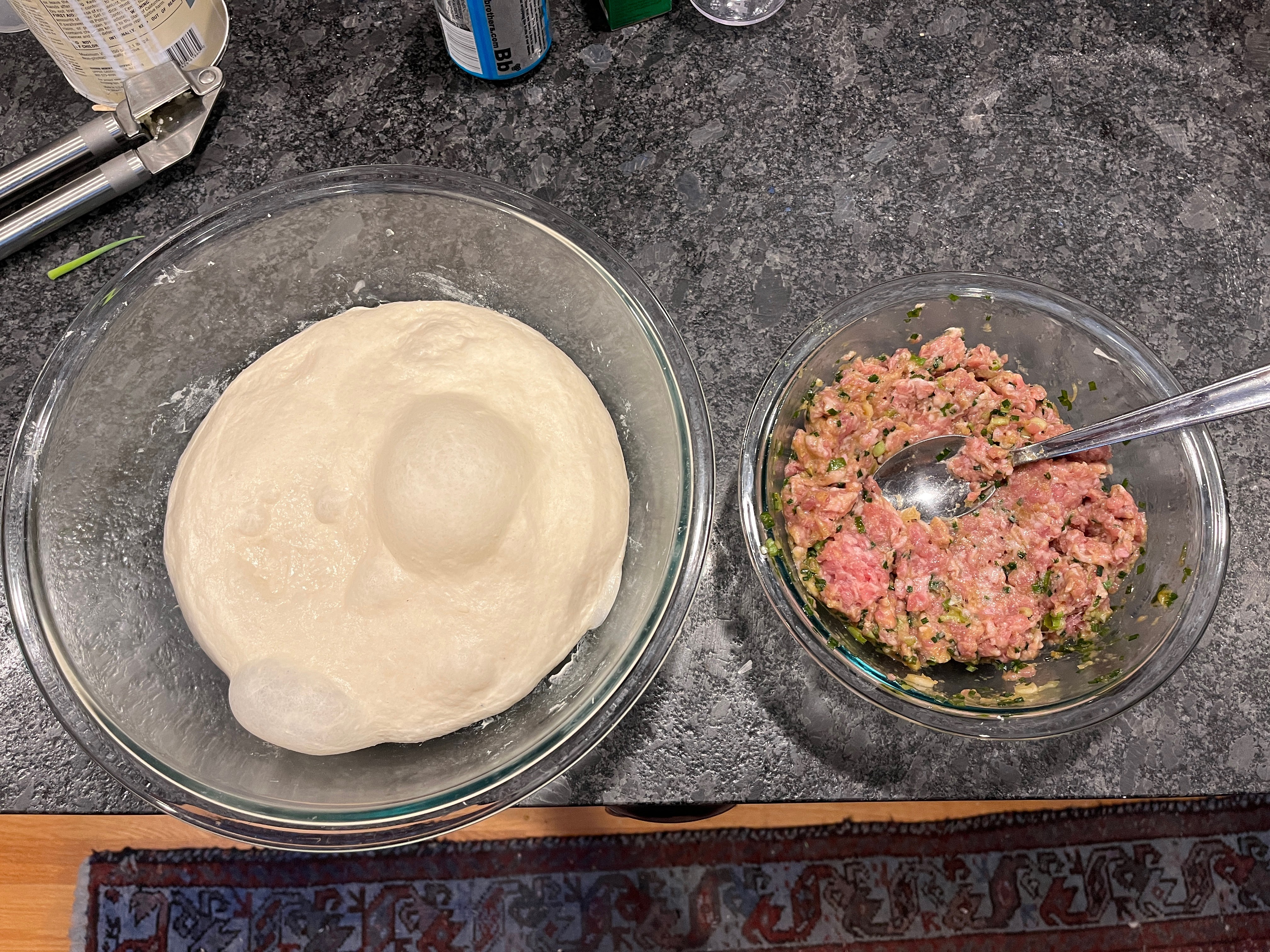
He never did any of this with a thought of reward. He would brush off any gestures of gratitude. Thanks, likewise, were unnecessary. He helped because he could help. That was it, and he didn’t think any more about it.

There are hundreds of other things that my Dad might have told you today, but the last thing I’ll leave you with, then, is that it’s not about you, it’s about being there when the people you love – particularly your family – need you.

He was always there for me, and I’ll miss him.

Goodbye, Dad, and thank you.